
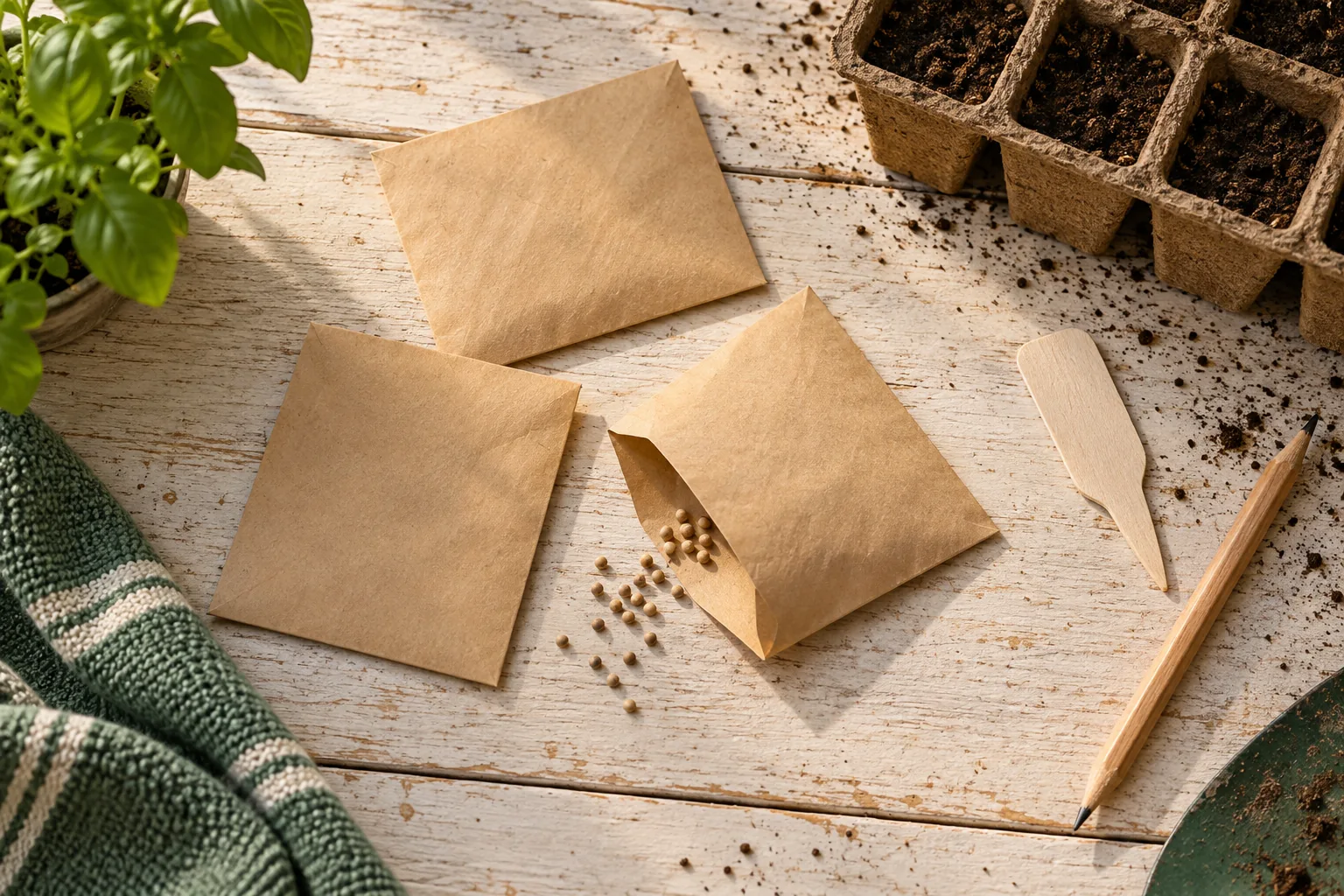
A vegetable seed packet is a small set of instructions for a particular variety, not just a picture of a possible harvest. Before opening it, turn the information into a plan for one container. The important questions are what starts the timing clock, how large the plant becomes, and which instructions apply to sowing versus the final planting.
Extract the instructions you will actually use
Illinois Extension explains that packet layouts vary and that useful information may be split between the front, back and a detachable plant marker. Read the whole packet, then check the supplier’s variety page if something is missing. Keep the exact variety name, lot information and packed-for year with your notes so you can trace what you planted.
| Packet field | Write this in your container plan |
|---|---|
| Crop and variety | The full name, plus bush/vining, compact or other relevant growth habit. |
| Sowing method and depth | Direct sow or start indoors; the stated depth and any light requirement. |
| Germination information | Expected emergence range and stated temperature conditions. |
| Spacing and thinning | Initial seed spacing separately from the final plant spacing. |
| Days to maturity | The number, its starting point and the harvest stage it describes. |
| Site and mature size | Light, growing-season needs, final height/spread and support requirements. |
A container photograph is not enough to establish fit. Compare mature size with usable pot depth and volume, and leave room for any support. A variety can have small fruit while still making a large vine. If the packet does not explain the growth habit, ask the supplier before buying several packets for a narrow balcony.
Find out when the maturity clock starts
Maryland Extension distinguishes maturity counted from direct sowing from maturity counted after transplanting. Tomatoes and peppers, for example, commonly use the transplanting date. The number is approximate, and conditions affect the result. Confirm the supplier’s convention; do not automatically count from the day you bought the packet or saw the first shoot.
Fictional timing example: a packet calls for an indoor start six weeks before transplanting and lists 65 days from transplant to harvest. Six weeks is 42 days; 42 + 65 = 107 days from sowing in that simplified plan. Counting only 65 days would leave out the indoor stage. Do not add germination days again if they are already included in the six-week seed-starting interval.
Put the target transplant date in a calendar only after checking local crop guidance and conditions. In a purely illustrative calendar, six weeks before May 15 is April 3. Those dates are not a planting recommendation for your region. Allow for hardening off in the seedling plan, and use the fall planning guide when shortening days and approaching cold change what is realistic. A maturity number alone cannot establish that an October sowing will succeed.
Separate sowing density from final spacing
A packet may describe sowing several seeds and thinning later. Your final pot plan needs the spacing of the plants you intend to keep. Row spacing in a garden is not automatically a complete container layout. Consider the crop, harvest stage and usable space together; the radish guide and the lettuce guide show why mature roots and baby leaves need different decisions.
Sketch the pot before sowing and mark the planned final plant positions. Next to the sketch, write how many seeds you will initially sow and what you will do if several emerge together. This makes thinning a planned step rather than an unpleasant surprise. The packet’s seed count is what you purchased, not a recommendation to sow all of it at once.
Use labels to compare choices, not predict success
An F1 hybrid comes from a planned cross; saved seed from it does not reliably reproduce the same variety. Open-pollinated varieties can come true from saved seed when appropriate precautions prevent unwanted crossing. Maryland explains these distinctions in its seed glossary. Neither term replaces the checks for season, light and room. Illinois also notes that an heirloom label alone does not establish organic certification.
Minnesota Extension recommends planning the growing space before starting seed, including light and room for seedlings as they become larger. If the packet requires an indoor start you cannot support, a suitable transplant may be the more practical choice. Use the seed-versus-transplant guide before committing a whole tray.
End with a short go/no-go note: “I know the variety, final space, sowing method, timing basis and local planting window.” If one is missing, resolve that question first. After sowing, keep the packet with your garden record and record actual emergence and first harvest. Store unused seed using the leftover-seed guide rather than discarding it simply because you did not need a full packet.
Your next steps
0 of 5 steps checked · Saved on this device
Sources & further reading
Extension resources support the growing principles in this guide. Planning examples apply them to small container gardens. Local conditions and variety instructions take priority.
- Illinois Extension: finding and interpreting seed-packet information
- Maryland Extension: planting dates and seed terminology
- Minnesota Extension: planning an indoor seed start
Prepared with AI assistance; this is research-based guidance, not a personal growing trial. Editorial policy · Suggest a correction