
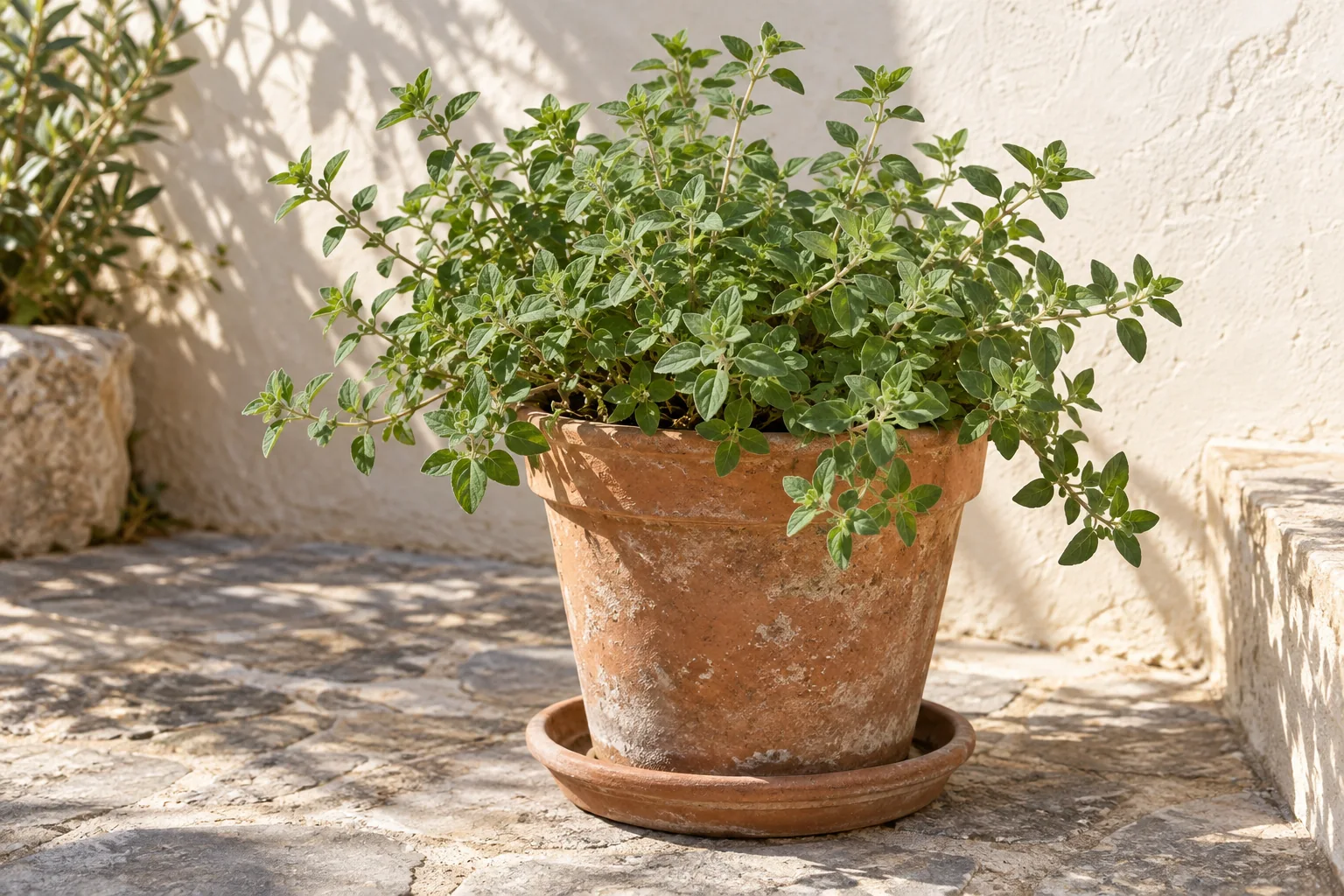
For a kitchen pot, choosing the right oregano matters as much as choosing the pot. A plant sold for decorative flowers may not give you the flavor you expected, and different herbs share the oregano name. Start with a labeled culinary plant, then give it a draining container and a place where you can check its growth before taking regular cuttings.
Read the plant name before buying
North Carolina Extension identifies Greek oregano as Origanum vulgare subsp. hirtum, a culinary perennial with aromatic leaves. It is a useful starting point when you want the familiar oregano flavor used in tomato dishes. A nursery label that says only “oregano” leaves an important question unanswered: which plant are you taking home? Ask for its botanical name and intended culinary use.
| Name on the label | What to clarify |
|---|---|
| Greek oregano | Look for Origanum vulgare subsp. hirtum, also written with var. hirtum. Confirm the nursery is selling a culinary plant. |
| Sweet marjoram | Origanum majorana is a related herb with a milder flavor; choose it deliberately rather than assuming it is the same plant. |
| Mexican oregano | Lippia graveolens is a different plant. Use its own growing instructions rather than applying this Greek-oregano guide. |
| An ornamental selection or no botanical name | Ask what the selection is grown for and obtain reliable identification before harvesting. |
Illinois Extension describes sweet marjoram’s milder flavor and tender habit. Its oregano guide distinguishes several other plants sold under the oregano name and recommends plants propagated from flavorful stock because seed-grown plants can vary. A labeled young plant is a straightforward first project. Save the label with the purchase date; the illustration above cannot confirm your plant’s identity.
Set up a manageable pot
Illinois Extension includes Greek oregano among herbs suited to containers and recommends drainage holes and loose, well-drained potting mix. Start with one plant in its own pot so you can adjust its care without guessing what neighboring herbs need. Check the actual root ball and the variety’s mature spread when selecting a pot; no single rim diameter guarantees enough room for every plant.
Before filling the container, make three checks: can water leave the bottom, can you reach the mix to assess moisture, and can you move or inspect the pot safely once it is wet? Keep the drainage openings clear and use mix intended for pots. If roots later crowd the container, use the repotting decision guide instead of starting a tiny transplant in the largest pot available.
Place it in a sunny location. North Carolina’s Greek-oregano profile allows full sun to partial shade, while Illinois emphasizes full sun. Use an actual sunlight record to assess your space. A shelf described as “bright” may have very little direct sun. Check for new growth before planning repeated harvests, especially after moving the plant indoors.
Water by observation and harvest lightly
Good drainage does not mean keeping a new transplant completely dry. Check the mix and water according to the plant’s condition; when watering a conventional draining pot, let excess water escape. Illinois advises against overfertilizing container herbs. Record any fertilizer already included in the mix before adding more, using the feeding guide. North Carolina warns that persistently wet, poorly drained conditions can lead to root rot.
For an established, actively growing plant, Illinois recommends taking stem tips while leaving four to six pairs of leaves to support more growth. Do not apply that as a reason to strip a small or struggling plant. Its general container-herb guidance also recommends light harvests of perennials. Use clean cutting tools and choose a small amount you will use promptly. See tool care and drying small herb harvests for the separate handling steps.
Keep a brief harvest record: date, amount taken, whether buds were present, and how the plant looked at the next check. For example, “two stem tips, remaining stems leafy” is more useful than “harvested normally.” This is an observation template, not a predicted yield. Slow regrowth is a reason to pause picking and reassess conditions.
Make a winter decision for your exact plant
Hardiness guidance differs among oregano types and references. Illinois cautions that some types need protection or indoor care; North Carolina lists a wider hardiness range for its Greek-oregano profile. Do not treat the word perennial as a promise that any oregano in any exposed pot will survive your winter. Ask a local extension office about the labeled plant and your container situation.
If moving a suitable plant indoors, plan the light and pest inspection before cold weather. Illinois recommends a gradual adjustment to indoor conditions. Follow the indoor-herb transition guide and reduce harvesting if growth slows. For a first season, the useful goal is a healthy, correctly identified plant and a few well-timed cuttings, not an assumed year-round supply.
Your next steps
0 of 5 steps checked · Saved on this device
Sources & further reading
Extension resources support the growing principles in this guide. Planning examples apply them to small container gardens. Local conditions and variety instructions take priority.
- North Carolina Extension: Greek oregano plant profile
- Illinois Extension: oregano types, propagation and harvest
- Illinois Extension: herbs in containers
- Illinois Extension: sweet marjoram
Prepared with AI assistance; this is research-based guidance, not a personal growing trial. Editorial policy · Suggest a correction