
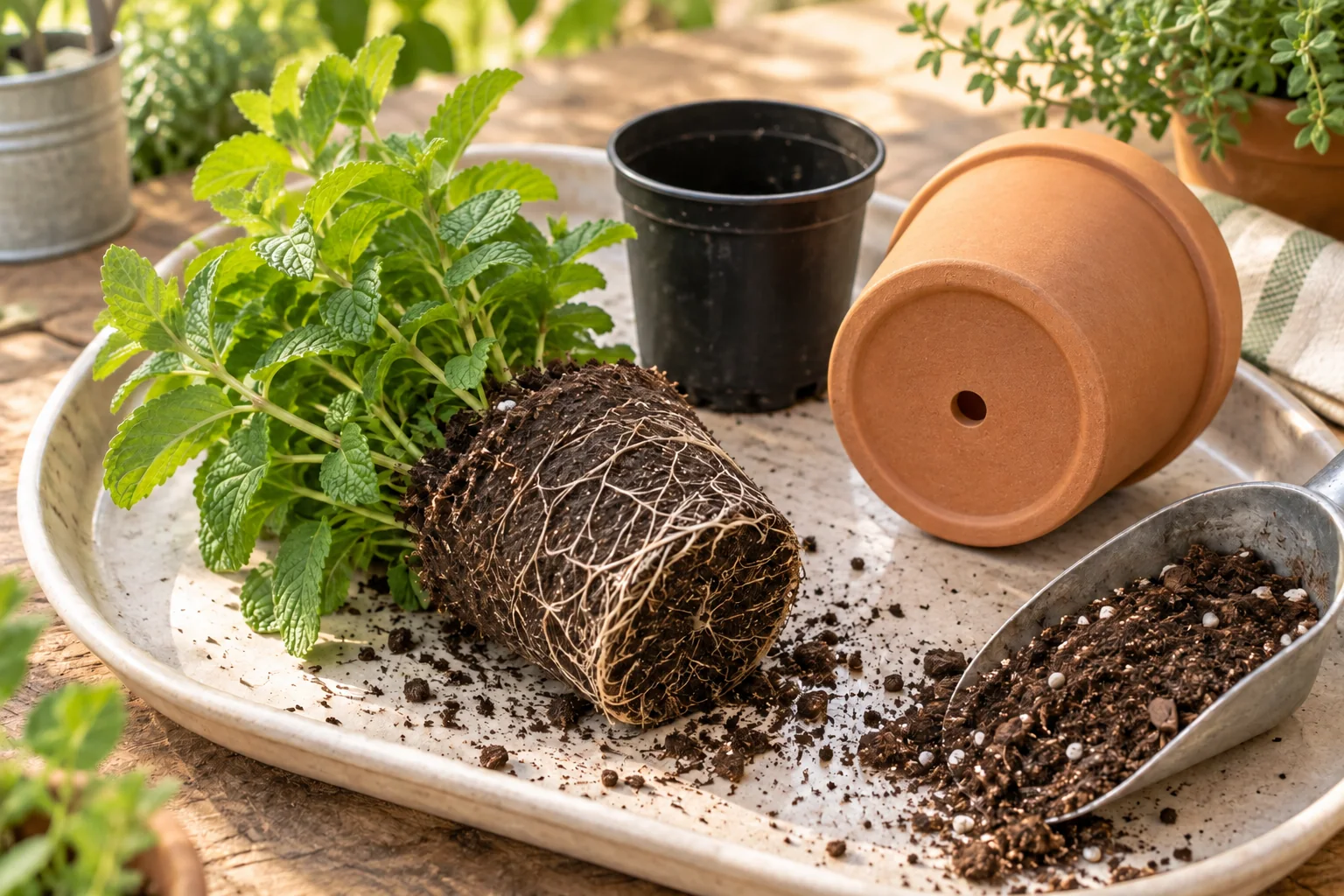
A root peeking through a drainage hole is a reason to inspect an herb, not an automatic order for a giant new planter. An established mint, thyme or other potted herb may need more root space, but slow growth can also reflect its light, moisture or season. Start with the plant you have and the size you want to maintain.
Separate a cramped root ball from other problems
Penn State’s repotting guidance points to unusually rapid drying, roots escaping the pot and slowed active-season growth as reasons to look inside. Dense circling roots, with little mix visible around the lower root ball, provide stronger evidence than the height of the foliage alone. These general container principles are useful for established herbs; they are not instructions to disturb a newly germinated tray.
| What you find | Decision before buying a pot |
|---|---|
| Mix dries unusually fast and a dense root mat fills the pot | More root space may help if you want the plant to grow larger. |
| A few visible roots, plenty of mix and steady growth | Return it to the same pot and keep observing; more space may not be needed yet. |
| Mix stays wet, with limp or deteriorating roots | Investigate drainage and root health. A larger wet volume is not a repair for unhealthy roots. |
| Long, weak shoots after moving indoors, without a crowded root ball | Review light and growing conditions before changing the pot. |
First check whether the mix actually absorbs water. Water can run past very dry, shrunken mix without wetting the center. The watering guide explains that problem. If roots are not crowded, investigate it before spending time on a larger container.
Match the timing to active growth
Iowa State says repotting can be done at any time, but late winter and early spring often offer better conditions as growth resumes. For an herb growing slowly in a dim October room, a calendar reminder alone is a weak reason to enlarge its pot. A healthy plant can often wait while you improve its setup; a serious root or drainage problem needs attention when discovered.
Maryland’s indoor-herb guidance emphasizes adequate light, freely draining mix and avoiding drafts or dry heating vents. Fix those conditions alongside any necessary repotting. Repotting does not extend an annual herb’s productive life indefinitely or replace enough light. The winter herb guide covers which plants are worth bringing inside.
Inspect gently and decide what size you want
- Prepare a clear work surface, tray and clean pot. Read the empty-pot cleaning guide before reusing an old container.
- With the mix lightly moist rather than crumbling dry or dripping wet, support the root ball and gently slide it out. Squeeze a flexible nursery pot to loosen it; do not yank the plant by its stems.
- Look around the sides and bottom. Note how much mix remains visible and whether roots circle densely. If there is room and the plant is healthy, return it to its pot.
- If the plant needs space and you want it larger, select a modest step up. If the available shelf cannot take a larger plant, consider a crop-specific division or replacement plan instead of cutting roots indiscriminately.
For example, a six-inch pot moved to an eight-inch pot gains two inches in diameter, which is roughly one inch around each side of a centered root ball. That is a fit illustration, not a universal size prescription. Check inside dimensions and depth: tall and shallow pots with the same rim width behave differently. Do not use the decorative outer pot’s width as the growing pot’s measurement.
Give the roots usable mix, not empty space
Choose a container with drainage and a mix suited to the herb. Maryland distinguishes herbs needing steadier moisture from those that prefer more drying: mint and basil differ from rosemary and thyme. A potting mix that works for one plant should not become a fixed watering schedule for the whole shelf.
Gently loosen accessible circling roots without stripping the root ball bare. Add fresh, premoistened mix beneath and around it, keeping the plant at its previous planting depth and leaving room below the rim for watering. Firm lightly, water thoroughly and let excess drain. Penn State’s illustrated repotting instructions provide a reference for handling the root ball and positioning it.
Do not put rocks beneath the mix or leave the pot standing in water inside a decorative cover. See the drainage guide for why that arrangement matters. Keep mint in its own container; see the mint guide for division and ongoing care.
Relearn the watering interval after the move
The new mix and container can dry at a different rate. Record the repotting date, inside pot dimensions and mix used, then check moisture over the following days instead of continuing the old watering timetable. Note wilting, new growth and how long the mix remains wet; those observations help distinguish adjustment from an unresolved problem.
Do not automatically add a dose of fertilizer on repotting day. Iowa State advises waiting at least 2–4 weeks before regular feeding; mixes can already contain fertilizer. Read the label and match later feeding to active growth with the fertilizer record. A larger pot creates room for future roots, not an immediate need for more fertilizer.
Your next steps
0 of 5 steps checked · Saved on this device
Sources & further reading
Extension resources support the growing principles in this guide. Planning examples apply them to small container gardens. Local conditions and variety instructions take priority.
- Penn State Extension: repotting houseplants
- Iowa State Extension: caring for houseplants
- Maryland Extension: herbs in containers and indoors
- Maryland Extension: container media and herb care
Prepared with AI assistance; this is research-based guidance, not a personal growing trial. Editorial policy · Suggest a correction