A useful fall planting plan starts with a local harvest window, not the month on a national checklist. Before filling an empty pot, work backward from the season you actually have. Then choose whether you want small leaves, mature roots, or plants to carry through winter.
Choose a finish date before choosing seeds
Look up your county extension service’s fall planting guidance and typical first fall frost. Write down the source, the temperature threshold it uses, and your target harvest date. An average frost date is a planning reference, not this year’s forecast. A light frost and a killing freeze are different events, and crops respond differently.
For a first attempt, choose a harvest target inside the locally recommended window. Treat growing plants through winter as a separate project with its own variety, shelter, and care requirements. The container frost guide covers protection decisions when the forecast changes.
Count backward with a fall allowance
Oregon State’s fall-garden formula adds roughly two weeks to the crop’s outdoor time to harvest to allow for slower autumn growth. It also includes seedling-raising time when you grow your own transplants. Maryland Extension uses a 14-day short-day allowance when counting back from a desired harvest date. These are planning aids; local temperatures and light can still delay a crop.
Direct-sown example: target harvest date minus packet days from sowing to harvest minus 14 days. Check what the packet’s number measures. If it starts at transplanting, calculate the outdoor planting date first, then count back separately for raising the transplant. Do not add the seedling stage twice to a number that already starts at sowing.
| Illustrative packet time | Days to count back | Sowing date |
|---|---|---|
| 45 days from sowing | 45 + 14 = 59 | September 17, 2026 |
| 30 days from sowing | 30 + 14 = 44 | October 2, 2026 |
If you were making this plan on September 27, the 45-day example would already be late. The 30-day example would still fit the arithmetic, but you would need to check the crop, local planting window, and actual growing conditions before sowing. A number that fits on paper is a reason to investigate, not a guarantee of harvest.
Choose a smaller goal when time is short
| What you want | What to check before planting |
|---|---|
| A few young salad leaves | Use a baby-leaf harvest estimate rather than the date for a mature head. |
| Small radish roots | Choose a named small-rooted variety and allow time for roots to size up. |
| Mature heads or pods | Confirm that the full development period fits; do not substitute a baby-leaf estimate. |
| An overwintering crop | Find local advice for that exact crop and protection method before treating it as a winter plan. |
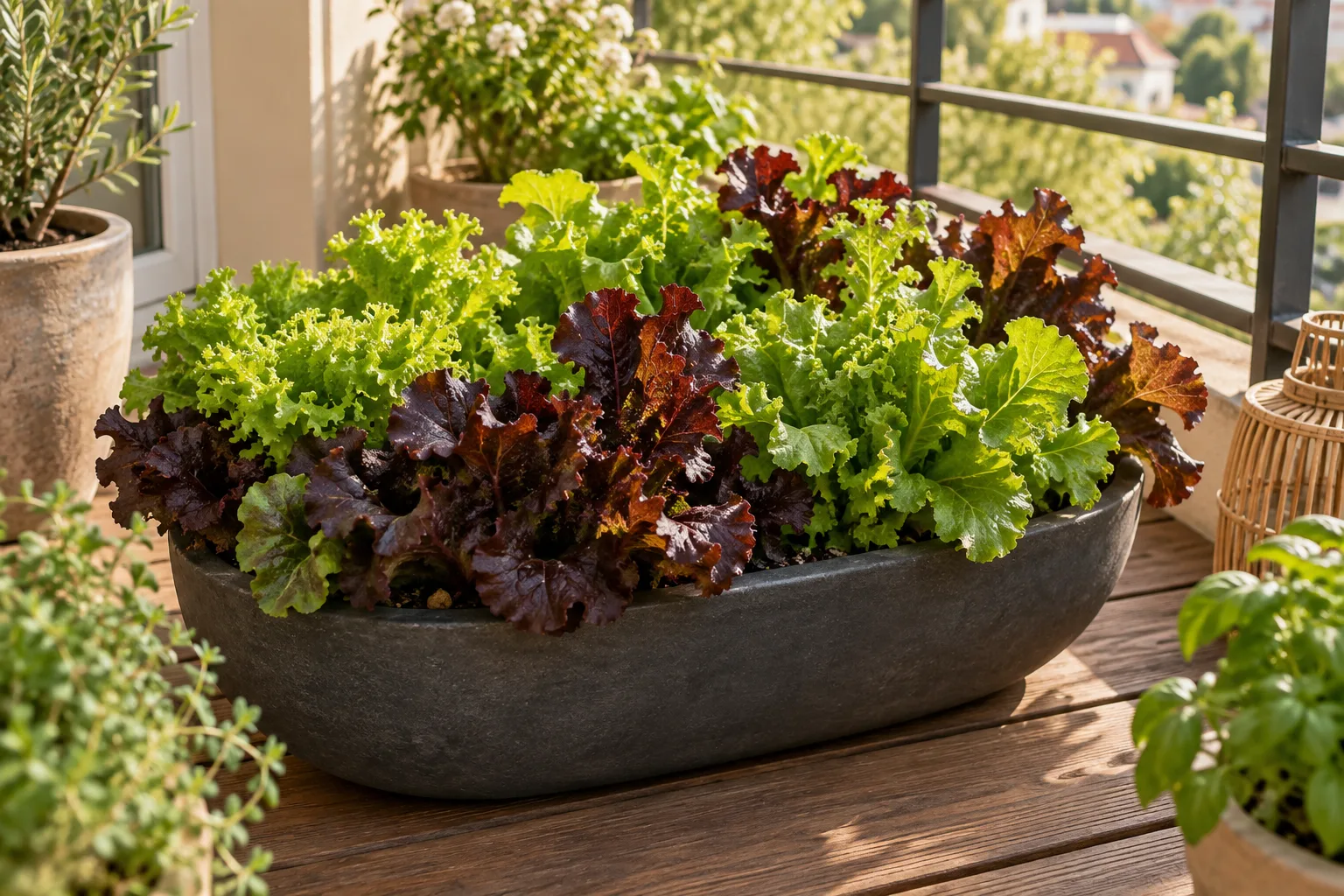
Use the spacing and harvest choices in our lettuce guide or the measured layout in our radish guide. If neither crop fits, leave the pot available for the next suitable window. Buying extra seed will not create more daylight.
Adjust the plan for your region and balcony
In a short northern or high-elevation season, late September may be too late to start a crop intended to mature before winter. In a warm region, heat may still be the obstacle. UF/IFAS describes winter as a good lettuce season in Florida, with planting months varying within the state. Neither example supplies a nationwide September sowing date.
Maryland’s fall guide explains how shorter days and cooling weather slow growth. Recheck the sun at your actual planter: a wall or overhang can shade it differently as the season changes. Record separate sunny intervals with our sunlight worksheet before moving a heavy container.
Prepare one pot and keep a short record
- Measure the usable planting width and depth, then select a crop and spacing that fit.
- Inspect the old growing medium before replanting; use the potting-mix reuse decision guide if the previous crop struggled.
- Put the sowing date, named variety, packet maturity basis, and target harvest on one label or garden note.
- Check the seed surface and developing plants regularly. Adjust watering to the mix and weather, using the watering guide.
- At harvest, record the actual elapsed time. Keep that observation with the season and conditions so it can inform next year’s plan.
Updated September 27, 2026: Added checked sowing-date calculations, harvest-stage choices, and regional planning qualifications.
Your next steps
0 of 5 steps checked · Saved on this device
Sources & further reading
Extension resources support the growing principles in this guide. Planning examples apply them to small container gardens. Local conditions and variety instructions take priority.
- Oregon State Extension: Growing Your Own, fall planning on page 24
- Maryland Extension: Fall vegetable gardening
- UF/IFAS Gardening Solutions: Lettuce
Prepared with AI assistance; this is research-based guidance, not a personal growing trial. Editorial policy · Suggest a correction