THE SHORT ANSWER
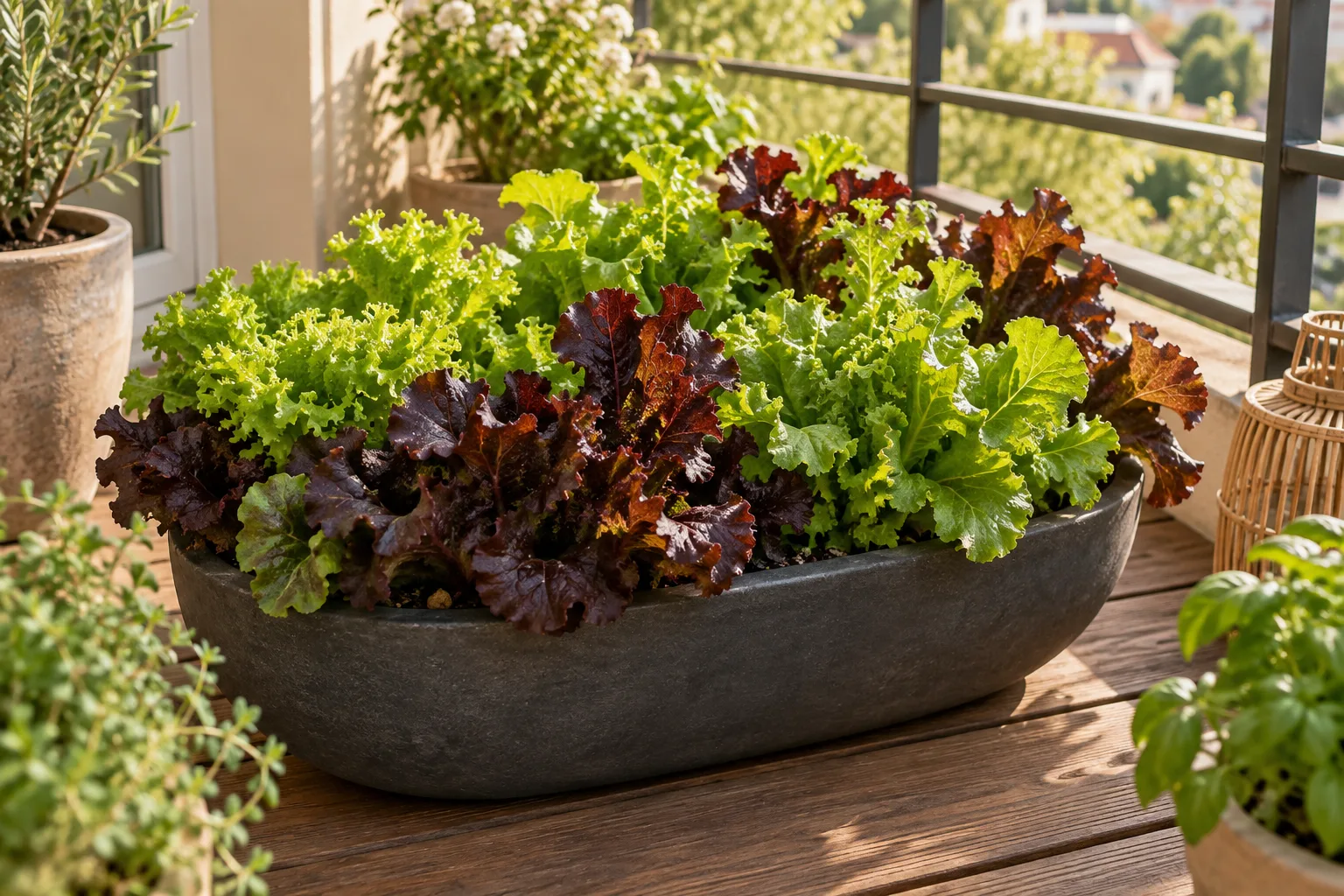
Leaf lettuce is a useful cool-season container crop. Give plants suitable spacing, consistent moisture, and enough light. Harvesting outer leaves can extend use of an established plant while leaving its center intact.
Choose your harvest style
Loose-leaf lettuce lets you take a few leaves at a time; heading types need room and time to develop a head. Decide which result fits your meals and available space before buying seed. A small planter is better viewed as a source of fresh additions than a promise of endless family-sized salads.
Read the packet for spacing at the intended harvest stage. Baby-leaf sowing and mature plants are different projects. Sowing densely and later expecting full-sized heads often leads to disappointment that could have been prevented at planting.
Work with cool weather
Lettuce commonly performs best in cooler conditions and can bolt as conditions become unfavorable. Use local planting guidance rather than adopting a calendar month from another region. A spring recommendation for a northern state may not fit a hot southern balcony.
Take note of reflected heat from walls and paving. Your balcony may be warmer than the general forecast suggests. If you experiment with afternoon shade, keep enough light for useful growth and observe the result. Shade is a tool to manage conditions, not a guarantee that lettuce will thrive through extreme heat.
Build a simple planter routine
Choose a broad container with drainage and enough root space for the selected variety. Sow as directed, label the date, and keep the seed zone from repeatedly drying out during germination. Thin seedlings to an appropriate spacing instead of leaving a crowded carpet indefinitely.
Place the planter where you can inspect leaves without awkward reaching. A weekly photograph from the same position can help you notice crowding or uneven growth. If one end grows differently, compare its light and moisture before assuming every plant needs fertilizer.
Pick gently and plan the next batch
For an outer-leaf harvest, remove a few usable leaves and leave the central growth point and enough foliage for recovery. Wash harvested leaves before eating. If flavor becomes unpleasant or plants begin flowering, it may be time to replace the planting.
Rather than sowing every seed at once, consider a small second batch while weather remains suitable. Label each sowing so you can judge the interval that works for your household. Your first season’s notes will be more relevant than a promised harvest schedule that ignores your climate and variety.
Your next steps
0 of 4 steps checked · Saved on this device
Sources & further reading
Extension resources support the growing principles in this guide. Planning examples apply them to small container gardens. Local conditions and variety instructions take priority.
- University of Minnesota Extension: Head lettuce growing guidance
- University of Maryland Extension: Growing vegetables in containers
Prepared with AI assistance; this is research-based guidance, not a personal growing trial. Editorial policy · Suggest a correction