THE SHORT ANSWER
Match the container to the mature crop and its recommended spacing. Capacity, depth, width, and stability all matter; the diameter printed on a product label does not tell the whole story.
Start with the adult plant
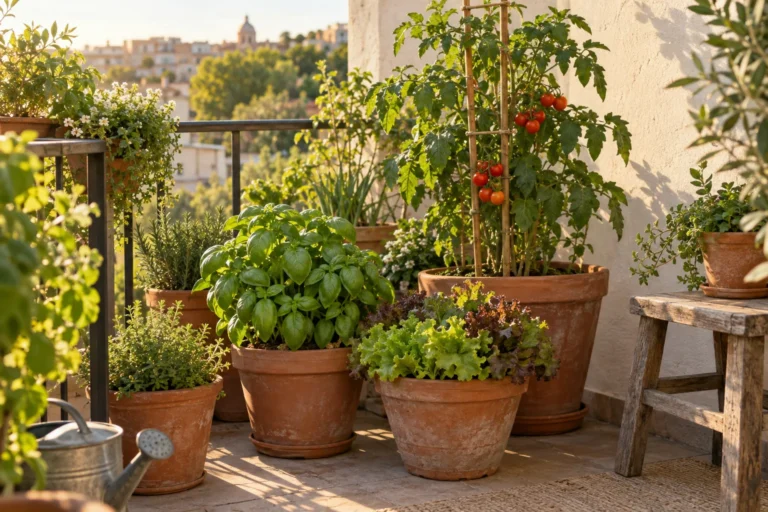
A small nursery plant can become a substantial crop. Before choosing a decorative pot, read the variety label or a crop-specific guide for mature size, root depth, and spacing. Consider the support as well as the foliage.
Set the empty container in position and imagine the plant several times larger. Would it cover a walkway or shade a neighboring pot? That quick exercise can reveal a poor fit before you spend money on mix and plants. A compact variety can be more useful than squeezing a vigorous one into a tight arrangement.
Understand what the measurements mean
Volume tells you roughly how much growing medium the pot holds. Depth helps you judge whether a root crop can develop properly. Width affects spacing for several small plants. A tall narrow planter and a broad shallow planter may hold similar volumes but serve different crops.
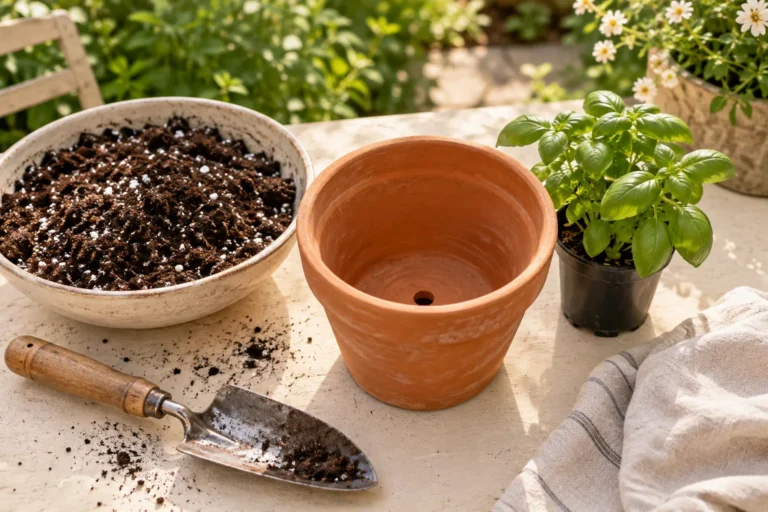
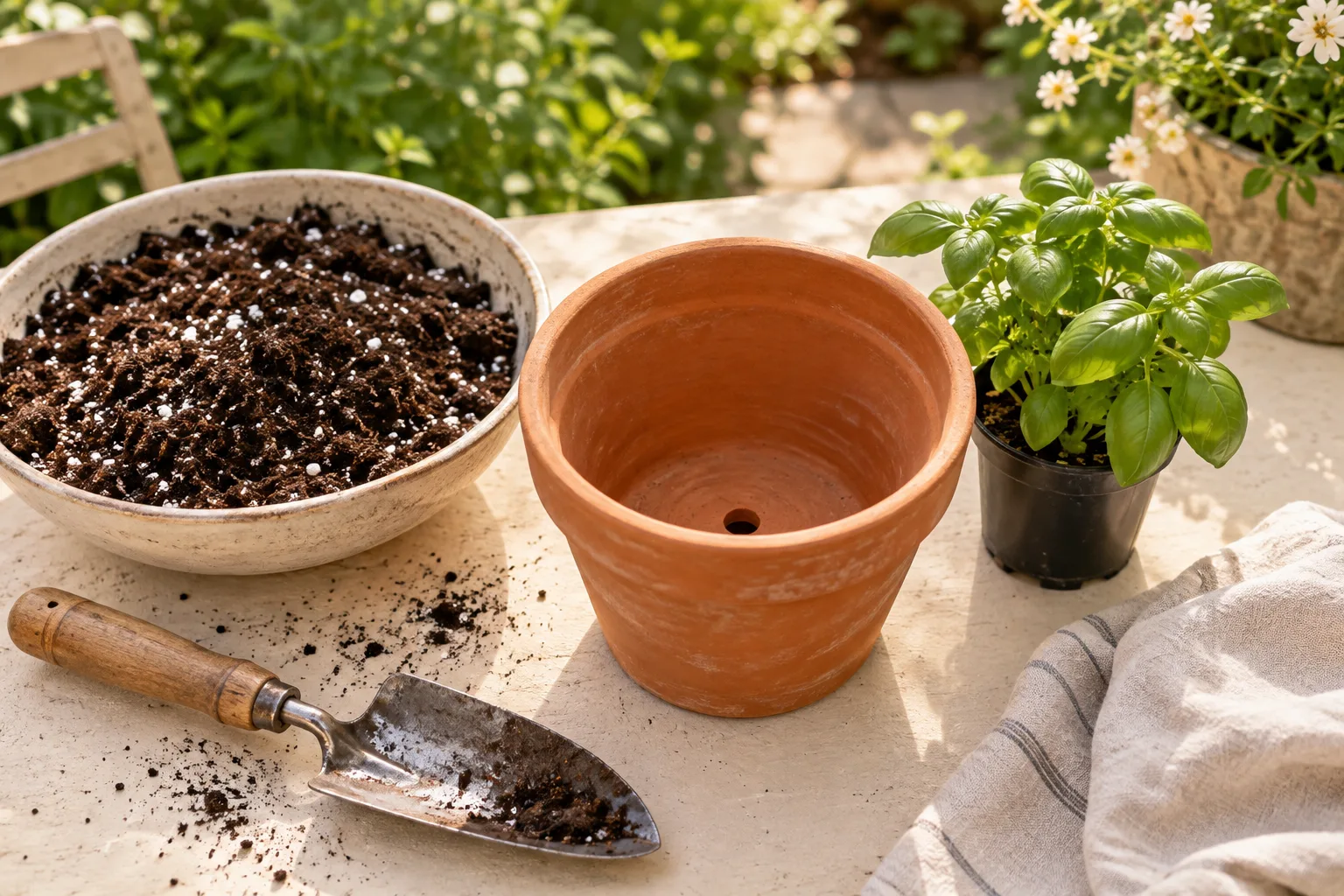
Measure inside dimensions when calculating potting mix. A tapered pot holds less than a cylinder with the same top diameter and height. Our calculator provides a geometric estimate, so leave room for the watering rim and account for existing roots or mix instead of buying blindly from the headline capacity.
Balance a bigger pot with real constraints
More growing medium can buffer changes in moisture, but a very large container also weighs more when wet. It may be difficult to move and can stay wet longer than expected if the plant is small. Illinois Extension emphasizes choosing a container suited to the number and kind of plants.
On an elevated surface, check load limits and placement rules before filling large pots. Keep them stable and within reach. A portable garden is only portable if you can move it safely; do not assume an empty lightweight planter will stay light after planting.
Plan one container before buying a set
Write a small specification for the crop: desired capacity, useful depth, drainage, space for support, and where water will go. Take that list shopping. It is much easier to compare actual needs than a shelf full of attractive shapes.
For a first season, avoid buying several identical pots just for a matching display. Your herbs, leafy vegetables, and tomatoes may need different arrangements. Coordinating color or material can create a coherent look while letting each crop have a suitable home.
Your next steps
0 of 4 steps checked · Saved on this device
Sources & further reading
Extension resources support the growing principles in this guide. Planning examples apply them to small container gardens. Local conditions and variety instructions take priority.
Prepared with AI assistance; this is research-based guidance, not a personal growing trial. Editorial policy · Suggest a correction