
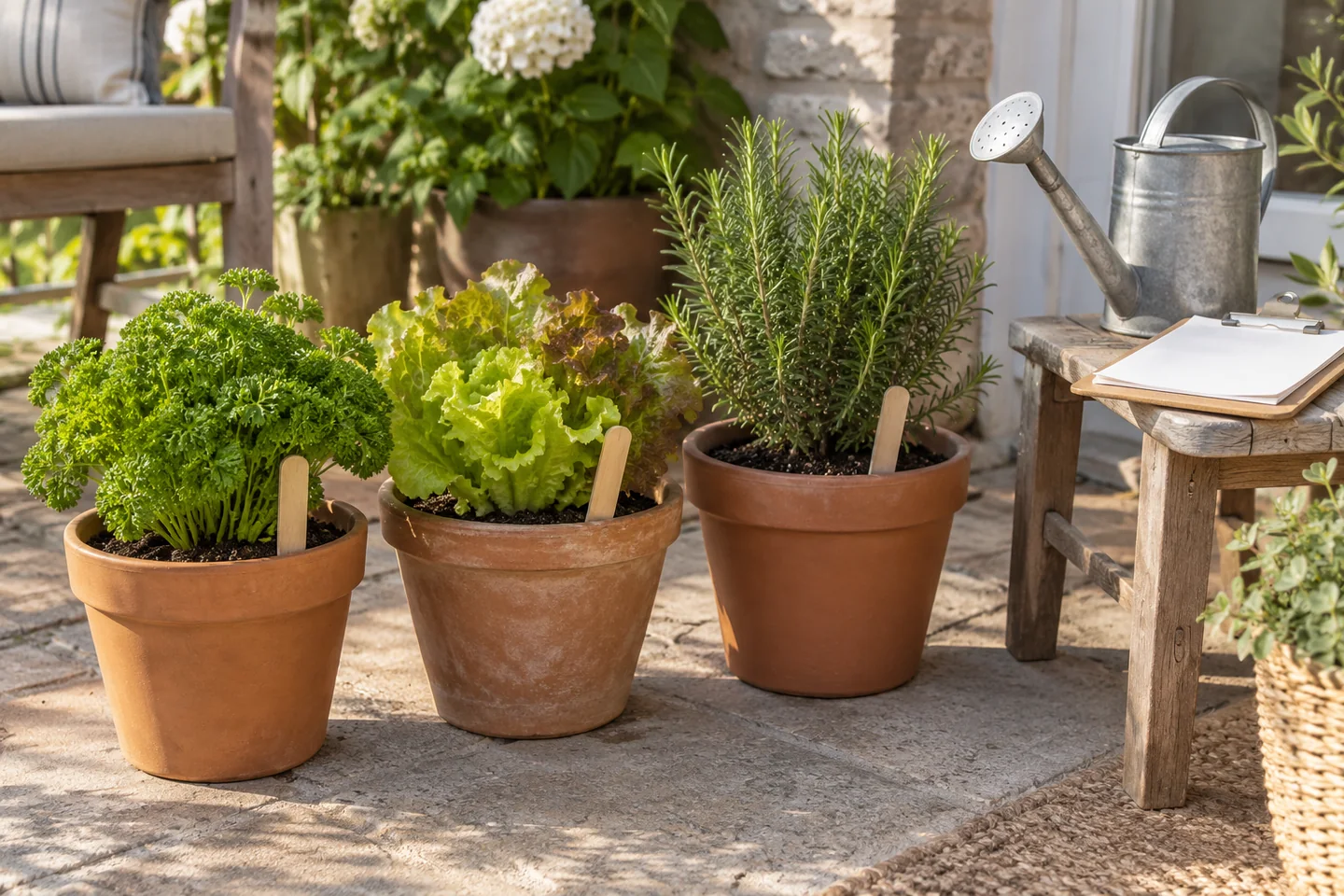
A useful vacation-watering plan tells someone what to check, what to do, and when to contact you. A timer can be part of that plan, but it cannot explain a disconnected tube or a pot that remains wet. Build the handoff while you are home and can observe the result.
Make a care card for each pot
Illinois Extension recommends checking container moisture daily and explains that porous containers can dry faster than plastic or glazed pots. Plant size, exposure, and weather add more variation. Group pots by demonstrated care needs, not just by how close they are to the door.
Give each container a visible label such as A, B, or C. Photograph the arrangement and copy the following card for every pot or genuinely similar group. Fill the blanks using your own observations; a helper should not have to identify the crop to find the correct instructions.
| Care-card field | What to write before leaving |
|---|---|
| Pot and location | Label, crop, and an unmistakable location; for example, “A — lettuce, left side of patio door.” |
| Visit plan | Dates or agreed check frequency, adjusted to the forecast and your observed drying rate. |
| Moisture check | Where and how to check this pot, with a demonstration of when it needs water. |
| Watering action | How to apply water, how to recognize adequate wetting, and what to do with runoff. |
| Equipment | Water source, can or hose location, refill point, and any controls the helper should leave alone. |
| Contact rule | What problems to photograph or report, how to reach you, and an agreed backup contact. |
A short visit record can be equally simple: date/time, pot label, mix before watering, action taken, and problem noticed. Ask the helper to record “checked; still moist” when appropriate. An empty watering column should not be mistaken for a missed visit.
Choose a method you can rehearse
| Method | What to prove before relying on it |
|---|---|
| A garden helper | They can find every labeled pot, demonstrate your moisture check, and reach the water safely. |
| A self-watering reservoir | You know the refill opening, overflow route, and how quickly the level falls in this actual planting. |
| A timer with drip lines | Every intended outlet delivers water, connections stay in place, the timer stops, and runoff drains safely. |
Illinois describes reservoirs and drip irrigation as useful container-watering options. Treat the following sequence as a practical commissioning checklist, not a product certification. Keep the system manual nearby and use the specified supply, fittings, pressure controls, and backflow protection where required by its instructions and local rules.
- Start several days before departure so you can observe more than one normal wetting-and-drying cycle. A single successful run gives limited evidence.
- Inspect the water source, tubing, connectors, outlet placement, reservoir, and drainage. Identify the shutoff and label it for the helper.
- Run the intended cycle while present. Check every pot at the beginning, during delivery, and after the timer should have stopped. Look for dry sections, leaks, displaced outlets, and pooling.
- Check the mix afterward and again before the next planned cycle. Adjust using the planting’s actual response and the equipment instructions.
- Have the helper perform one practice visit. Agree what to do if the supply, timer, or reservoir fails; include a manual watering option.
Measure delivery without inventing a watering schedule
When the equipment permits a simple catch test, collect an outlet’s water in a graduated container for a known time. For example, 250 milliliters collected in 5 minutes is 50 milliliters per minute; 10 minutes at the same measured rate would deliver about 500 milliliters. This checks delivery, not the amount a plant needs. A different pressure, outlet, or reservoir level can change the rate.
Return the outlet to its intended place and verify the setup again. A cup measurement cannot show whether water reaches the root zone evenly. Do not convert one test into “water every pot for ten minutes.” Use our watering decision guide for the next observation, and our drainage guide if water cannot escape.
Prepare for the forecast and make the handoff
Illinois’s vacation checklist suggests arranging harvest help and considering a more sheltered container location. Its broad in-ground irrigation intervals are not a schedule for pots. If you move containers, rehearse the new arrangement while you are home and consider each crop’s light needs. Never assume an overhang protects a pot from all weather.
For an autumn trip, the handoff may need a separate frost-night plan. List which plants can be moved, where they should go, and when you will make that decision. Clear the access route, leave the necessary equipment ready, and avoid asking a helper to lift a pot they cannot safely manage.
Before leaving, review the forecast, confirm the first visit, and check that the plan still matches the plants. Ask for a message about leaks, unusual wilting, an empty reservoir, or persistently wet mix. Leave diagnosis and fertilizer changes out of a routine watering visit unless you have supplied a specific, appropriate instruction. On return, use the visit record to improve the next handoff.
Updated October 1, 2026: Added a reusable care card, equipment rehearsal checklist, and checked water-delivery calculation.
Your next steps
0 of 5 steps checked · Saved on this device
Sources & further reading
Extension resources support the growing principles in this guide. Planning examples apply them to small container gardens. Local conditions and variety instructions take priority.
- Illinois Extension: Six tips for watering container gardens
- Illinois Extension: Vacation checklist for your garden
Prepared with AI assistance; this is research-based guidance, not a personal growing trial. Editorial policy · Suggest a correction