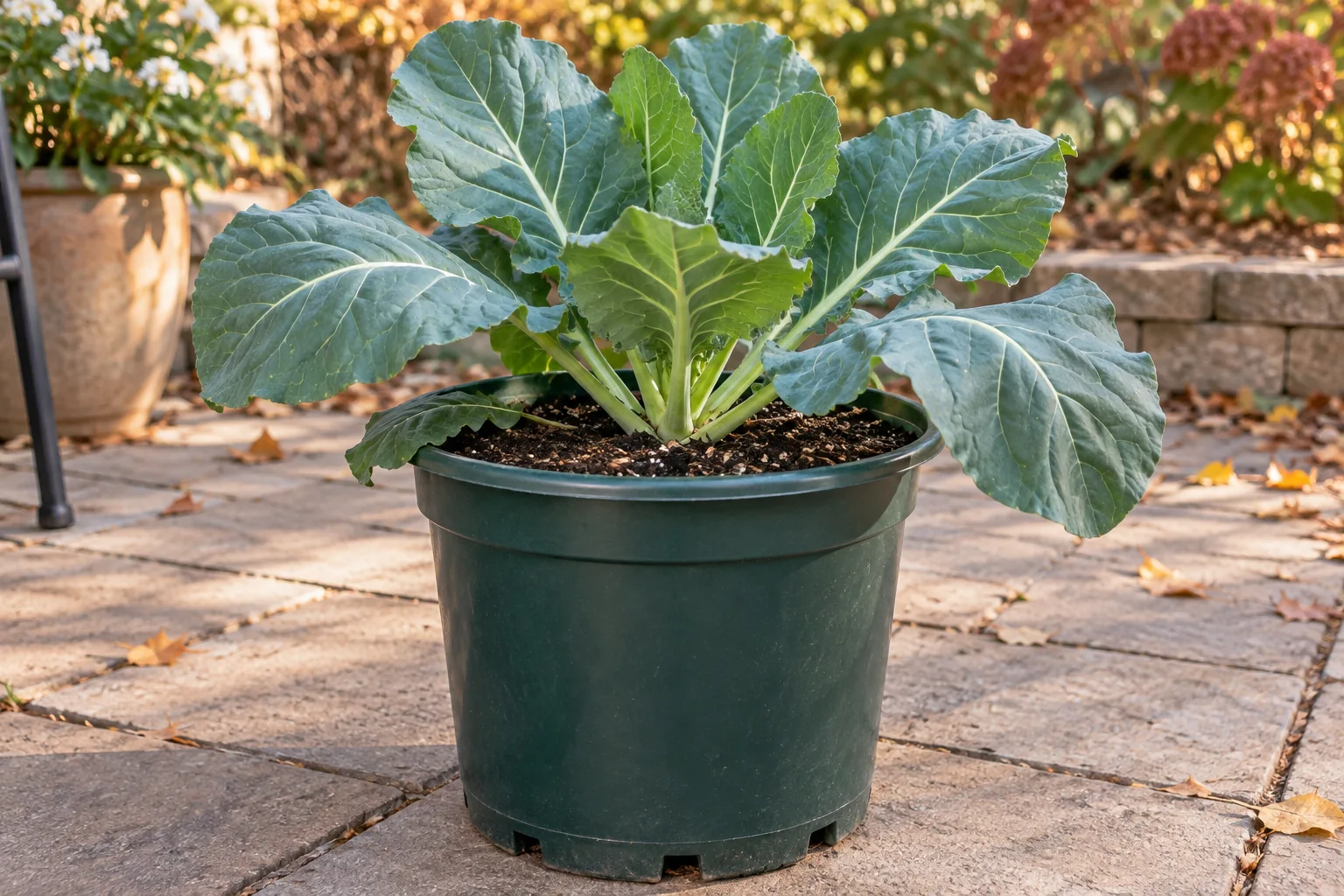
Collards can make a useful cooking-green crop in a container, but a plant kept for repeated outer-leaf harvests needs its own room. Start with one plant, a substantial draining pot and a local planting window. Buying a six-pack of seedlings does not mean six plants belong in the container you already have.
Choose a single-plant container
Alabama Extension recommends one collard per 5- to 7-gallon container in full sun, with potting mix and drainage holes. That is a straightforward starting setup for this guide. North Carolina’s container handbook lists a smaller 3-gallon minimum and 12-inch minimum depth. These are different reference recommendations, not competing guarantees of yield; choosing the larger setup gives a beginner more room to manage one mature plant.
Check both capacity and usable depth before buying. Nursery trade sizes and household liquid-gallon measurements are not always interchangeable; use the manufacturer’s actual dimensions and capacity. Our container-size guide explains that distinction. Do not place several mature-plant positions in the pot merely because the new seedlings look small.
| Before planting | Your written decision |
|---|---|
| Container | One plant; choose the 5- to 7-gallon setup and check depth, drainage and stability. |
| Growing position | A sunny place with space for broad leaves and access to their undersides. |
| Harvest purpose | Repeated outer-leaf pickings, with enough foliage left to keep growing. |
| Planting date | A date checked against local extension guidance and the variety’s timing. |
| Care record | Variety, planting date, pot size, mix and any fertilizer already included. |
Check whether your season allows establishment
Maryland Extension describes collards as more heat tolerant than kale or turnip greens, while kale and turnip greens tolerate colder conditions. This distinction matters when choosing among kale, collards and other leafy crops. It does not mean collards can be planted on any date or that a potted root system will survive every freeze.
Alabama’s published planting windows are February through mid-March and mid-August through mid-September. Those dates belong to its regional advice. For an October project, check your own county’s calendar before sowing: cold tolerance in an established plant does not supply the weeks needed to raise a new one. In a short-season northern location, planning for spring may be the sensible choice.
Maryland adds 10–14 days to stated maturity for fall seed planning because growth slows with shorter days. Use the fall planning worksheet and confirm whether the variety’s maturity starts at sowing or transplanting. Avoid converting a frost-survival description into a harvest deadline.
Plant, water and inspect one pot well
Alabama gives a seed depth of one-quarter inch. For a purchased transplant, it advises a healthy, stocky plant without flowers, planted at the root ball’s depth. Acclimate an indoor-grown transplant with the hardening-off steps. Label the pot immediately, water it in, and keep access to the center so you can check establishment.
Illinois’s container-growing instructions emphasize moistening the mix, watering newly planted seeds gently and watering transplants thoroughly. Check the pot regularly as weather changes; a garden recommendation expressed as inches of water per week is not a measuring jug instruction for every container. Use the moisture-based watering guide and allow excess water to drain.
Read the potting-mix label and use a fertilizer labeled for edible container plants at its stated rate. Do not translate pounds per garden row into an improvised handful. Keep applications in your garden record so you can see what was actually added. When leaves change color, work through the symptom checks before assuming more fertilizer is the answer.
Turn leaves gently during care checks and look at the undersides and new growth. Photograph holes, insects and any worsening patches separately. Maryland’s leafy-greens page links identification resources for cabbageworms, loopers, harlequin bugs and whiteflies. Identify the cause before selecting a control, and check that any product is labeled for the crop and use you intend.
Take outer leaves and watch replacement growth
For its varieties and conditions, Alabama describes harvest around 60–80 days, when outside leaves are 8–10 inches long, and limits each picking to one-third of the lower leaves. Your timing will vary. Leave the central growing point and substantial healthy foliage; pause if the plant is small, stressed or no longer replacing leaves.
Make the first picking an observation: note how many leaves you removed, their approximate size and whether they were enough for your recipe. Check new growth before planning the next meal around the pot. If you want a larger supply next season, that record helps you decide whether a second separate container is worthwhile. A single pot offers a manageable crop to learn from, not a promised household yield.
Your next steps
0 of 5 steps checked · Saved on this device
Sources & further reading
Extension resources support the growing principles in this guide. Planning examples apply them to small container gardens. Local conditions and variety instructions take priority.
- Alabama Extension: collard container, planting and harvest guidance
- North Carolina Extension: container dimensions and minimums
- Maryland Extension: leafy greens, seasons and pest references
- Illinois Extension: growing vegetables in containers
Prepared with AI assistance; this is research-based guidance, not a personal growing trial. Editorial policy · Suggest a correction