THE SHORT ANSWER
Start with one suitable crop in one properly drained container. Match it to your direct sunlight and the current growing season, then learn a manageable care routine before adding more pots.
Choose the space before the plant
A garden-center display makes almost every plant look possible. Your own growing spot is a better starting point. Look at it during the morning, middle of the day, and afternoon. Write down when direct sunlight reaches the place where the leaves will sit. A balcony roof can change that picture considerably.
University of Maryland Extension distinguishes sun-hungry warm-season vegetables from leafy cool-season crops that can manage with less direct light. Use that distinction to narrow your choices. Do not buy a tomato first and hope a shaded corner becomes sunny enough.
Choose one crop you will use
Imagine an ordinary meal you make at home. Would a few basil leaves be useful? Do you enjoy leafy salads? Would you realistically use a crop of hot peppers? A plant you want to harvest gives you a reason to keep checking it.
Treat your first container as a small project with a clear purpose. For example: “I want a basil plant I can harvest lightly for dinner.” That is easier to evaluate than “I want a balcony that produces all our vegetables.” The second idea can wait while you learn what your space can support.
Make a complete shopping list
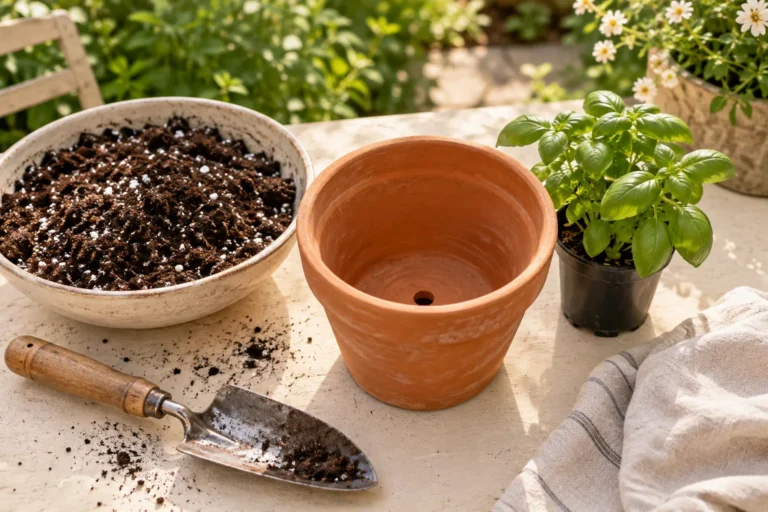
Buy the plant or seed, a container appropriate to its mature size, and a potting mix intended for containers. Check for working drainage holes. If you need a saucer to protect the surface underneath, plan how you will empty it. Add a watering can you can lift comfortably.
Make room for the mature plant, not only the nursery pot. Include any cage or trellis in your space estimate. On an elevated balcony, confirm permitted loads and building rules before concentrating large, wet containers in one place. Keep access routes clear.
Use the first week to learn
Take a picture on planting day and write down the plant name, location, and container size. Check the growing medium regularly and observe new leaves. Note changes after especially windy, hot, or rainy days. This is a learning record, not a demand for perfect results.
At the end of the week, ask three questions: can I reach the pot easily, can I manage the watering, and does this still feel like a useful project? Adjust the setup before buying more plants. A second pot is most helpful when it solves a clear wish rather than adding a new care problem.
Your next steps
0 of 4 steps checked · Saved on this device
Sources & further reading
Extension resources support the growing principles in this guide. Planning examples apply them to small container gardens. Local conditions and variety instructions take priority.
Prepared with AI assistance; this is research-based guidance, not a personal growing trial. Editorial policy · Suggest a correction