
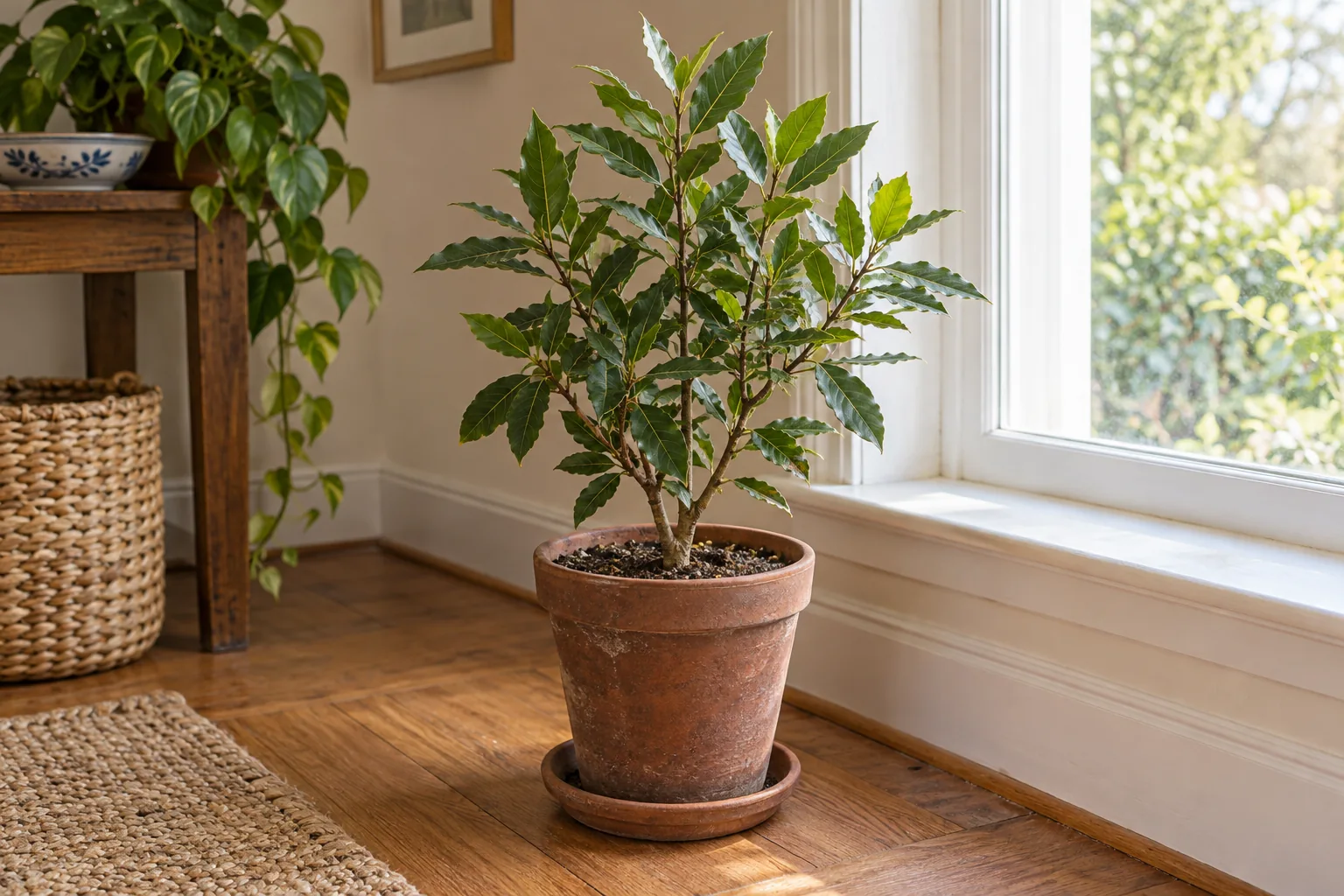
Bay laurel can be a long-term container herb, but buying the plant is only half the plan. In a cold climate, decide where its pot will spend winter before bringing one home. A cool protected room and a warm living room call for different care; neither makes an ordinary outdoor pot safe from freezing.
Buy the culinary plant with its label
Choose a nursery plant labeled Laurus nobilis, intended for culinary use. North Carolina Extension identifies this species as bay laurel, a slow-growing evergreen tree or shrub that can be grown in a container. A common name such as “bay” or “laurel” is not enough to identify an unfamiliar plant for eating. Keep the nursery label; the illustration above is not an identification key.
Illinois Extension recommends starting with an established plant because bay can be slow and difficult to propagate. For a small patio, select a healthy plant you can lift and accommodate indoors. Check the stems, both leaf surfaces and the underside of the nursery pot before purchase. Do not choose a large specimen without measuring the winter space and the route through the doorway.
Set up a pot you can water and move
Match the pot to the existing root ball and the plant’s growth, rather than buying a large decorative container on looks alone. Use the repotting checks if the nursery pot is crowded. Leave access to the mix so you can check moisture; a solid carpet of companion plants makes that harder.
Illinois’s container-herb guidance calls for drainage holes and loose potting mix. Water thoroughly when needed so excess can escape, and empty the saucer. If using an outer decorative pot, lift out the nursery pot to water and drain it. Read the fertilizer information on the mix before adding a separate product; avoid stacking a feeding routine on top of an existing fertilizer charge.
During active outdoor growth, Illinois recommends sun and watering when the mix begins to dry, without keeping it constantly wet. Check the pot itself, not a repeating calendar reminder. The container-watering guide explains how pot weight, moisture below the surface and drainage work together. Bay should not be left until its entire root ball has dried out.
Choose the winter location before frost
In cold regions, bring the pot into a suitable protected space before frost. Follow the indoor transition checklist to inspect and acclimate it. A plant hardiness label for an outdoor landscape tree does not certify that an exposed container will survive the same winter.
Wisconsin Extension distinguishes two indoor winter conditions. Its cool-room range is 35–60°F: growth rests, light demand is lower, and watering is very limited, just enough to keep the mix barely moist. In a warmer room, bay needs as much sun as possible and regular moisture checks. The following table turns that distinction into a location decision.
| Available space | Care decision |
|---|---|
| Cool room consistently above freezing | Measure its actual temperature, including cold nights. Maintain barely moist mix; do not copy the summer watering frequency. |
| Warm room with a bright window | Give the plant the brightest suitable position and check moisture regularly. An indoor move does not remove its need for water. |
| Unheated shed or garage with unknown lows | Check with a minimum thermometer before treating it as frost protection. Choose another location if it freezes. |
| Dark, warm corner chosen for decoration | Reconsider the location before buying the plant; the light and temperature plan should work together. |
Pick modestly and inspect before using leaves
Take a few healthy leaves from an established, growing plant rather than stripping a new purchase. North Carolina lists the leaves for fresh or dried culinary use but notes problems from ingestion of whole leaves. Use bay to flavor food and remove whole leaves before serving. Do not use unknown “laurel” foliage as a substitute.
Keep harvest expectations small when winter growth slows. Inspect woody stems and leaves for scale, a pest Wisconsin highlights particularly indoors. Bumps deserve identification before treatment; choose only products labeled for the exact edible plant and use. Photograph a suspicious area and ask local extension for help if identification is uncertain.
Keep a short seasonal record
- Record the botanical name, purchase date and current pot size.
- Write down the winter location and measured coldest temperature.
- Note watering checks after the move; compare the pot’s drying pattern with summer.
- Record small pickings and any pest observations.
- In spring, plan a gradual return to outdoor conditions using the acclimation principles.
A few lines in a garden journal make the next seasonal move easier. They also separate a change you observed—such as slower drying indoors—from an assumption that the plant needs more fertilizer.
Your next steps
0 of 5 steps checked · Saved on this device
Sources & further reading
Extension resources support the growing principles in this guide. Planning examples apply them to small container gardens. Local conditions and variety instructions take priority.
- Illinois Extension: bay laurel
- Wisconsin Extension: sweet bay and winter conditions
- North Carolina Extension: Laurus nobilis
- Illinois Extension: container-herb care
Prepared with AI assistance; this is research-based guidance, not a personal growing trial. Editorial policy · Suggest a correction