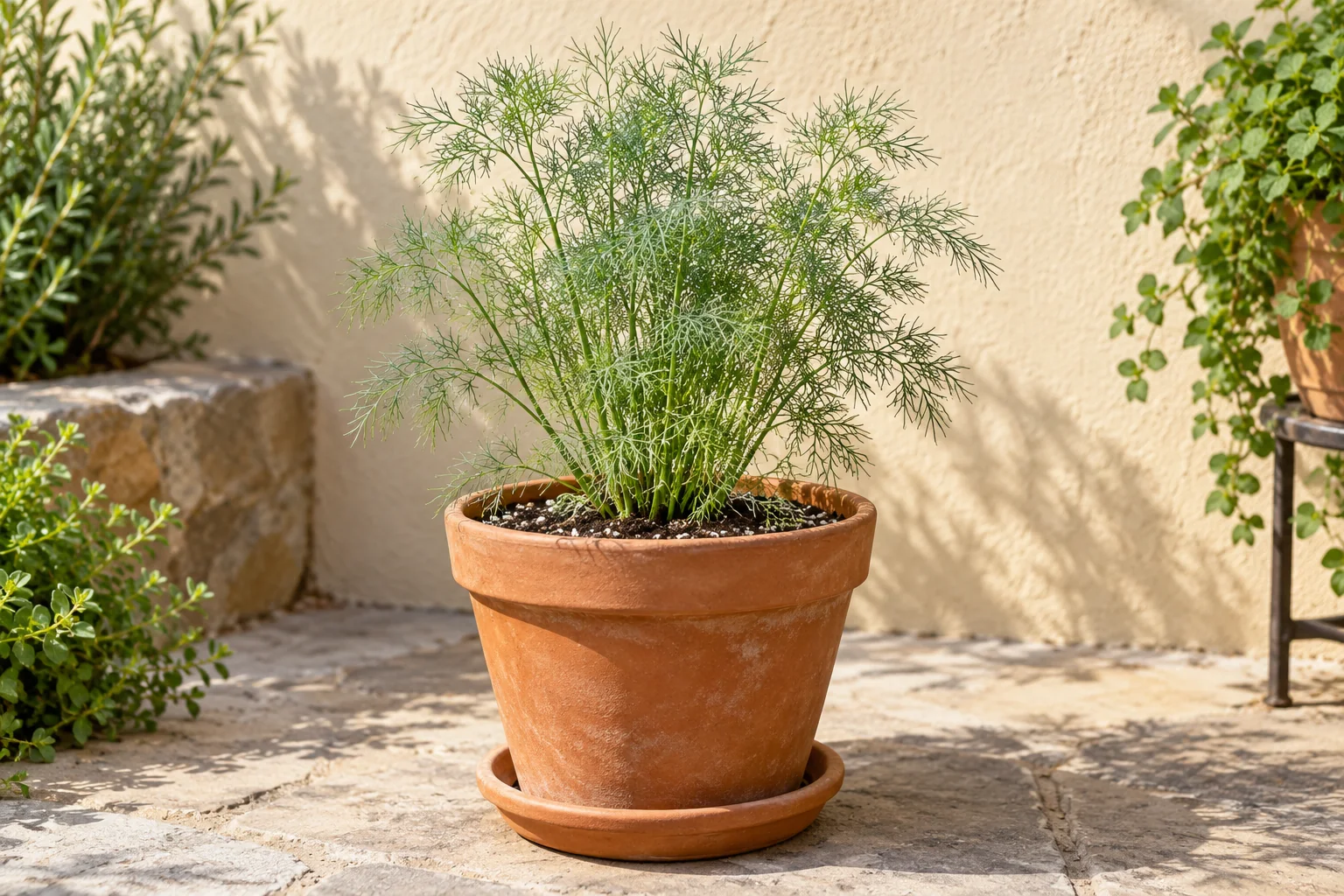
A pot of dill can supply a few fresh fronds without taking over a vegetable bed. The useful first decision is what you want to pick: tender leaves, flowers or mature seeds. That choice affects the variety, the space you leave and when you let the plant flower. Start with a small sowing and a realistic place for the mature plant.
Choose dill for the harvest you want
Iowa State Extension lists Fernleaf as a compact dill suited to containers, reaching about 18 inches and flowering later than some alternatives. Its guidance also distinguishes Bouquet, useful for seed production and cut flowers, from selections grown mainly for foliage. These are variety descriptions, not a promise that every plant will reach a precise size in your pot. Save the packet and compare its mature height and intended harvest before buying.
| Your main use | A practical starting choice |
|---|---|
| A few leaves for meals | Choose a compact or late-flowering selection and plan light, frequent picking. |
| Flower or seed heads | Allow room for the stated mature height and support if needed; leave the flowering stems intact. |
| Both leaves and seeds | Give separate plants different jobs rather than stripping the plant intended for seed. |
| A very small indoor shelf | Check mature height and available light first. A low shelf may suit another herb better. |
Maryland Extension describes dill as an annual that may grow two to three feet tall and readily self-seed. A compact packet is therefore useful information, not just a marketing name. Do not treat dill like a woody perennial you can keep trimming indefinitely. If seed heads are unwanted, manage them before ripe seed drops into nearby pots.
Sow where the plant will grow
Minnesota Extension recommends direct sowing because dill does not transplant easily. For a container project, sow in the final pot instead of planning several moves from tiny cells. Its general sowing guidance is about one-quarter inch deep, with seedlings eventually thinned to 10–12 inches apart. Follow the variety packet if it gives different, crop-specific directions. A dense nursery-style tuft is not a spacing diagram for full-size plants.
Choose a fairly deep pot with drainage holes. Measure the usable width and depth inside it, and check the selected variety’s space needs; a broad rim can hide a narrow bottom. Wisconsin Extension recommends commercial potting mix for container vegetables. Use that kind of mix rather than digging soil from a garden bed, and keep the drainage openings working. Leave room at the top to water without washing seed over the rim.
For a first attempt, label one pot with the variety and sowing date. As seedlings develop, keep only the number that can fit the intended spacing. If you want a later batch, label a second pot separately. This makes it possible to compare actual emergence and useful picking dates instead of assuming two sowings will behave alike.
Match light and timing to your location
Minnesota recommends six to eight hours of direct sun outdoors and a location sheltered from strong wind. Tall hollow stems may need support. Use a sunlight record to assess the spot, particularly as autumn shadows lengthen. Keep the mix relatively moist while plants establish, checking it rather than watering on a fixed calendar. Do not let a saucer become permanent standing water.
The Minnesota and Maryland spring advice begins after frost danger has passed. Those regional instructions do not make October a suitable outdoor sowing date everywhere. In a cold climate, decide whether there is a workable indoor light setup or wait for the next outdoor season. In a mild region, check your local extension planting calendar. The fall planning guide helps separate a crop’s growing time from the weather available.
Dill can grow indoors with sufficient light, but a window that looks bright to people may still produce weak growth. Check the plant’s response and the clearance above the pot before committing more seed. Keep the project small until you know that location can support it. A kitchen windowsill is a location to assess, not a guarantee of fresh dill all winter.
Pick leaves while keeping the next harvest in mind
For foliage, take modest amounts from a plant with enough leafy growth to spare. Iowa State advises removing flower stalks when leaf production is the goal, or letting them develop when flowers and seeds are wanted. Minnesota recommends using freshly cut dill promptly. Avoid taking most of a small plant for one meal and then expecting an immediate replacement harvest.
If a recipe needs preserved dill, use the separate guides to freeze small herb portions or dry spare herbs. Growing dill is not a canning procedure; use a tested preservation recipe for pickles. Record the first useful picking and the first flower in your pot journal. Those observations will tell you more about the next sowing than a generic harvest countdown.
Your next steps
0 of 5 steps checked · Saved on this device
Sources & further reading
Extension resources support the growing principles in this guide. Planning examples apply them to small container gardens. Local conditions and variety instructions take priority.
- Iowa State Extension: dill varieties and harvest choices
- Minnesota Extension: sowing and growing dill
- Maryland Extension: dill growth and annual habit
- Wisconsin Extension: growing media for containers
Prepared with AI assistance; this is research-based guidance, not a personal growing trial. Editorial policy · Suggest a correction