
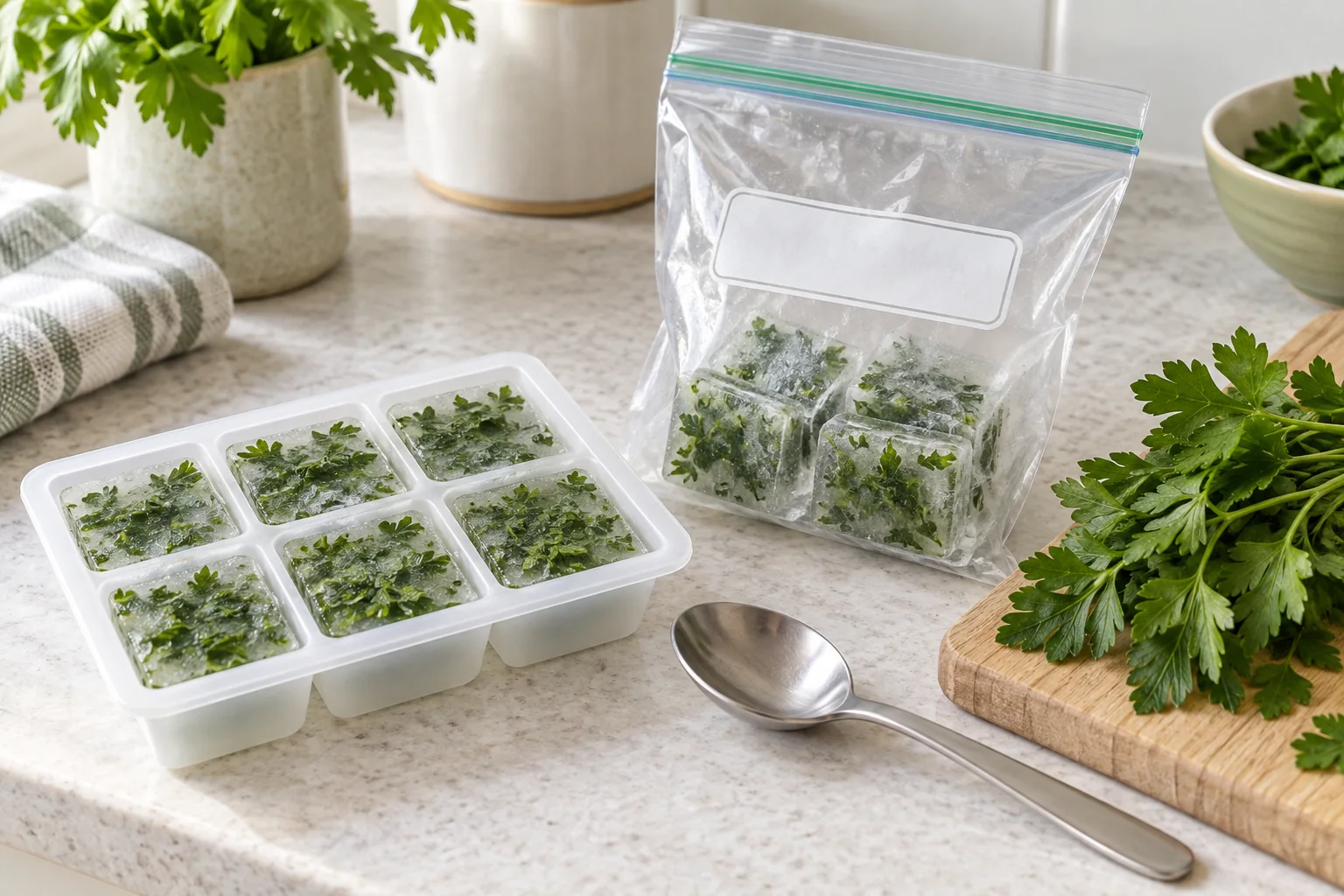
A few spoonfuls of parsley or cilantro can be worth saving even when there is no large harvest to preserve. Freezing works best when the package matches a meal you cook. Choose small portions you can recognize and use, rather than one mystery bag that becomes a solid block.
Choose the destination before choosing the package
The National Center for Home Food Preservation recommends frozen herbs for cooked dishes because thawed leaves become limp and generally do not make a fresh-looking garnish. Plan a soup, sauce or other cooked use. If the dish needs crisp leaves at serving time, keep that requirement separate from the freezer project.
| Your intended use | A practical format |
|---|---|
| You want to choose a few sprigs later | Pack small groups of washed, dried sprigs or leaves in freezer wrap inside a freezer bag. |
| The dish can accept a little extra water | Freeze measured chopped herbs in water cubes, then bag the solid cubes. |
| You need an attractive fresh garnish | Plan a fresh picking; freezing changes the texture. |
Start with one known culinary herb and a small batch. Keep different herbs separate until you know how you use them. A mixed cube makes sense only if you want that same combination later. For an October cleanup, identify which healthy plants you will keep growing and which usable leaves you will harvest; the indoor-herb guide covers the plant-care decision.
Prepare clean herbs and freeze promptly
Use sound leaves from plants positively identified as edible culinary herbs. Discard spoiled material. Wash hands and use clean preparation surfaces and utensils. NCHFP’s simple method is to wash, drain and pat herbs dry, wrap a few sprigs or leaves, then bag, seal and freeze. Work in portions small enough to take out without thawing the entire harvest.
Utah State recommends freezer storage at 0°F or below and explains that freezing does not sterilize food. It cannot rescue spoiled or improperly handled ingredients. Use a freezer thermometer, package to limit air and moisture loss, and leave space for the new packets rather than wedging a fresh batch into an overloaded compartment. These are frozen foods, not pantry preserves.
For water cubes, measure the herb before adding water
Penn State provides a two-stage water-cube method. Strip leaves from stems and chop. Half-fill a clean ice cube tray with water, put about one tablespoon of herbs in each section, and press the herbs under the water. Freeze. Once solid the next day, top up with water and freeze again. Transfer the solid cubes to a labeled freezer bag. Choose cavities large enough to hold the herbs and water without overflowing.
Measure the chopped herb itself, not the final cube. If you change the portion, write the amount on the bag. The illustration shows the general idea, not a measured tablespoon or a completed household trial. Our example uses water; it is not a recipe for storing fresh herbs in oil at room temperature.
Here is a small planning example: six tablespoons of chopped parsley divided into six equal portions gives one tablespoon per cube. A recipe calling for two tablespoons would use two of those cubes. That produces three two-cube portions before any loss. The water added to the tray is extra liquid, so choose a dish that can accommodate it. Six cubes of unknown herb content would not support the same calculation.
Label for the person cooking next month
- Write the herb name, preparation method and actual freezing date. Add any other ingredients if you used a different tested recipe.
- Record the herb amount per portion and the number packed. Use “approximately” if you estimated rather than measured.
- Add one intended cooked use, such as parsley for soup, so the batch has a destination.
- Keep the label on the bag; do not rely on identifying chopped frozen leaves by their appearance.
A sample label could read “Parsley · frozen in water · 1 tablespoon herb per cube · 6 cubes · frozen [your date] · for soup.” The date is a record of your work, not a shelf-life guarantee. Put that batch on your meal list soon and compare its usefulness before filling more trays. Small portions make it easier to learn whether this storage method suits your cooking.
Penn State suggests adding frozen herb cubes directly to cooked dishes such as soups and sauces. Remove the needed portion and return the rest to the freezer promptly. Utah State advises against counter thawing; follow safe thawing guidance if your recipe needs thawed ingredients. For future pickings, our parsley and cilantro guides explain how to keep the plants productive. Base the next freezer batch on what you actually used.
Your next steps
0 of 5 steps checked · Saved on this device
Sources & further reading
Extension resources support the growing principles in this guide. Planning examples apply them to small container gardens. Local conditions and variety instructions take priority.
- National Center for Home Food Preservation: Freezing fresh herbs
- Penn State: Herb freezing and water cubes
- Utah State: Freezer temperature, packaging and safe thawing
Prepared with AI assistance; this is research-based guidance, not a personal growing trial. Editorial policy · Suggest a correction