
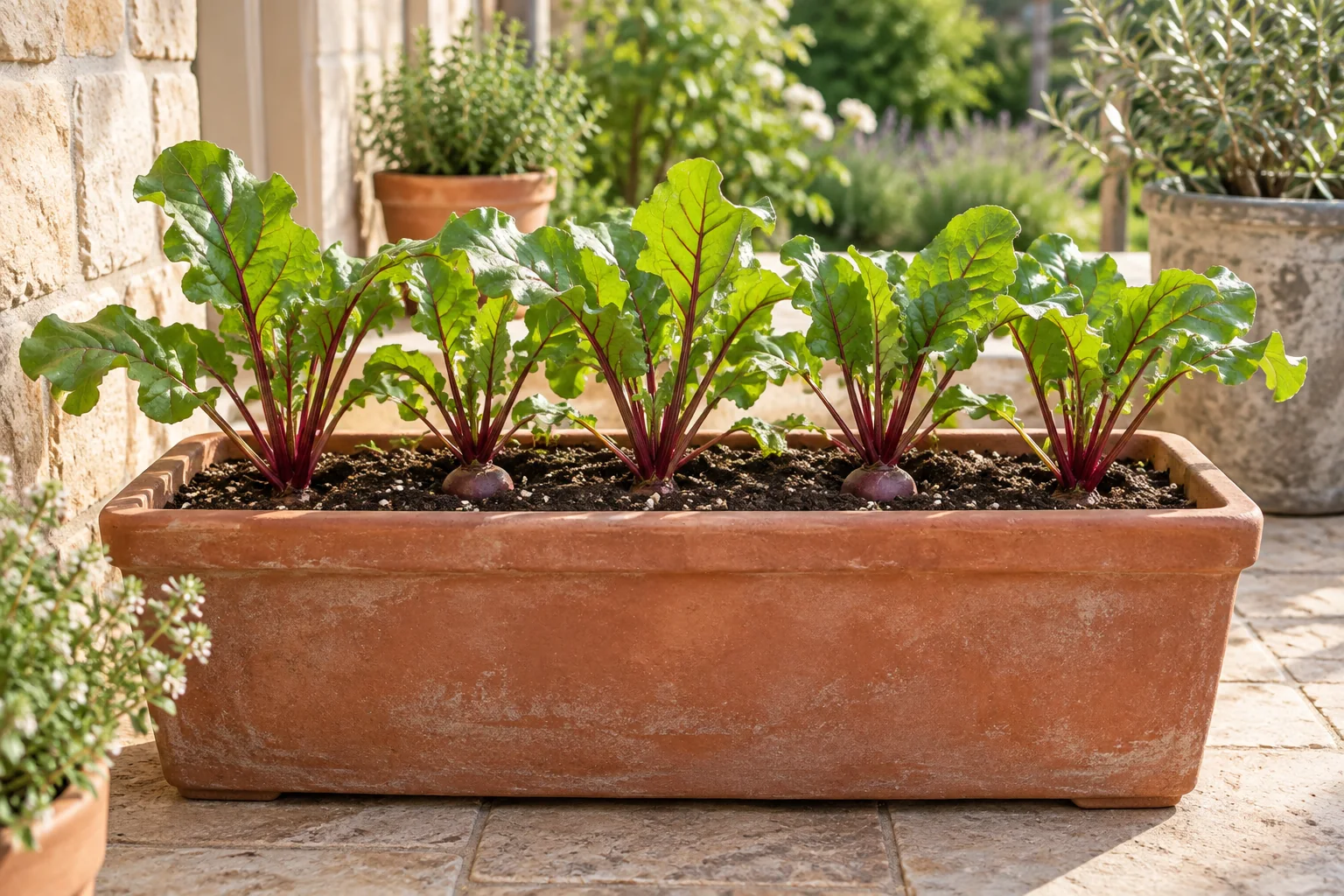
Beets can give a small-space garden both colorful roots and useful greens, but a crowded pot often produces a disappointing root harvest. The job that matters most comes early: turning a patch of seedlings into a few well-spaced plants. Plan those final positions before opening the seed packet.
Choose the season before filling the planter
Illinois Extension recommends spring and fall beet crops and warns that heat can reduce root quality. Its 50–70-day harvest range is a planning estimate for favorable conditions, not a deadline a late-autumn pot will meet. Use your variety’s packet and local Extension planting calendar together.
In much of the northern U.S., October may be too late to start outdoor beets for substantial roots. A mild-winter location can have a different planting window. If your remaining weather does not fit the crop, save the packet for the next suitable season rather than relying on a frost cover to create growing time. The fall planning guide explains that decision.
Use dimensions as well as gallons
Illinois’s container chart lists beets in a two-gallon container and names Ruby Queen as an example. That is not a promise that any two-gallon shape holds a particular number of mature beets. Check the variety’s root shape, usable depth and planting surface. A long-rooted beet needs a different depth allowance from a round one.
For a modest first project with round beets, consider a planter about 20 inches long and 8 inches wide inside, with roughly 10–12 inches of usable potting-mix depth plus watering space below the rim. This is a roomy layout example, not a researched minimum or a requirement to buy that exact planter. Maryland Extension emphasizes both depth and total volume when choosing a container. Use drainage holes and container potting mix; do not sacrifice root space to a layer of rocks.
| Layout detail | One-row example |
|---|---|
| Usable inside length | 20 inches; measure the planting area, not the outside rim. |
| Final plant centers | 2, 6, 10, 14 and 18 inches from one end, along the middle of the box. |
| Space between plants | Four inches between centers, with two inches left at each end. |
| Final count | Five plants after thinning. Five positions are a capacity plan, not a guaranteed harvest. |
The four-inch final spacing follows the upper end of the 3–4-inch range in Illinois’s root-vegetable guide. Other recommendations use closer spacing for smaller beets. Choose one target size and layout instead of averaging conflicting numbers. Use the pot-size guide if your container narrows sharply toward its base.
Expect more than one seedling from a seed cluster
A typical beet “seed” is a dried fruit containing several seeds. Some packets use singulated seed, so check the label. Direct sowing in the final planter keeps this small project straightforward: follow the packet, or use Illinois’s general guidance of about half an inch deep and one inch apart, then thin.
- Moisten the mix and mark the row. Cover the seed gently, label the variety and date, and water without washing it out.
- Keep the seed zone moist while seedlings emerge. Germination may be uneven; do not assume every clump represents one plant.
- As seedlings establish, keep one sound plant at each final position. Snip unwanted neighbors close to the mix with small scissors if pulling would disturb the one you are keeping.
- Recheck the row later for late-emerging seedlings. Do not leave twins at a position intended for one root.
Care for the roots you are keeping
Place the box where it meets the packet’s sunlight requirement, checking actual direct sun with the sunlight worksheet. Keep moisture even; Illinois links irregular watering with woody or cracked roots. Check the mix rather than copying an in-ground inches-per-week schedule. Our container watering guide covers the practical checks.
Read the potting-mix label before adding fertilizer. More nitrogen is not a shortcut to bigger beets; excessive feeding can favor tops. Use the feeding record to avoid overlapping a precharged mix with unrecorded extra applications.
Harvest for tenderness, not maximum size
Check the exposed shoulder against your variety’s target size and lift one when you are ready to cook. Illinois notes that many varieties become fibrous above about three inches across. Thinnings can provide greens; do not count a plant removed for greens as a future root in the same harvest plan.
After lifting roots, separate the tops, leaving about an inch of stem, and refrigerate roots and greens separately. Record the number and size harvested from your five positions. That observation is more useful for the next sowing than assuming a photograph represents a typical yield.
Your next steps
0 of 5 steps checked · Saved on this device
Sources & further reading
Extension resources support the growing principles in this guide. Planning examples apply them to small container gardens. Local conditions and variety instructions take priority.
- Illinois Extension: growing and harvesting beets
- Illinois Extension: cool-season root vegetables
- Illinois Extension: vegetables in containers
- Maryland Extension: container vegetable growing
Prepared with AI assistance; this is research-based guidance, not a personal growing trial. Editorial policy · Suggest a correction