
THE SHORT ANSWER
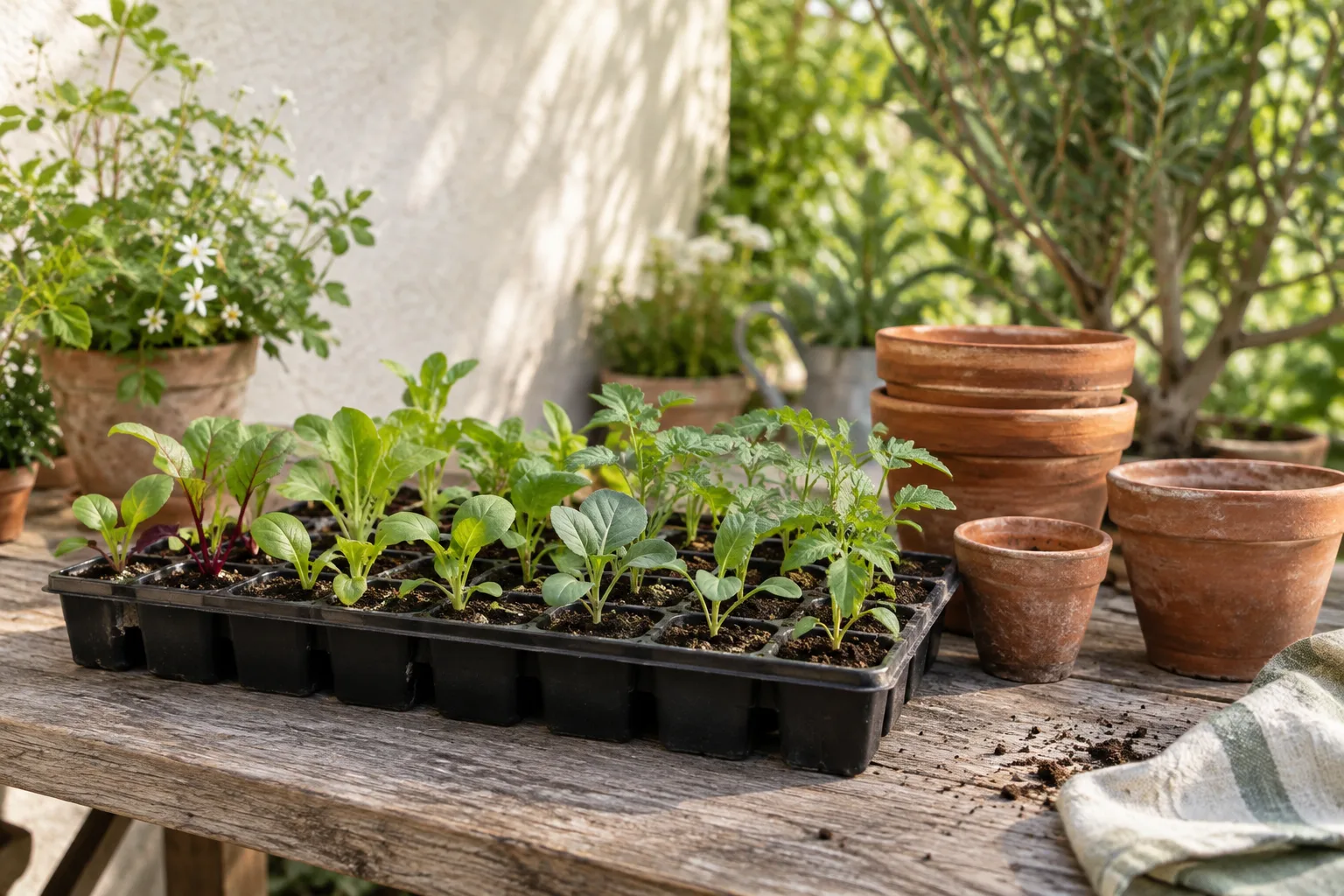
Hardening off means gradually exposing sheltered plants to outdoor conditions. Begin with a protected location and short visits, then increase exposure as the plants tolerate it and the weather allows.
Why a sudden move can cause trouble
An indoor-grown seedling has developed in a relatively protected environment. Outdoor sun, wind, and temperature swings can be a major change. A plant that looked healthy inside can scorch or wilt after a sudden full day on an exposed balcony.
Treat the move as part of the planting process rather than a separate optional chore. Even a sunny window does not perfectly reproduce the conditions beyond the glass. Plants bought from a protected indoor display may also need acclimation; ask how they were grown.
Choose a protected starting place
Start with a sheltered outdoor position and a brief period of exposure in suitable weather. Gradually extend the time and introduce stronger light as the plants respond. University of Minnesota Extension recommends gradual acclimation rather than an abrupt transition.
Your schedule should remain flexible. A calm mild day and a cold windy day are different conditions, even if both are marked “day three” on a plan. Bring tender plants back to protection when conditions demand it. Do not deliberately allow severe wilting as a way to make them tough.
Watch plants and forecasts together
Check for pale or damaged patches, persistent wilting, and drying containers. Small seedling cells can lose moisture quickly outdoors. Keep the plants secure so a gust cannot tip the tray or push it off a surface.
Make a simple daily record of hours outside and the conditions. If the plant struggles, reduce the exposure and reassess rather than pressing ahead to satisfy a rigid calendar. A record also helps you avoid repeating the same shock with the next tray.
Finish with a sensible planting day
When the plants are accustomed to the intended conditions and local temperatures suit the crop, transplant with care. Have the final containers, growing medium, and supports prepared so seedlings do not sit exposed while you search for supplies.
Continue observing after transplanting. Hardening off helps with the transition but cannot make a frost-tender vegetable frost-hardy or compensate for an unsuitable site. If weather changes sharply, use an appropriate temporary shelter or delay the move. A few extra days of preparation are often easier to manage than replacing stressed plants.
Your next steps
0 of 4 steps checked · Saved on this device
Sources & further reading
Extension resources support the growing principles in this guide. Planning examples apply them to small container gardens. Local conditions and variety instructions take priority.
- University of Minnesota Extension: Hardening and transplanting seedlings
- University of Minnesota Extension: Spring preparation
Prepared with AI assistance; this is research-based guidance, not a personal growing trial. Editorial policy · Suggest a correction