THE SHORT ANSWER
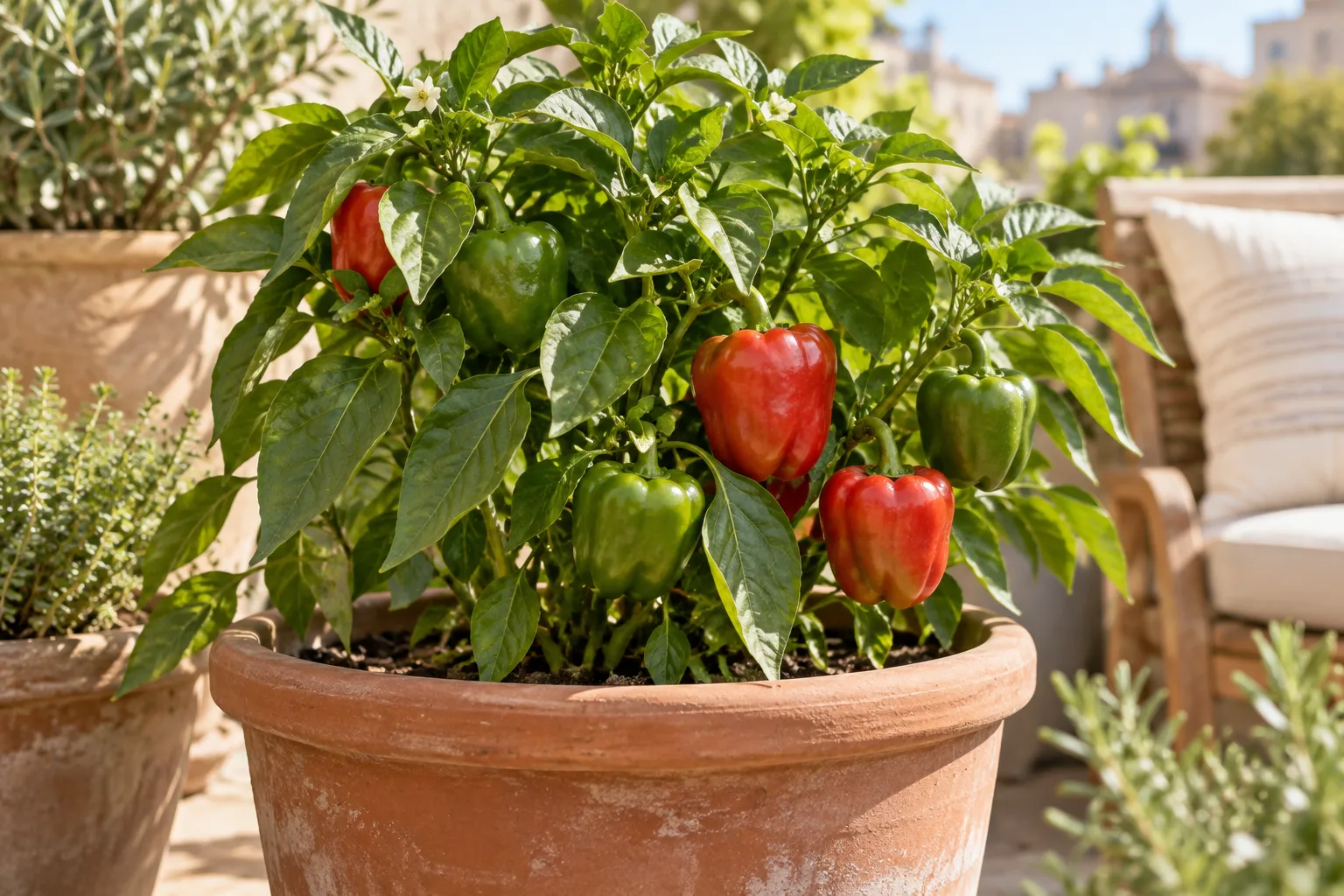
Start with one pepper plant in a container of at least 5 gallons. Give it direct sun, warm growing conditions, consistent moisture, and a small support before fruit weighs down the branches.
Choose for your kitchen, then your climate
A pepper garden becomes easier to plan when you start with a meal. Do you want crisp sweet peppers for lunches, a few jalapeños for salsa, or small frying peppers? Choose one use first, then compare the variety’s time to maturity with your remaining warm season.
For a first attempt, a healthy nursery transplant removes the long indoor seed-starting stage. Write its variety name on the pot. “Pepper” on a label is less useful than a name you can look up when the fruit begins changing color.
Build a stable home
Use a draining pot holding at least 5 gallons and place one plant in it. A compact variety is a sensible choice on a narrow patio. Insert a short stake or cage early, while roots occupy less of the container.
Before filling the pot, stand in the spot where you will water it. Can you reach the far side without leaning over a railing? Can a laden branch swing without crossing a walkway? Solve the access problem now; a productive plant will take more room than its nursery pot suggests.
Warmth and steady care
Wait for reliably warm conditions after frost danger, rather than planting by a date alone. Peppers need at least six hours of direct sun and often benefit from more. Check moisture through the season and avoid repeated drought followed by flooding. Very hot weather can interrupt fruit set.
Keep a short note of watering and flower changes. If blossoms drop during a heat spell, recording the weather gives you a better starting point than immediately adding fertilizer. Follow the fertilizer label and account for any nutrients already included in your potting mix.
Decide when to pick
A full-size green pepper and a fully colored pepper can both be useful harvests, depending on the variety. Leaving fruit to change color takes additional time on the plant. Cut fruit off carefully instead of pulling brittle branches.
Try a small kitchen comparison: harvest one usable green fruit, and let another reach its expected mature color. Note which you prefer. That observation can guide next season’s choice without needing a dozen different plants.
Your next steps
0 of 4 steps checked · Saved on this device
Sources & further reading
Extension resources support the growing principles in this guide. Planning examples apply them to small container gardens. Local conditions and variety instructions take priority.
Prepared with AI assistance; this is research-based guidance, not a personal growing trial. Editorial policy · Suggest a correction