
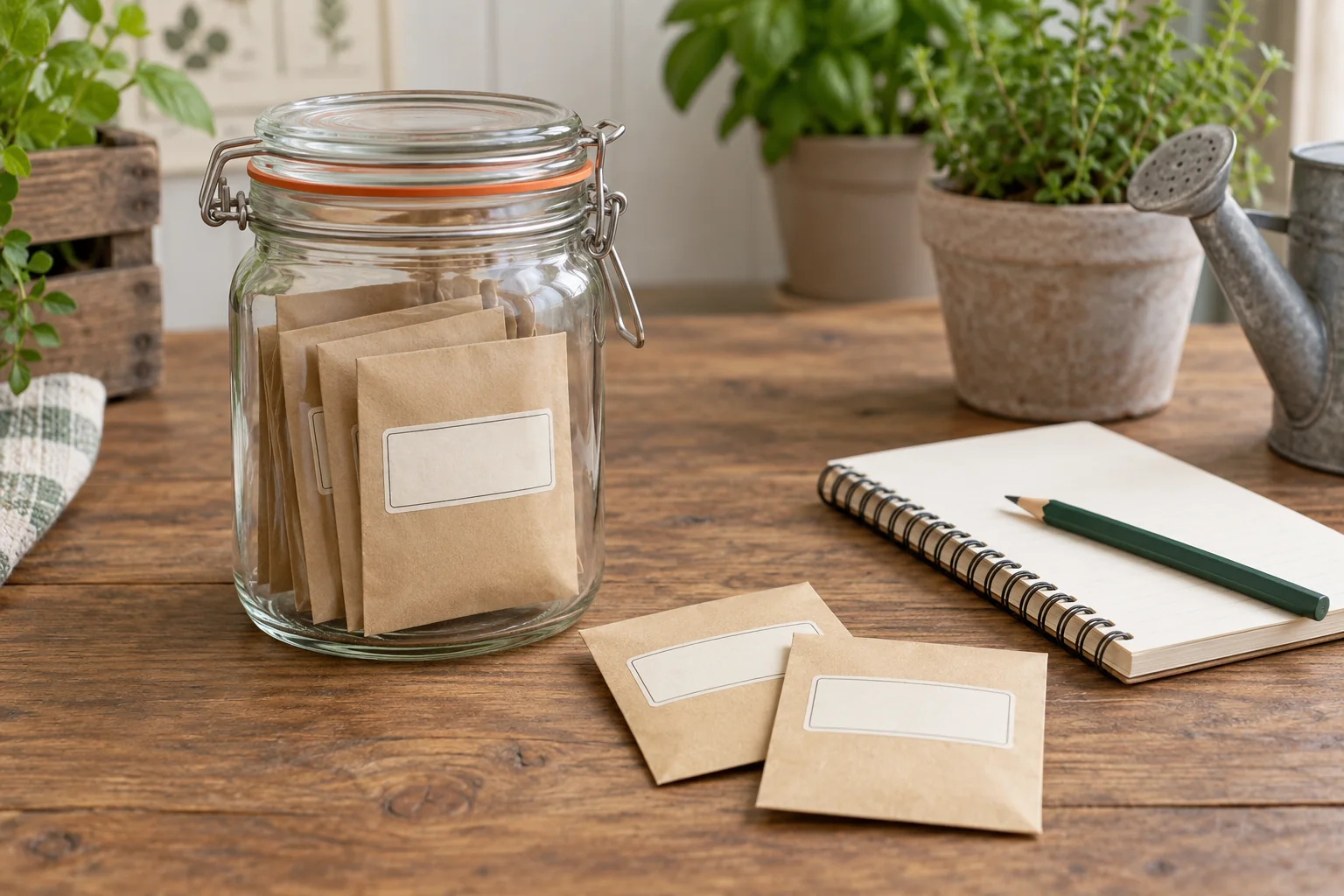
Before buying another packet, find out what is already in your seed box. A useful storage system keeps seed dry, preserves its identity and tells you when to check it again. One small, well-labeled container is easier to manage than a drawer of packets whose dates and contents have become guesses.
Sort the packets while everything is dry
This routine is for leftover dry vegetable and herb seed, especially opened commercial packets. Freshly collected seed needs crop-specific cleaning and thorough drying first; do not seal damp seed just to finish tidying the bench. Iowa State emphasizes dryness before storage and cautions against food dehydrators that can become hot enough to damage seed.
Work away from the watering area. Keep the original packet and its planting instructions, treatment warnings, variety name and lot information together. If a torn packet needs an inner envelope, copy its identity before moving the seeds. Keep different lots separate even when the variety names match; their age and storage histories may differ.
| Packet condition | Next action |
|---|---|
| Dry, clearly identified, with a known history | Keep the packet, record the remaining amount and assign a storage location. |
| Dry but old or exposed to heat | Flag it for a germination check before committing valuable growing space. Age alone does not measure viability. |
| Damp, musty or visibly moldy | Keep it out of the dry collection. Seek crop-specific advice if it is valuable; do not seal it with sound packets. |
| Unidentified loose seed | Keep it separate. Do not guess its crop or treatment status and mix it into a labeled packet. |
Choose a cool place and a moisture barrier
South Dakota State recommends cool, dry storage away from direct sunlight. A hot shed or humid garage can undo careful packet labeling. Choose a location for its actual conditions, not because it is where garden tools happen to live. In a humid climate, moisture protection deserves particular attention; a paper envelope alone does not provide an airtight outer barrier.
Minnesota Extension describes separate paper packets inside a tightly sealed glass container. Use a clean, completely dry jar with a sound closure. A seed-storage desiccant can help absorb moisture, but it is not a cure for wet seed; follow its instructions, keep it separate from seed and retain its warning label. Do not use the seed jar as a food container.
A refrigerator is an option when the seeds are dry and the outer container seals properly. South Dakota State advises letting the closed container reach room temperature before opening it so moisture does not condense on the cold seeds. Remove the packet you need, close the remaining collection promptly, and return it to its chosen storage place. A container that repeatedly develops internal condensation needs attention, not another layer of tape.
Make an inventory you can use without opening every packet
Assign each packet a simple identifier such as S01. Put the same identifier in a notebook or phone note. Record crop and variety, packet year, storage history, approximate quantity, planned use and next check. Mark an amount as “estimated” if you did not count it. Our illustration shows blank labels; your real packets need identifying information.
| Field | Example entry |
|---|---|
| Identity | S01 · bush bean · variety from the original packet |
| Quantity | 18 seeds counted before storage |
| Intended use | 12 planting positions, subject to season and germination checks |
| Inventory difference | 18 − 12 = 6 seeds beyond the planned positions |
| Next action | Check the packet and test near the intended sowing date |
Keep the inventory outside the sealed jar so shopping decisions do not require opening cold packets. A short “use first” list is more useful than trying to assign an exact expiration date to every variety. If you share seed, transfer its identity and warnings along with it.
Check before sowing, not just before storage
Iowa State’s longevity tables assume good storage and do not replace a germination test. Different crops age differently, and storage cannot restore vigor already lost. Schedule a small germination check close enough to planting to guide the decision, while leaving time to obtain replacement seed if needed.
For a northern garden packed away in October, that check may belong on the spring preparation list. For a mild-winter container garden, it may be needed much sooner. Match the reminder to your local growing window, then plan only the seedlings your finished containers can hold. Record the check date and decision so next season begins with evidence rather than a fresh guess.
Your next steps
0 of 5 steps checked · Saved on this device
Sources & further reading
Extension resources support the growing principles in this guide. Planning examples apply them to small container gardens. Local conditions and variety instructions take priority.
- South Dakota State: Leftover seed storage and condensation
- Iowa State: Storage conditions and viability limits
- Minnesota Extension: Labeled packets and sealed storage
Prepared with AI assistance; this is research-based guidance, not a personal growing trial. Editorial policy · Suggest a correction