
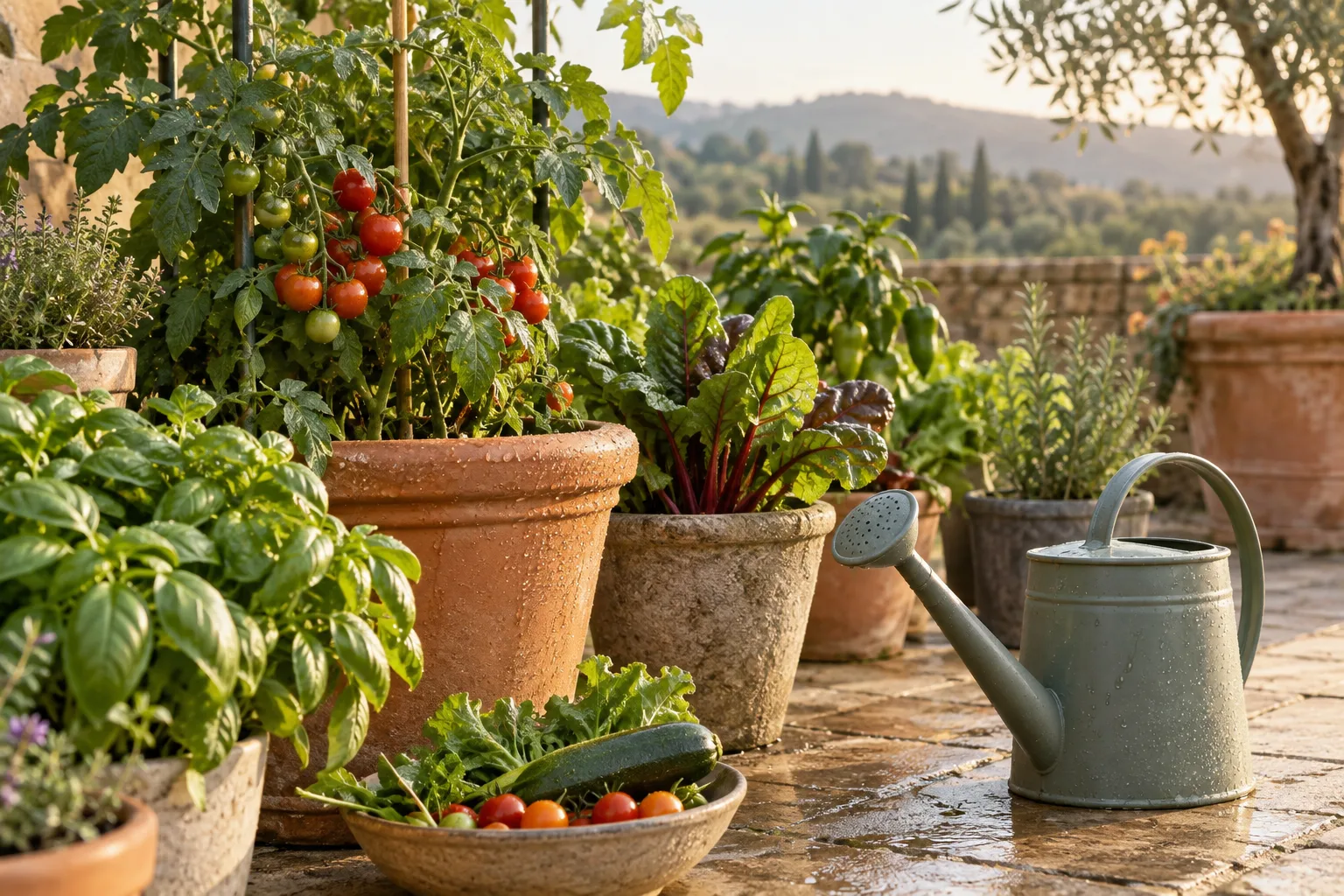
Water when the growing medium and crop need it, then wet the root zone thoroughly and let surplus water escape. A morning check is a useful habit; an automatic daily dose can miss both a soaking-wet pot and a very dry one.
Make a three-part moisture check
- Feel below the surface in an accessible spot without digging through roots. A dry crust does not establish that the whole pot is dry.
- For a small pot you can lift safely, compare its weight with its weight after a thorough watering and drainage. Use the same pot as your reference.
- Look at the plant and the weather together. Note droop, recent heat, wind, rain, and whether a balcony roof kept that rain out.
Illinois Extension recommends checking containers daily and using moisture and weight as guides. Fabric and unglazed clay tend to lose moisture faster than nonporous pots. An established vegetable and a newly planted seed tray also need different attention. Keep a germinating seed surface suitably moist instead of waiting for a deep-rooted-plant signal.
Choose the next action from what you find
| What you observe | Next check or action |
|---|---|
| Mix is drying below the surface; pot feels lighter | Water slowly across the root zone and confirm drainage. |
| Mix is moist; plant is upright | Leave it for now and check again as conditions change. |
| Plant droops but the mix is wet | Check drainage and heat exposure before adding water. |
| Water immediately runs beside a shrunken root ball | Check the center: runoff may have bypassed dry mix. |
| Mix stays saturated and water collects underneath | Empty standing water and inspect the outlet and medium. |
Drooping leaves are not a watering meter. Maryland Extension describes both drought-related and waterlogging-related wilting, as well as temporary wilting in heat. If a plant stays wilted after the immediate conditions improve, investigate roots, damage, or disease instead of repeating more water.
Water slowly enough to wet the mix
Aim at the growing medium and move the spout around the surface. Pause if water pools or runs over the rim. For an ordinary container, continue until the root zone is wetted and water exits the holes, then let it drain. A quick splash on top can leave much of the mix untouched. See Maryland’s container maintenance guidance.
When dry mix pulls away from the wall, give it several gentle passes and check whether the center is becoming moist. A small, movable pot can sometimes be rehydrated by standing it partway in water until moisture reaches the surface, then removing it to drain; the linked Maryland guide describes this method. Do not leave the pot permanently soaking or attempt to lift an unsafe load.
Empty runoff from an ordinary saucer. A purpose-built self-watering container has a separate reservoir, overflow, and filling method. Follow its instructions; topping up a saucer under an ordinary pot does not create the same system. For blocked outlets and gravel questions, use the drainage guide.
Change the inspection frequency when the pot changes
A large canopy, a heat wave, or strong drying wind can shorten the interval between waterings. A cool cloudy period may lengthen it. Check again later in the day when conditions warrant it; do not wait for tomorrow’s scheduled visit if the pot is clearly drying now. After rain, check the mix itself, especially under overhangs.
If a container repeatedly becomes very dry between visits, note how long the gap is and review pot size, placement, and your access to water. A tested irrigation arrangement may help when your schedule cannot match the garden. Our vacation watering plan covers testing and a helper’s handoff.
Keep one useful week of observations
| Record | Example to copy and adapt |
|---|---|
| Pot and crop | A — compact tomato |
| Time and weather | 8 a.m.; warm and windy |
| Moisture before action | Drying beneath surface; lighter than after watering |
| Action and result | Slow watering; runoff drained; mix wetted |
| Next observation | Check again this afternoon if drying continues |
After a week, look for repeated problems rather than trying to produce a perfect schedule. Is one container always missed by the rain? Does a helper water everything when only one pot needs it? Make one clear adjustment and keep checking. The garden planner can hold your reminders; the plants still supply the decision.
Updated September 26, 2026: Added a moisture decision table, dry-mix recovery steps, and a reusable observation record.
Your next steps
0 of 5 steps checked · Saved on this device
Sources & further reading
Extension resources support the growing principles in this guide. Planning examples apply them to small container gardens. Local conditions and variety instructions take priority.
- Illinois Extension: Watering container gardens
- Maryland Extension: Maintaining container vegetables
- Maryland Extension: Wilting of vegetable plants
Prepared with AI assistance; this is research-based guidance, not a personal growing trial. Editorial policy · Suggest a correction