THE SHORT ANSWER
A compact tomato, generous container, reliable drainage, and at least six hours of direct sun make a sensible starting setup. One plant per pot keeps a beginner’s project easier to manage.
Read the variety label carefully
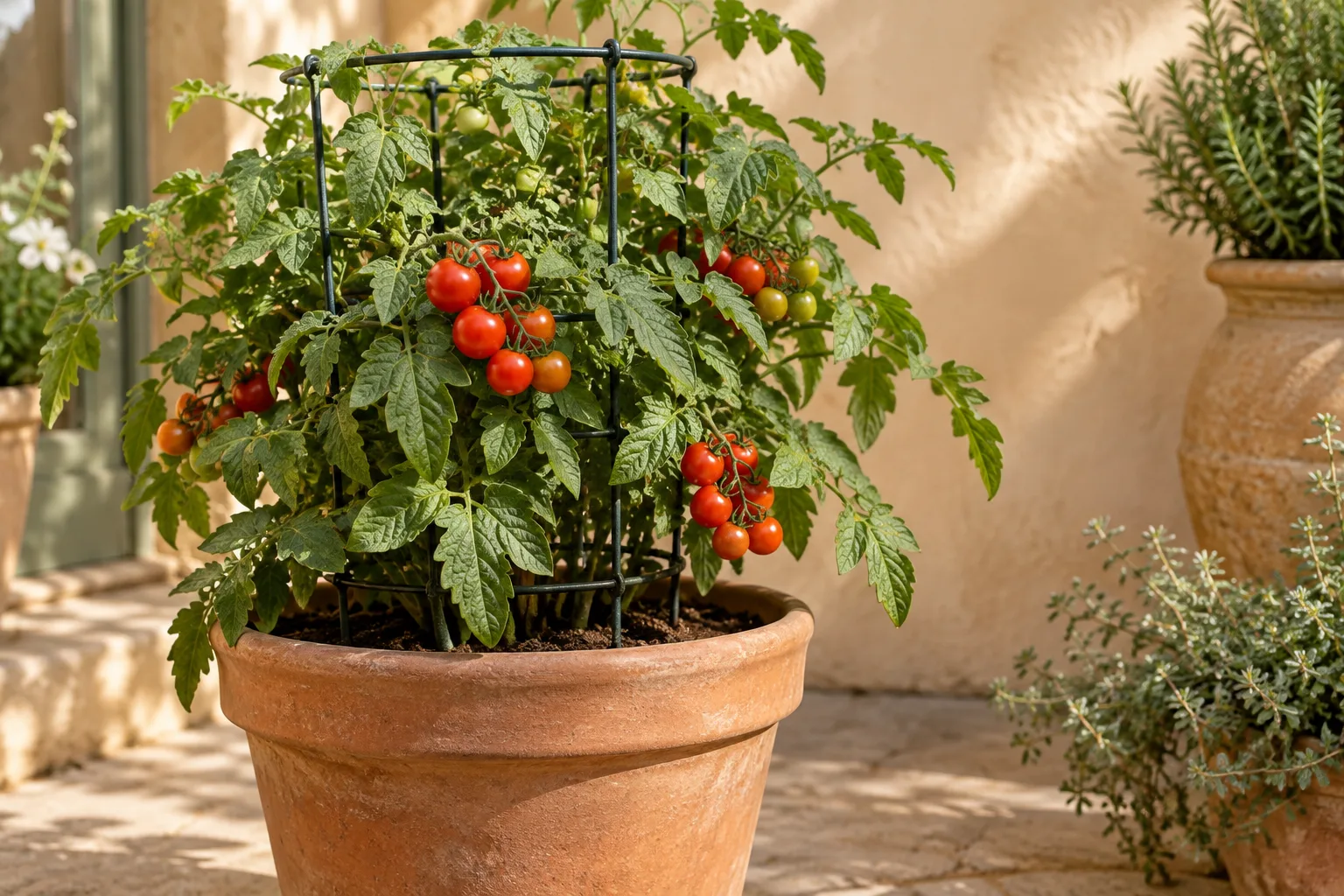
“Cherry” describes fruit size, not necessarily a small plant. Some cherry tomatoes make long, vigorous vines. Look for a dwarf or compact variety and read its expected mature size before choosing a container. Iowa State Extension notes that determinate and dwarf types can be easier to accommodate.
For a first setup, we suggest planning around a five-gallon or larger pot for a compact plant, and going larger when space and load limits permit. This is a practical starting recommendation, not a universal minimum for every tomato. A large vining variety needs a different plan.
Set the support before the plant grows
Put the empty container in its intended position and check the footprint with its cage or stake. Can you still open the door? Can you reach behind the leaves to water? Will the support remain stable in the wind?
Fill with suitable container mix and install support at planting rather than pushing a stake through an established root system later. A modest plant in a well-organized spot is easier to care for than a crowded collection. Keep ties loose enough to allow stems to thicken, and inspect them as growth continues.
Make watering an observation habit
A tomato pot can dry much faster during hot or windy weather. Check the medium instead of assuming yesterday’s watering schedule still fits. Water the root zone thoroughly when needed and let excess water leave through the drainage holes. Consistent moisture helps reduce problems associated with large wet-dry swings.
Keep a short note for a few days: weather, whether the pot needed water, and whether leaves recovered overnight. This helps distinguish a recurring dry-pot problem from one afternoon’s temporary stress. A wet pot with a wilting plant is a reason to investigate, not automatically add more water.
Feed thoughtfully and enjoy the first harvest
Read the potting-mix bag before adding fertilizer; some mixes already contain nutrients. Follow the chosen fertilizer’s directions for container vegetables. More fertilizer does not compensate for insufficient light or a container that cannot drain.
Use the variety description to recognize ripe fruit, since tomatoes are not all red when ready. Keep the harvest modest in your expectations: success can mean learning how one plant behaves, not reaching a promised number of pounds. If a problem recurs, record its pattern and consult the linked extension guidance before changing several things at once.
Your next steps
0 of 4 steps checked · Saved on this device
Sources & further reading
Extension resources support the growing principles in this guide. Planning examples apply them to small container gardens. Local conditions and variety instructions take priority.
- Iowa State University Extension: Growing tomatoes in containers
- University of Minnesota Extension: Early-season tomato sleuthing
Prepared with AI assistance; this is research-based guidance, not a personal growing trial. Editorial policy · Suggest a correction