
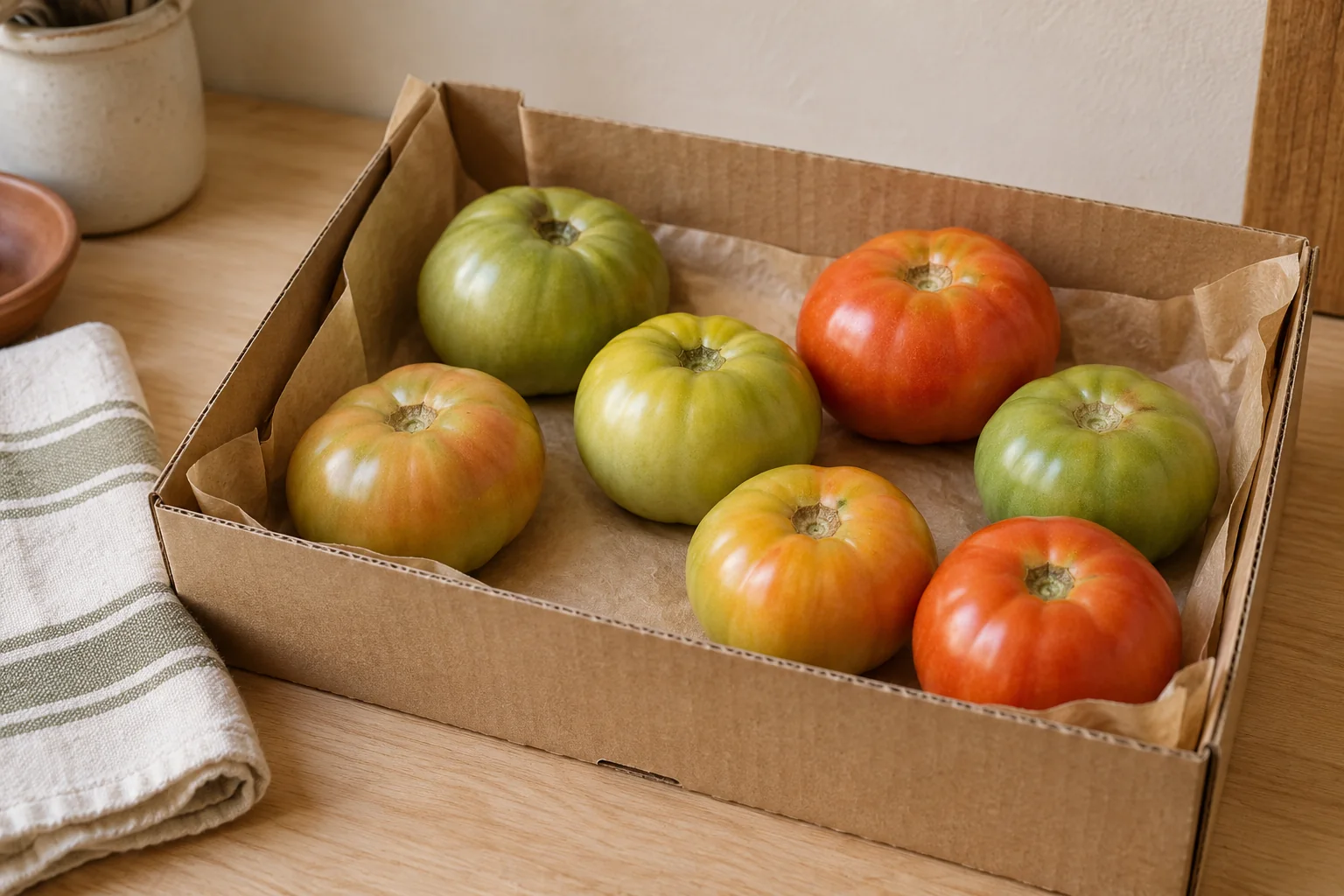
When cold weather threatens a patio tomato plant, the remaining fruit is rarely all at the same stage. Sort it before choosing indoor space. Some tomatoes have started ripening, some are mature but green, and others are too immature to make the transition reliably. A box of selected fruit is easier to inspect than an unsorted heap.
Use the forecast, then sort by maturity
In frost-prone regions, harvest suitable fruit before frost damages it. October is not a national deadline: gardeners in warm regions may still have productive plants. Use the local forecast and the container frost plan to decide when to act. This guide begins with harvested fruit; it does not replace the tomato growing guide.
Colorado State describes the first blush of color as the breaker stage. Such fruit can continue ripening off the plant. It also distinguishes shiny, mature-green fruit with a pale star near the blossom end from less mature, matte-green fruit. Size or “green” alone is not enough, and varieties have different ripe colors. Use the source’s descriptions alongside the variety you grew; our illustration is not a diagnostic color chart.
| What you have | Where it belongs in your plan |
|---|---|
| Sound fruit already changing color | Keep together as the first group to inspect for kitchen use. |
| Firm, sound fruit that fits mature-green descriptions | Give it a separate, clearly marked ripening group. Do not promise a date or identical summer flavor. |
| Small or immature green fruit | Do not count it as future ripe tomatoes in meal planning. Decide separately whether a suitable green-tomato use applies. |
| Damaged, decaying or moldy fruit | Discard it from the ripening batch; do not hide it under sound fruit. |
Set up a box you can inspect
Iowa State’s method starts with firm, defect-free mature fruit. Remove stems, clean and dry the tomatoes, wrap them individually in newspaper, and arrange them in a single layer in a box or on a table. Keep them in a dark location around 60–65°F. When color develops, unwrap them and move them to room temperature.
For a small apartment harvest, label two shallow boxes or two sections: “beginning to color” and “mature green.” Add the picking date and variety. Keep the boxes reachable, with enough room to lift and replace individual fruit. A covered storage method is useful only if you actually open it to inspect the contents. The hero image shows a sorting stage with the fruit uncovered.
If the available location varies greatly between day and night, measure it before relying on its name. A basement is not automatically cool enough or warm enough. Keep the box away from direct sunlight and heating vents rather than putting it on a hot windowsill to hurry the process.
Let temperature guide expectations
Colorado State gives a wider indoor-ripening range of 55–70°F, with warmer fruit progressing faster and cooler fruit taking longer. It notes that ripening below 50°F produces poor flavor. Its example timings are measured in weeks, not hours, and should not become a deadline for every variety or batch. A refrigerator is not the place to finish ripening green fruit.
Keep one simple record: date, storage temperature, tomatoes moved to kitchen use, and tomatoes discarded. Check frequently; Colorado State describes checking every couple of days, and Iowa State advises removing damaged or decaying fruit. If you notice condensation, shriveling or new soft spots, record the condition rather than adding another layer of fruit and forgetting it.
Make a meal plan from ripe fruit, not the box count
Suppose you bring in twelve tomatoes: four already blushing, five judged mature green, and three too immature to count on. Record the first two groups separately instead of planning twelve ripe tomatoes for a particular dinner. When two actually ripen, plan around those two. This is a fictional sorting example, not a yield claim or a prediction that all nine candidates will succeed.
For such a small batch, a pencil mark on the box may be enough. If several containers are involved, use the garden task list for inspection reminders. Finish with a note about which variety supplied usable late fruit and which storage spot stayed manageable. That record is more useful next year than an unsupported claim that one ripening trick always works.
This article covers selecting and ripening sound tomatoes for ordinary kitchen use. Canning, freezing and green-tomato recipes have separate preparation requirements; use a tested preservation recipe if that is your next step.
Your next steps
0 of 5 steps checked · Saved on this device
Sources & further reading
Extension resources support the growing principles in this guide. Planning examples apply them to small container gardens. Local conditions and variety instructions take priority.
- Iowa State: Ripening green tomatoes before frost
- Colorado State: Maturity, temperature and indoor ripening
Prepared with AI assistance; this is research-based guidance, not a personal growing trial. Editorial policy · Suggest a correction