
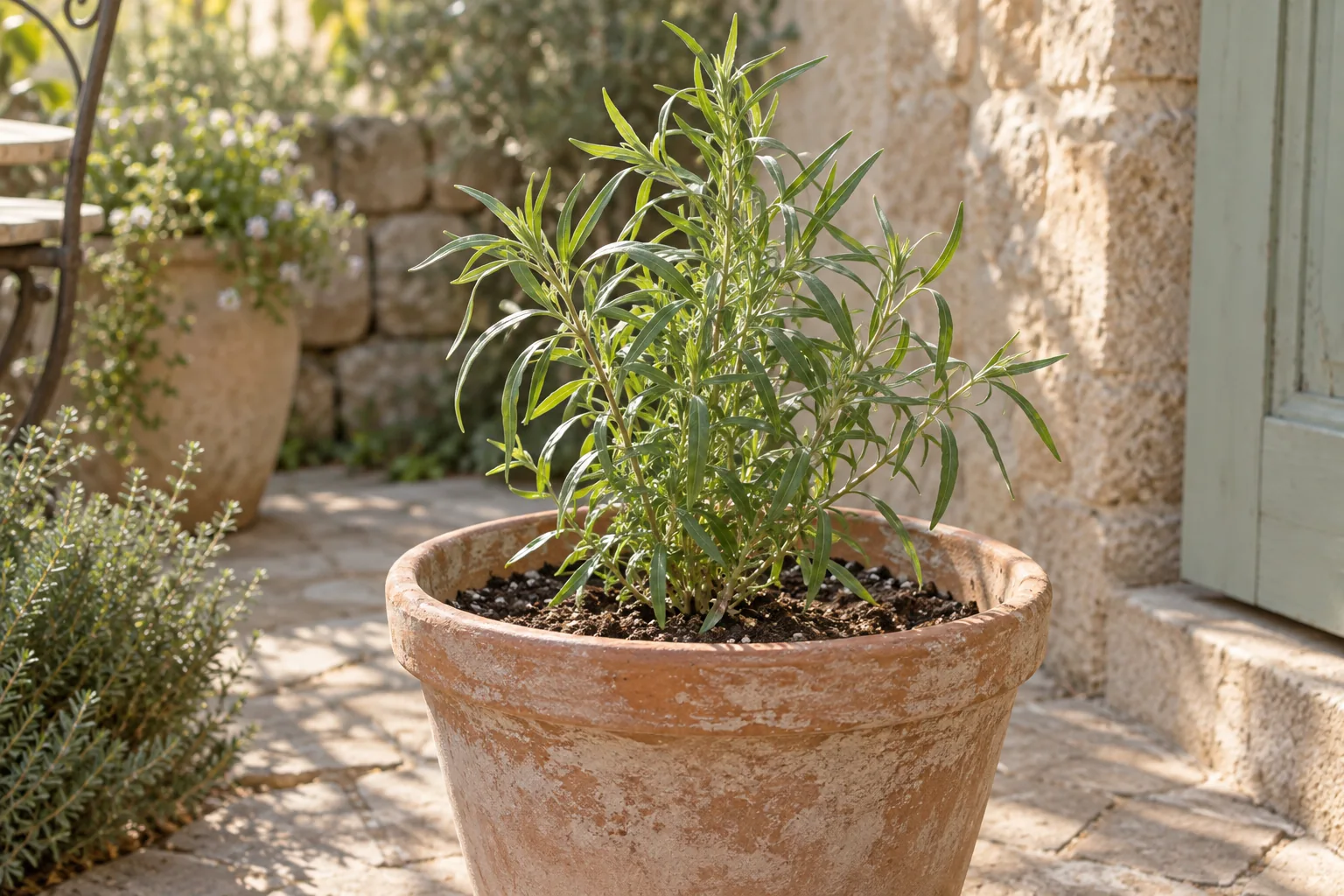
For a pot of French tarragon, start with the right plant. A packet labeled simply “tarragon” can lead to a different herb with a weaker flavor. Once you have a labeled French plant, the useful decisions are where its roots can drain, how much to harvest, and where the pot will spend winter.
Buy a plant rather than French tarragon seed
Illinois Extension explains that true French tarragon is propagated by cuttings or root division. Its flowers do not produce viable seed. Seed-grown tarragon is generally the Russian type. Ask the nursery specifically for French tarragon, Artemisia dracunculus var. sativa, and keep the label. A photograph or an anise-like scent alone cannot establish which plant you have.
This matters before you invest a growing season. If your goal is a dependable culinary French plant, replacing an uncertain seed purchase with a correctly labeled start is more useful than trying to strengthen its flavor with fertilizer. Record the supplier and plant name in your garden notes.
Give one plant a draining pot
The RHS suggests a container at least 8 inches wide and deep for tarragon, with drainage holes. Treat that as a starting size for a young plant, not a lifetime limit. An established clump may need more room. Use a well-draining prepared container mix and check that water can leave the pot freely; a decorative outer pot must not hold a pool around the roots.
Choose a sunny, sheltered position. In very hot climates, some afternoon shade can help: Utah State notes that temperatures above 90°F can make partial shade useful. Check the actual exposure at leaf height using a sunlight record. A bright wall can be a much hotter position than an open patio nearby.
Water according to establishment and drying
A newly planted start needs regular moisture while it establishes. Established French tarragon tolerates drying better than persistently wet roots. Utah State advises letting established plants dry between waterings. In a pot, inspect the mix and the plant rather than translating an in-ground weekly schedule into a fixed dose. Water thoroughly when needed, let it drain, and check again before repeating.
| What you observe | What to check next |
|---|---|
| A new plant wilts and the root ball feels dry | Water the root zone and confirm that the original nursery root ball is being wetted. |
| The pot remains wet in cool weather | Check open drainage and collected water before adding more. Review how often rain reaches the pot. |
| Roots crowd the pot and watering becomes difficult | Assess repotting or division instead of repeatedly increasing watering frequency. |
| Leaves die back after a hard frost | Consider seasonal dormancy and the condition of the roots; do not assume feeding will restart winter growth. |
Plan winter around cold and wet together
The RHS warns that French tarragon can suffer in cold, wet conditions and suggests sheltering containers. Its UK advice is not a guarantee for an exposed U.S. balcony. A spot under cover can reduce winter rain without protecting a small root ball from prolonged freezing. Ask local extension about an appropriate sheltered overwintering location for your climate before the weather turns.
Do not expect uninterrupted harvests from a dormant pot. Illinois recommends leaving the tops through winter and removing dead growth as new spring shoots appear. Keep the pot labeled so a bare winter container is not discarded accidentally. For other herbs that need an indoor move, use the indoor herb checklist; French tarragon needs its own seasonal plan.
Harvest lightly and renew an aging clump
Pick young leafy tips from an established plant as needed, leaving plenty of growth. Illinois favors fresh use because drying reduces the herb’s flavor. Harvest for the meal you are making rather than stripping a small plant to fill a storage jar. Wash harvested sprigs before kitchen use.
When an older clump needs renewal, Utah State describes division in spring as new shoots emerge. Separate healthy rooted portions carefully; its roots can be brittle. Pot and label each division, allow it to establish, and delay repeated harvesting. Keep a note of the division date so you can compare vigor over the next growing season.
Your next steps
0 of 5 steps checked · Saved on this device
Sources & further reading
Extension resources support the growing principles in this guide. Planning examples apply them to small container gardens. Local conditions and variety instructions take priority.
- Illinois Extension: French tarragon identity and harvest
- Utah State Extension: care and propagation
- RHS: tarragon containers and winter care
Prepared with AI assistance; this is research-based guidance, not a personal growing trial. Editorial policy · Suggest a correction