
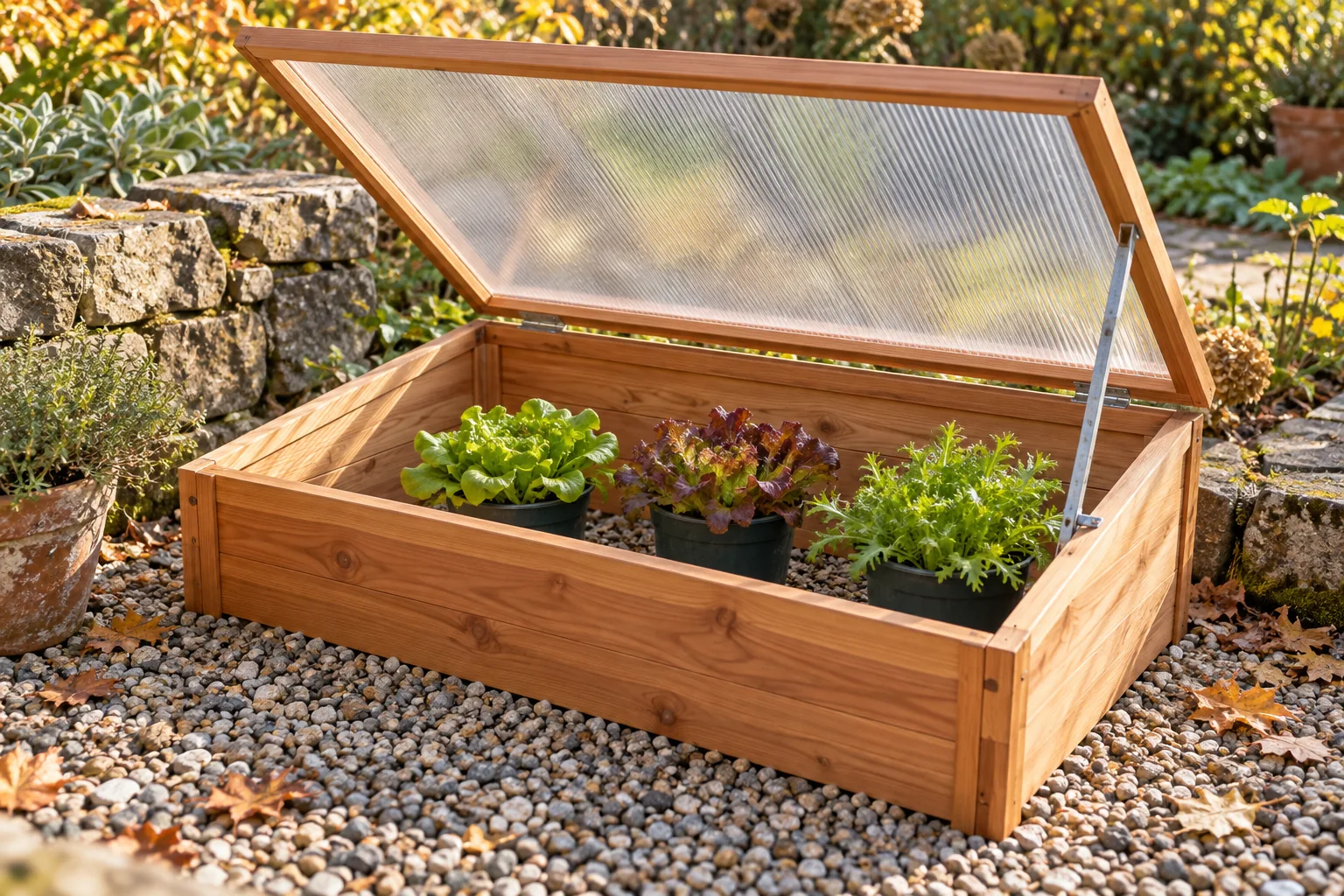
A cold frame can shelter small pots of greens through a changing season, but it needs attention when the sun comes out. The clear lid that traps useful warmth can also trap too much. Start with a few established plants and a thermometer, then learn how the frame behaves before relying on it for a valuable crop.
Understand what an unheated frame can do
University of Minnesota Extension describes a cold frame as a shallow covered structure for extending the growing season. It gains warmth from sunlight and offers protection during cooler weather. It is not a heated greenhouse. Cool-season vegetables such as lettuce and kale are more appropriate starting crops than a tender summer plant that needs sustained warmth.
The benefit varies with the structure, sun, wind and weather. Do not assume a particular temperature advantage will last all night. Protecting an established crop is also different from sowing seed late in autumn and expecting rapid growth. Use local fall timing and your crop’s requirements to decide whether there is still a worthwhile growing window.
Check the location and closed-lid clearance
Illinois Extension notes that cold frames can hold plants in pots or flats. A clear sloping lid facing the southern sky helps collect sunlight. Minnesota recommends good drainage and at least half a day of direct sun. Look at the actual site as nearby buildings and trees cast autumn shadows; a bright summer location may change substantially.
Before loading plants, close the lid over an empty pot and measure the remaining height. Add the expected foliage height, not only the nursery plant’s current size. Keep leaves clear of the cover and leave access to each container. A tall pot that nearly touches the lid is not made suitable merely because its diameter fits.
The illustration shows small pots at ground level with a vented lid. It is a visual example, not a dimensioned construction plan or evidence of winter survival. A frame on an exposed raised table should not be assumed to perform like a sheltered ground-level frame.
Vent according to the temperature inside
Missouri Extension recommends using a thermometer to guide ventilation. Measure at crop level as directed by the thermometer manufacturer, avoiding a misleading reading from a sun-heated surface. Watch the internal temperature as sunshine reaches the frame, even when the outside air still feels cool.
| When you check | What to do |
|---|---|
| Morning as sun reaches the lid | Read the internal temperature and forecast; begin venting before the crop gets too warm. |
| A sunny period or change from cloud to sun | Recheck the temperature and adjust the opening. A morning setting is not necessarily enough all day. |
| Late afternoon, as excess heat subsides | Close the frame for the cooler period when appropriate; keep watching the forecast. |
| Before leaving for several hours | Decide whether someone can check it, a tested opener will manage it, or the pots need a different arrangement. |
Missouri advises opening away from the prevailing wind and securing the cover against lifting. Use the frame’s proper support and fastenings, not a loose object likely to slip. A heavy lid must stay safely supported while you reach inside. Close it as overheating risk passes toward evening, rather than following a fixed clock time regardless of weather.
Keep automatic help within its limits
Illinois describes non-electric vent openers that respond to temperature. If you use one, follow its installation instructions and check its opening range with your own frame before trusting it unattended. Verify that leaves and pots cannot obstruct the mechanism. An opener does not water plants or add nighttime heat.
For the first several days, write down outside conditions, the internal high and low, and the lid position in a short garden log. Compare observations before adding more pots. If you cannot check a rapidly warming frame or provide reliable ventilation, do not leave plants sealed inside on a sunny day.
Water the pots and plan for the cold limit
Check each container’s mix rather than assuming enclosed plants stay watered. Missouri favors morning watering so foliage can dry before night. Water when the pots need it and let excess drain; do not turn the frame floor into a standing-water tray.
Review forecasts alongside your recorded overnight lows. If conditions will exceed what the crop and container can tolerate, move suitable pots to a safer place or harvest what is ready. The frost-night guide helps with that separate decision. There is no need to prove the frame’s limits by losing the entire planting at once.
Your next steps
0 of 5 steps checked · Saved on this device
Sources & further reading
Extension resources support the growing principles in this guide. Planning examples apply them to small container gardens. Local conditions and variety instructions take priority.
- University of Missouri: Hotbeds and cold frames
- Illinois Extension: Season extension
- University of Minnesota: Extending the growing season
Prepared with AI assistance; this is research-based guidance, not a personal growing trial. Editorial policy · Suggest a correction