
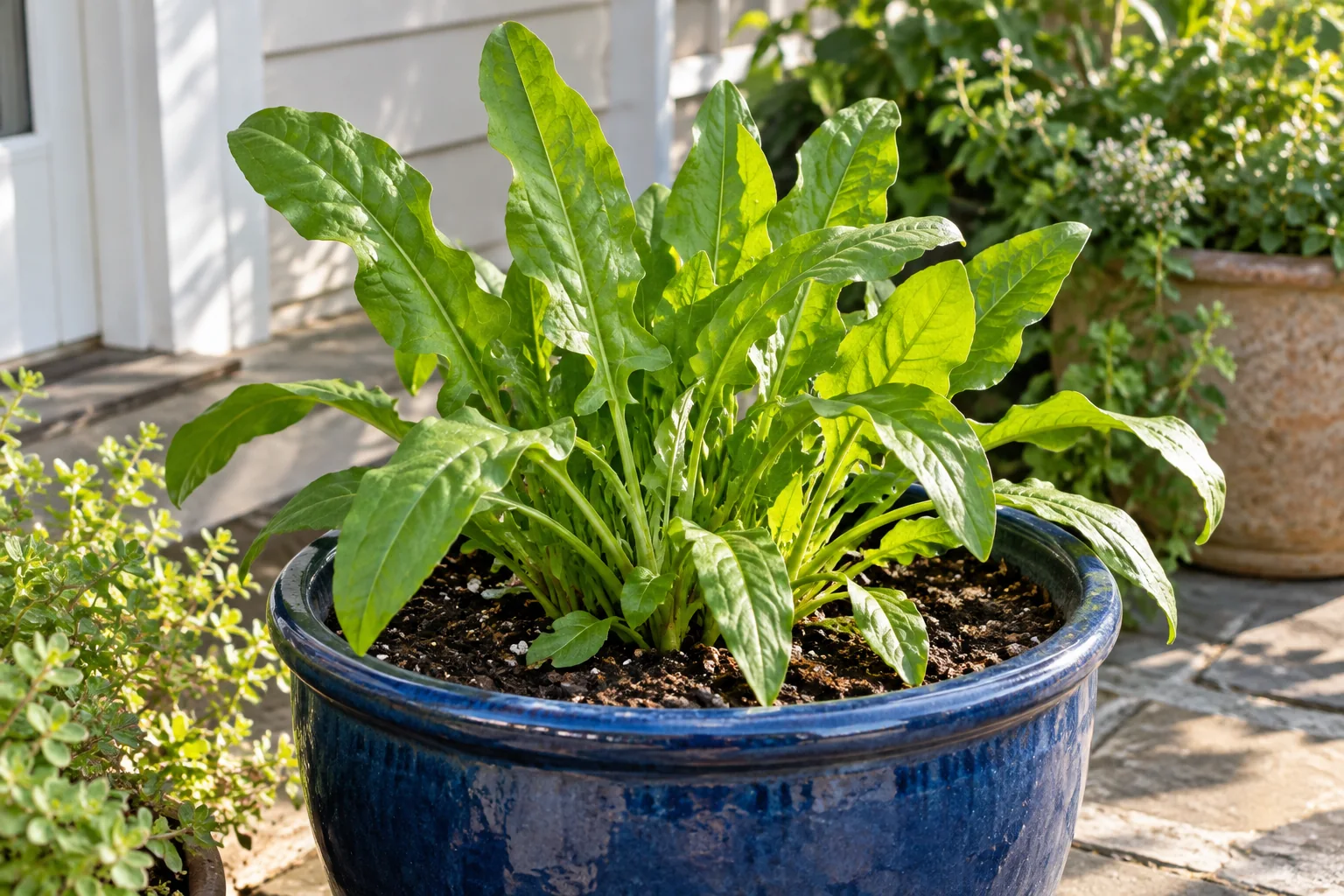
Sorrel earns a place in a small herb garden when you want a sharp, lemony leaf to add to a meal. Start with a labeled culinary plant, give it a pot that stays moist without holding standing water, and plan for seasonal growth rather than an endless winter harvest.
Choose the sorrel you actually want to eat
Look for the botanical name before buying. UC Master Gardeners of Santa Clara County distinguish common, French and red-veined sorrel. All are sold as sorrel, but their leaves and culinary appeal differ. A plant identified only by a common name or a photograph is not a reliable starting point for an edible garden.
| Plant label | Useful distinction |
|---|---|
| Common or garden sorrel — Rumex acetosa | Green, elongated leaves; a familiar culinary choice for a leafy clump. |
| French sorrel — Rumex scutatus | Smaller, more rounded or shield-shaped leaves; often preferred for culinary use. |
| Red-veined sorrel — Rumex sanguineus | Decorative red veins; leaves can be more bitter. Choose it deliberately rather than expecting the same flavor. |
Wood sorrel, usually Oxalis, is a different plant. Buy culinary sorrel from a reliable supplier rather than gathering an unknown look-alike. Keep the label in the pot and record the name in your garden journal.
Set up one manageable pot
The RHS recommends a sorrel container at least 12 inches wide and 8 inches deep. One young plant in a pot of that size is a practical starting arrangement, not a promise that a mature clump will never need more room. Choose a container with open drainage holes and a prepared, moisture-retentive potting mix.
Plant a nursery start at its existing soil level. Water it in, let surplus water escape, and empty the saucer. A decorative outer container should not become a reservoir around the roots. Place the pot where you can reach individual leaves without pushing through neighboring plants.
Keep moisture steady without keeping roots soggy
Sorrel grows in sun or partial shade. In hot weather, some shade can help keep container plants from drying too quickly. Check the mix with a finger and water when needed; do not wait for a small pot to become completely parched. The RHS specifically warns that waterlogged containers can rot in winter. Move a persistently rain-soaked pot to a sheltered position while retaining light and airflow.
Check the original nursery root ball as well as the new mix during establishment. If water runs down a gap at the pot edge, a wet saucer does not prove the roots received it. Use the container watering guide to work through uneven wetting before changing the feeding routine.
Harvest leaves, then watch the center regrow
University of Minnesota Extension recommends harvesting individual leaves from established plants. Young leaves are tenderer; cooking softens the sour flavor. Start with a few outer leaves for a meal, leaving the center and plenty of foliage. Remove flower stalks if leaf production is the goal. A newly transplanted or struggling plant needs time to establish before repeated picking.
Sorrel contains oxalic acid, as the UC guide notes. If you already follow a medically prescribed low-oxalate diet, check its suitability with your clinician before adding it. Do not treat a gardening guide as a dietary prescription.
Make a realistic spring and winter plan
Minnesota describes culinary sorrel as a perennial hardy to zone 3 in the garden and gives spring sowing guidance. That does not establish the survival temperature of an exposed pot. Roots in a small container have different protection from roots in the ground. Ask local extension about an overwintering location suited to your climate, especially on a windy balcony.
If buying late in autumn, decide where the pot will spend winter before purchasing it. For a seed start, spring is a straightforward planning point: Minnesota suggests indoor sowing about three weeks before the last frost, or direct sowing in spring. Older, crowded clumps can be divided in spring. Keep the plant labeled through dormancy instead of judging its future from a bare winter pot.
Your next steps
0 of 5 steps checked · Saved on this device
Sources & further reading
Extension resources support the growing principles in this guide. Planning examples apply them to small container gardens. Local conditions and variety instructions take priority.
Prepared with AI assistance; this is research-based guidance, not a personal growing trial. Editorial policy · Suggest a correction