
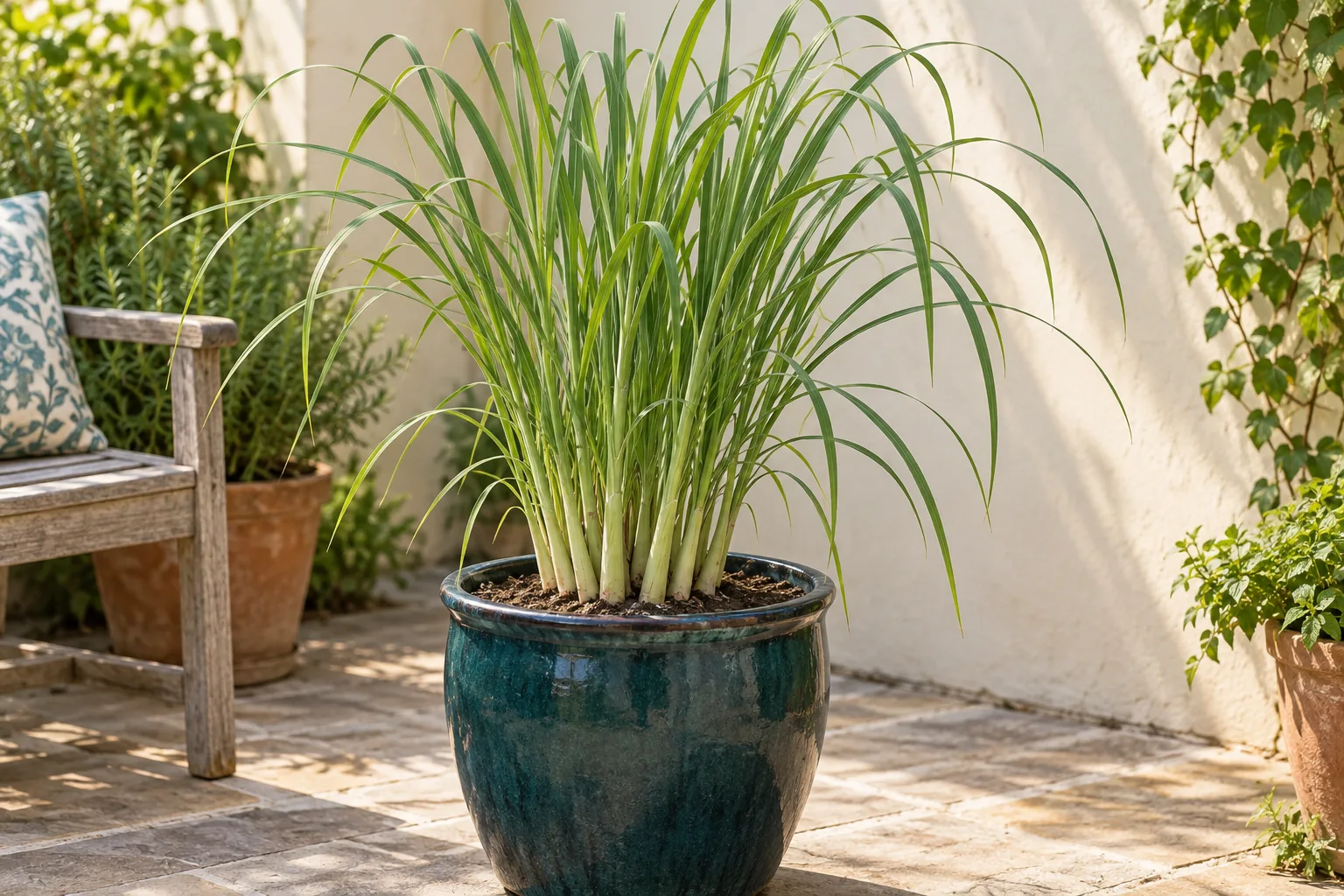
Lemongrass can turn a sunny patio corner into a small source of fragrant cooking stalks. The practical limit is often winter space: a summer clump may be much bigger than the plant you bought. Decide whether to keep the whole pot, save a rooted division, or harvest it as an annual before cold weather arrives.
Buy culinary lemongrass with a clear label
Look for Cymbopogon citratus, the culinary lemongrass described by North Carolina Extension. A lemon scent alone is not a plant identification. Other grasses sold under similar common names are not interchangeable kitchen ingredients. A labeled nursery plant gives you a straightforward starting point; keep its tag with your garden notes.
Give it full sun—North Carolina describes six or more hours of direct sun—and moist, well-drained growing conditions. This is a clumping grass with narrow, arching blades, so allow space around the pot as well as above it. Its sharp leaf edges make gloves useful during handling. Position it away from a narrow doorway where people brush past.
Match the pot to the plant you have
The Royal Horticultural Society recommends moving a young plant into a pot slightly wider and deeper than its existing one. Plant at the previous soil level in prepared container mix, water it in and use a warm, sunny, sheltered position. Check for open drainage holes before filling. Its UK term “multi-purpose compost” refers to a prepared growing medium; use container potting mix, not a pot filled with backyard compost.
There is no useful promise that one pot diameter will hold every clump indefinitely. Leave room to reach the mix and plan how you will lift the watered container. As the clump fills its pot, review root crowding and repotting signs. A larger summer container and a small winter division can be two separate decisions.
Use warmth and moisture to guide summer care
Utah State Extension notes that growth accelerates with summer heat. Move tender plants outside only after local frost danger has passed, acclimating them gradually. A cool spring patio is not the same growing environment as a warm summer one. For a measured light check, use the balcony sunlight guide.
Keep the mix moist without leaving the roots waterlogged. Inspect the pot rather than copying a weekly watering schedule. Feed during active growth with a product suitable for container-grown edible plants, accounting for fertilizer already in the mix and following its label. Utah’s calendar and fertilizer schedule reflect its growing conditions; they are not a national prescription.
Choose a winter plan before the forecast forces it
| Your situation | A workable plan |
|---|---|
| Room for the whole clump | Bring the pot into a bright, frost-free position. Check moisture after the move; slower growth can mean slower drying. |
| Room for only a small pot | Save a healthy rooted division and harvest the remaining usable stalks. Keep the division labeled. |
| No suitable indoor growing space | Treat the plant as an annual and harvest before freezing weather. Plan a fresh plant for the next warm season. |
For a small overwintering plant, Utah State describes saving a roughly 6-inch bulbous shoot base with roots attached. A leaf cutting without roots is a different starting material. Pot the rooted section and keep it warm and bright without letting it dry out. Use the indoor move checklist to inspect the plant and its container before bringing them inside.
Move before frost. The RHS offers a more cautious trigger of bringing plants indoors before local overnight temperatures fall below about 45°F. That is useful planning guidance, not a claim that every exposed pot survives down to a particular number. Indoors, check for fine speckling or webbing; Utah State flags spider mites as a possible problem. Use the mite inspection guide before choosing treatment.
Harvest individual stalks or finish the season
Wisconsin Extension describes harvesting stalks once their bases are about ½ inch thick. On an established clump, choose an outside stalk and cut it near ground level. Wear gloves and keep the cutting tool clear of neighboring stems. Leave the younger center if you want continued growth; a newly planted division needs time to establish before repeated pickings.
Trim away tough outer layers. The tender inner base can be prepared for cooking; coarse pieces used to flavor a simmering dish should be removed before serving. Do not judge tenderness from the size of the leafy top. At the season’s end, record what you kept and what you harvested in your garden journal so next year’s pot and winter-space choices reflect your own results.
Your next steps
0 of 5 steps checked · Saved on this device
Sources & further reading
Extension resources support the growing principles in this guide. Planning examples apply them to small container gardens. Local conditions and variety instructions take priority.
- North Carolina Extension: culinary lemongrass
- RHS: potting and overwintering lemongrass
- Utah State Extension: growth, division and care
- Wisconsin Extension: lemongrass harvest and use
Prepared with AI assistance; this is research-based guidance, not a personal growing trial. Editorial policy · Suggest a correction