
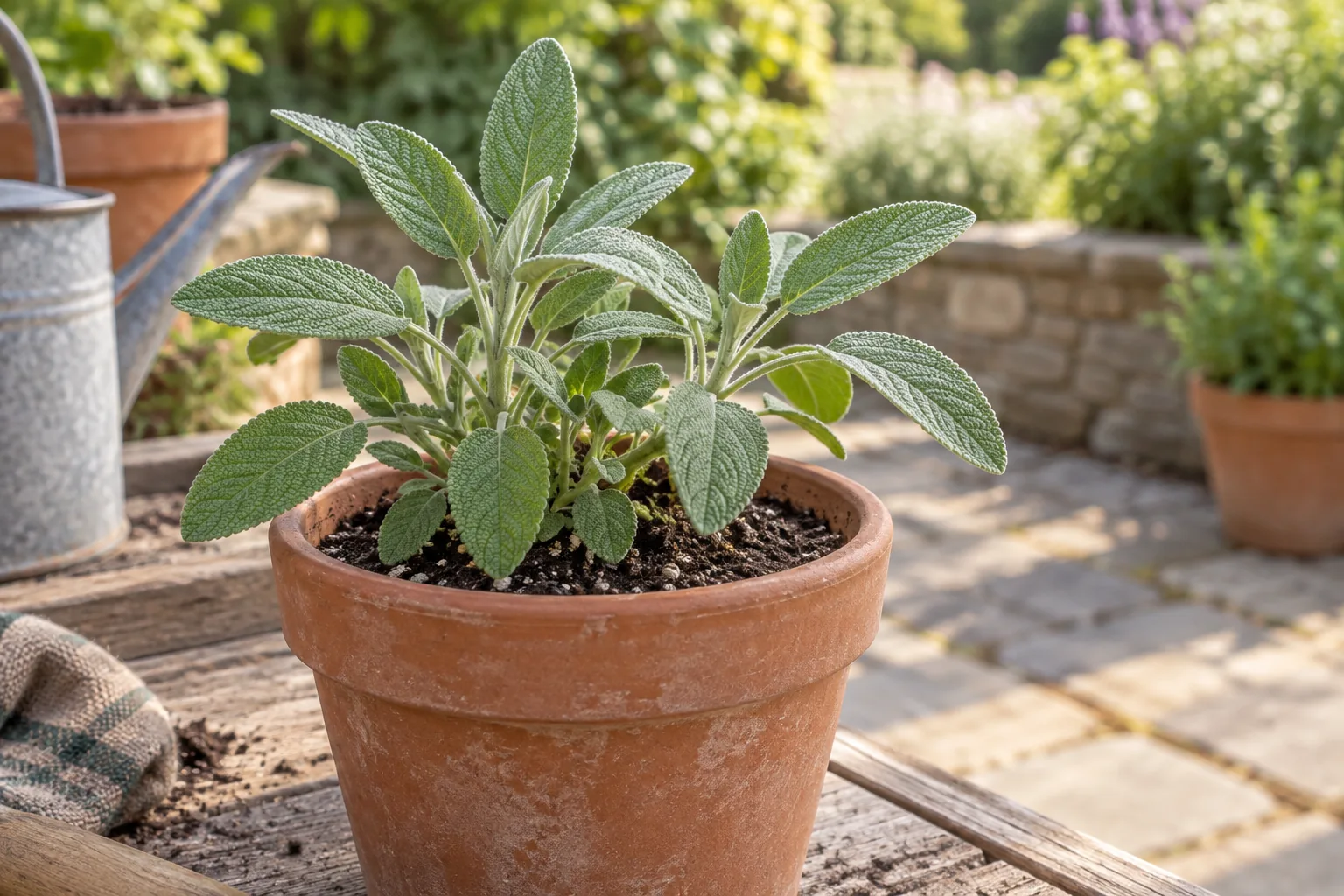
A pot of culinary sage is useful for small, occasional pickings. The plant needs time to establish, and an older woody stem is not a good place for an ambitious haircut. Choose a labeled kitchen herb, give it a sunny position with reliable drainage, and learn where the living, leafy growth begins before reaching for the scissors.
Choose culinary sage and room for its growth
Look for Salvia officinalis on the plant label. North Carolina Extension describes common sage as an edible, semi-woody perennial that prefers full sun and well-drained conditions. Do not use a generic “sage” name or the illustration above to identify an unknown plant for eating. Ask the nursery whether the exact selection is intended for culinary use; ornamental appeal does not establish good flavor.
For a small first project, buy one healthy labeled transplant. Illinois Extension favors cuttings over seed for a quicker harvestable plant and lists several selections with different foliage and hardiness. Keep that label. A mature sage can spread well beyond its nursery pot, so make room around it rather than squeezing several herbs into every open patch of mix.
Choose the container against the actual root ball and the label’s expected size. Check drainage openings, usable depth and access for watering. A tiny decorative cachepot is not a season-long growing plan. Illinois’s container-herb guidance emphasizes choosing a suitable pot with drainage and good potting mix. Use the repotting checks as growth fills the container; a rim measurement alone cannot tell you whether the roots need more room.
Make drainage and sunlight easy to check
Use loose mix made for containers and keep the drainage holes open. Illinois recommends watering container herbs until water drains out and avoiding overfertilization. Check whether the purchased mix already contains fertilizer before adding more. The aim is a healthy plant, not a feeding schedule copied from a vegetable bed.
Set the pot where you can record actual direct sun using the sunlight worksheet. Before watering, feel the mix and check whether a saucer or outer cover has trapped water. North Carolina cautions that sage does poorly in wet, poorly drained soil. A dry surface and a heavy, wet root ball deserve a closer check, especially after rain or a move indoors.
| What you notice | Useful next decision |
|---|---|
| New transplant with little fresh growth | Let it establish before planning a large picking. Check moisture and light. |
| Leafy shoots above bare, woody stems | Choose small cuts in the leafy growth; do not cut down into bare old wood. |
| Slow regrowth after a harvest | Pause picking and record light, watering and the amount removed. |
| Wet mix long after watering | Check drainage and standing water before adding more water or fertilizer. |
Harvest leaves without stripping the plant
North Carolina recommends a light first-year harvest and warns that mature woody stems seldom produce new shoots after being cut. For a new pot, take only a few usable leaves once it is growing well. For an established plant, identify leafy tips before cutting. Keep plenty of functioning foliage and avoid treating a bare stump as a renewal plan.
- Inspect the plant and select healthy leafy growth you can spare.
- Use clean, sharp scissors or pruners, following the tool-care guide.
- Take a modest amount for the meal at hand, leaving the plant visibly leafy.
- Note the picking date and wait for satisfactory regrowth before another substantial harvest.
Illinois’s general guidance limits perennial-herb harvests to the upper third. Treat that as an upper limit for established growth, not a quota to remove from a small or stressed plant. Its sage guide places pruning in spring as new growth resumes. If you have extra leaves during active growth, use the herb-drying guide rather than cutting heavily just because cold weather is approaching.
Plan winter care for the exact selection
Illinois notes that golden, purple and tricolor sage are not dependably hardy in zone 5. Even a hardy plant’s garden rating does not guarantee survival of its exposed container. Check local advice for the cultivar and the proposed winter location. In a cold region, an October purchase may be an overwintering project before it becomes a useful kitchen supply.
For a suitable plant moving indoors, arrange light and inspect for pests first. Follow the indoor-herb transition plan. Record whether growth continues and reduce picking if it slows. Your first-season record should answer a simple question: did the plant replace what you took? That is more useful for next year’s pot choice than assuming a fixed number of weekly harvests.
Your next steps
0 of 5 steps checked · Saved on this device
Sources & further reading
Extension resources support the growing principles in this guide. Planning examples apply them to small container gardens. Local conditions and variety instructions take priority.
- North Carolina Extension: common sage
- Illinois Extension: sage growth, pruning and selections
- Illinois Extension: container-herb care and harvest
- Illinois Extension: planning containers for herbs
Prepared with AI assistance; this is research-based guidance, not a personal growing trial. Editorial policy · Suggest a correction