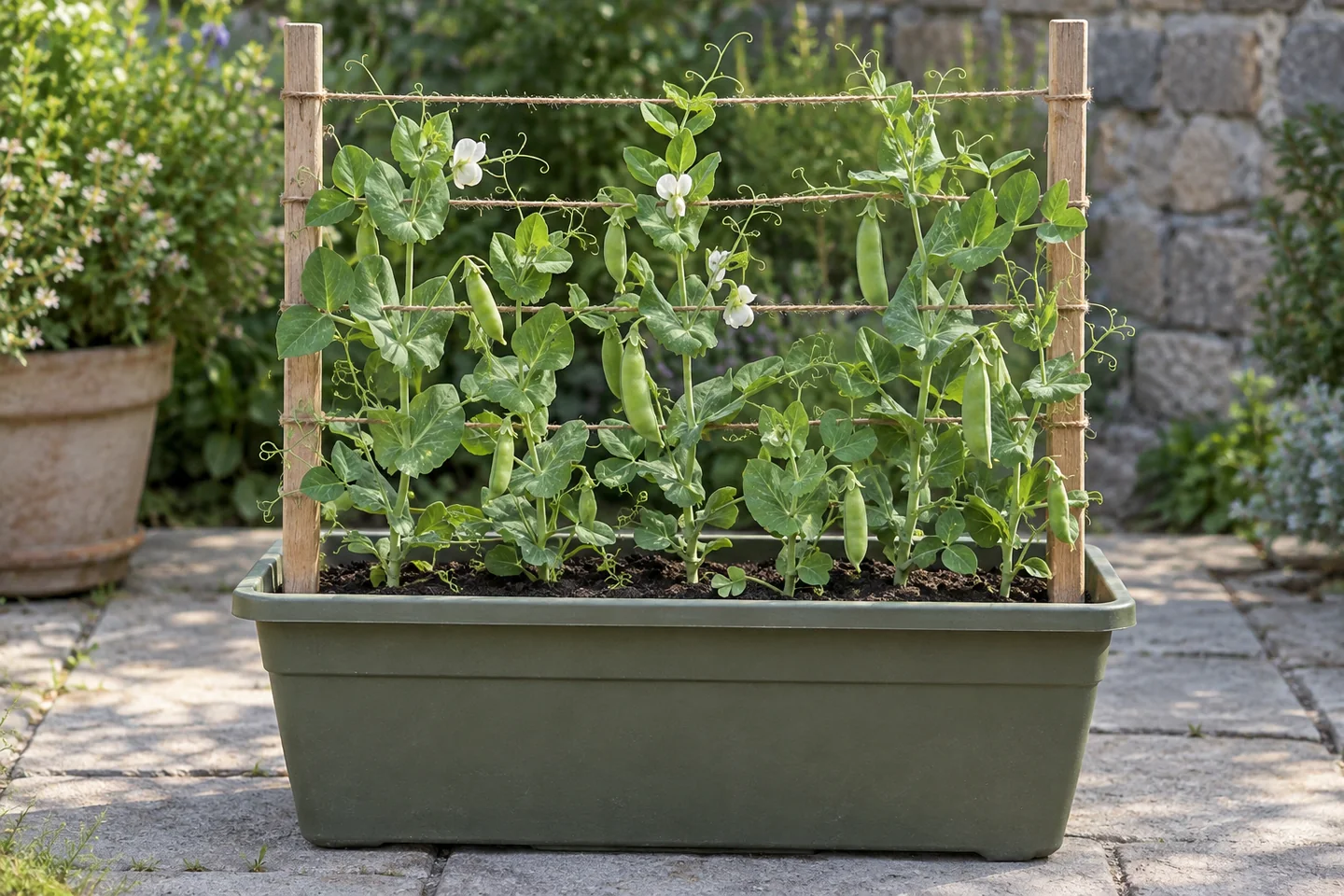
Start a pea container with the meal you want to make: flat snow-pea pods, crisp snap peas, or peas you shell. Then match the variety’s vine height to a support you can reach and stabilize. The crop needs a suitable cool season as much as it needs a place to climb.
Match the harvest cue to the pea type
Minnesota Extension distinguishes shelling peas from edible-pod snow and snap peas. Put the type on the pot label so everyone picking from it uses the same cue.
| Pea type | What to look for at harvest |
|---|---|
| Snow pea | The pod has reached its expected length but is still flat, with only small developing peas inside. Waiting for a full, rounded pod can make it tough. |
| Sugar snap pea | The pod is rounded and filling, but still tender and juicy. Check the packet’s description rather than waiting until the pod becomes dry or leathery. |
| Shelling pea | The pod is filled with developed peas. Open it and use the peas inside; the fibrous pod is not the edible part of this crop. |
Keep the packet or a clear photo of its variety description with your garden notes. Harvest size varies; a supermarket pod is not a universal ruler. Once your first pods are approaching the right stage, check them frequently and sample a known edible garden-pea pod or its shelled peas as appropriate.
Check the planting window before sowing
Minnesota lists 55–65°F as favorable growing temperatures and notes that flowers and developing pods can suffer frost damage even when young plants tolerate a light frost. A cool-weather label does not mean every part of the plant is equally cold-hardy.
Fall is particularly location-dependent. Maryland warns that fall peas often perform poorly because hot starting conditions and the arrival of killing frost can leave too little productive time. On October 1, some readers should be planning a spring crop rather than sowing now. Check your local extension planting window, variety maturity information, and remaining light; use our fall planning worksheet without treating packet days as a guaranteed countdown.
Match the pot and support to the variety
N.C. Cooperative Extension suggests long containers at least 6–8 inches deep for compact beans and peas and gives a 5-gallon window box as an option. That is a compact-crop starting point, not a universal pot for a tall pea variety. Leave drainage open and compare usable depth, total capacity, and surface spacing together.
The same container guide gives garden peas a 2–4-inch spacing range. Follow your variety’s instructions within the arrangement you choose. For example, a single row in a planter with 24 inches of usable length can have six plant centers at 4-inch spacing, starting 2 inches from each end. This is a layout example, not a sowing-rate or yield guarantee.
Maryland describes shorter pea cultivars under 3 feet and taller ones exceeding 5 feet. Buy a support for the labeled height, including the part buried or fixed below the growing surface. A 36-inch stake inserted 8 inches leaves only 28 inches above the mix; it does not provide 36 inches of climbing height.
- Choose a container and support with a stable base on a level surface. Plan the position before the filled pot becomes heavy.
- For a packet describing a 24-inch vine, a small frame providing roughly 30 inches above the mix is a practical example to assess. A taller variety needs a different plan.
- Place the frame before sowing. Give tendrils accessible twine or mesh, and follow the support maker’s installation guidance.
- Check the filled setup for wobble and wind exposure, and keep the picking side accessible. Do not assume extra stake height makes an unstable pot safe.
The example dimensions help you measure a setup; they are not an engineered wind rating or a tested cultivar-support combination. For an exposed balcony, a lower variety and sheltered ground-level position may be easier to manage than a tall screen of vines.
Care for the pot and keep a harvest record
Maryland emphasizes root-zone moisture as pods develop. Check the actual mix instead of applying an in-ground watering schedule unchanged to a container. Keep water directed toward the mix and preserve free drainage. Our watering checks and fertilizer record help make care decisions specific to the pot and products you use.
Record sowing date, first flowers, first usable pods, and the final picking date. Add the variety, support height above the mix, and whether picking was comfortable. Those observations make the next purchase more useful than assuming a pea container must produce all summer. After the crop ends, plan the next planting for its own season and growing conditions.
Updated October 1, 2026: Added harvest comparisons, regional fall cautions, and measured planting and support examples.
Your next steps
0 of 5 steps checked · Saved on this device
Sources & further reading
Extension resources support the growing principles in this guide. Planning examples apply them to small container gardens. Local conditions and variety instructions take priority.
- Minnesota Extension: Growing peas
- Maryland Extension: Growing green peas
- N.C. Cooperative Extension: Easy container vegetables
Prepared with AI assistance; this is research-based guidance, not a personal growing trial. Editorial policy · Suggest a correction