THE SHORT ANSWER
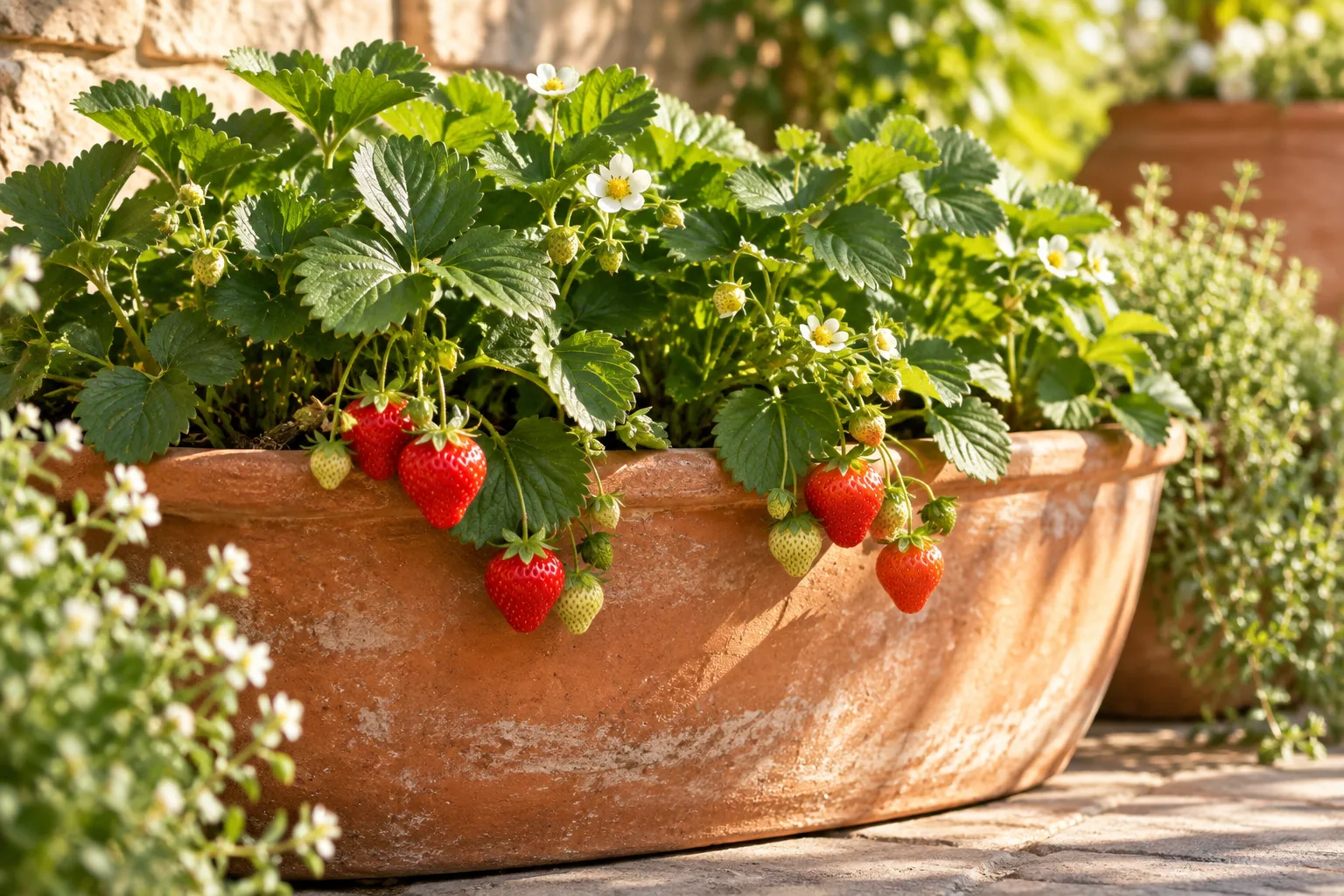
Use a sunny, draining container and healthy strawberry plants. Set each crown at the soil surface, leave room between plants, and choose a variety suited to your region and intended harvest season.
Choose the harvest pattern you want
June-bearing strawberries generally concentrate their crop, while day-neutral types can produce over a longer period when conditions are suitable. The best choice depends on your climate and expectations. Ask a local nursery for an appropriate named variety rather than choosing on the promise of constant fruit.
Write your goal first: a few berries for breakfast, a family growing project, or learning about perennial fruit. A small container fits those goals better than a promise to replace the supermarket supply.
Plant the crown carefully
The crown is the short central structure between roots and leaves. Burying it deeply can invite problems; leaving roots exposed also causes stress. Spread roots into the mix and position the crown around surface level, following the supplier’s planting instructions.
Before watering, take a side-on look at each plant. Check it again after the mix settles. This second look is a useful habit for any new container planting and can catch a plant that sank lower than you intended.
Give fruit and roots regular attention
Provide good light and consistent moisture without standing water. Crowded plants are harder to inspect and care for. Runners make new plants but also consume space; decide whether your goal is fruit or propagation and manage them accordingly.
Keep a simple harvest note rather than judging the crop by its prettiest berry. Count usable berries and record any losses to birds or slugs. If protection is needed, choose a secure, wildlife-safe arrangement that you can open easily for care and harvest.
Plan beyond the first summer
Container roots experience winter temperatures differently from roots in the ground. A variety considered hardy locally may still need container-specific winter protection. Ask your local extension service about a suitable overwintering method.
At the end of the season, decide whether to keep, divide, or replace the planting. Note the variety and what worked before labels fade. A realistic first-year result might be learning where the pot gets enough sun and how often it dries out. That information makes a second season more deliberate.
Your next steps
0 of 4 steps checked · Saved on this device
Sources & further reading
Extension resources support the growing principles in this guide. Planning examples apply them to small container gardens. Local conditions and variety instructions take priority.
Prepared with AI assistance; this is research-based guidance, not a personal growing trial. Editorial policy · Suggest a correction