THE SHORT ANSWER
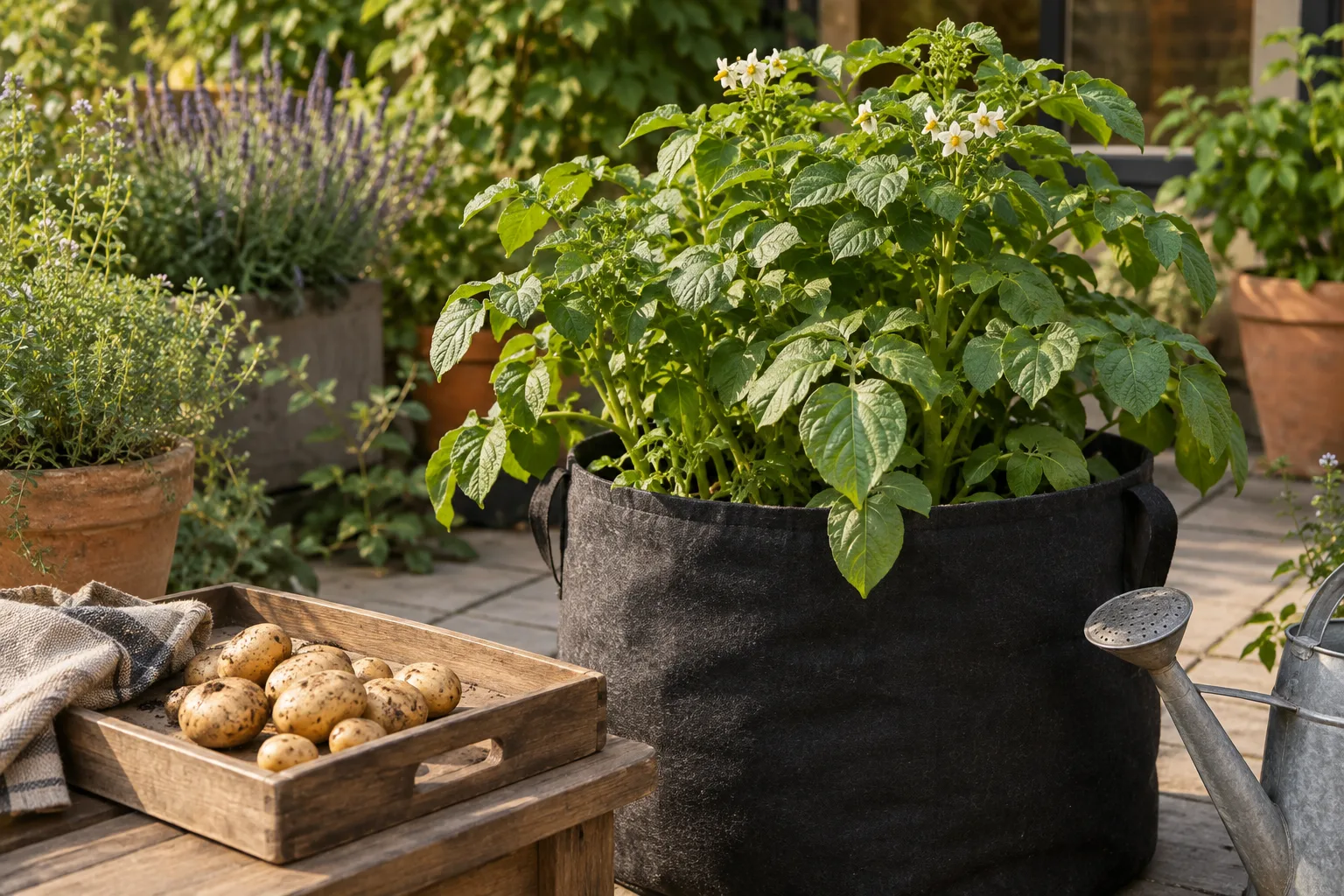
Use certified disease-free seed potatoes, a roomy draining bag, and enough growing mix to keep developing tubers covered. A grow bag is a practical experiment, not a guarantee of a huge potato harvest.
Choose seed and space thoughtfully
Buy seed potatoes intended for planting from a reputable supplier. Grocery potatoes may carry disease or be treated to discourage sprouting. Pick a variety and planting window recommended for your region.
For a beginner project, a 10–15 gallon bag gives you a useful starting scale, but follow the seed supplier’s spacing and container guidance. Decide how you will empty the bag before filling it. A tarp or shallow tray can make harvest and cleanup manageable on a small patio.
Leave room to cover developing tubers
Potatoes need a loose growing medium, drainage, and adequate sunlight. As the plant develops, maintain coverage over the tubers so they are not exposed to light. Do not expect an endlessly tall tower of mix to produce unlimited layers of potatoes.
Write the starting fill level on your project notes. Add mix carefully as needed without burying the entire growing plant. Keep a little spare mix ready so covering exposed tubers does not become a shopping emergency.
Monitor a fabric bag closely
Fabric containers can lose moisture quickly in wind and heat. Check the mix, especially as the plant gets larger. Aim for even moisture; alternating severe drying and saturation is not a useful growing strategy.
Place the bag where it will remain accessible throughout the crop. If you want to compare two varieties, use separate labeled bags with the same care. That makes your observations easier to interpret than mixing several unnamed potatoes in one container.
Harvest and judge the result
Harvest timing depends on whether you want small new potatoes or a mature crop for storage. Follow the variety’s guidance and inspect carefully to avoid cutting tubers. Keep potatoes out of light. Discard green, bitter, or badly damaged potatoes; do not eat potato foliage or the small above-ground fruits.
Record the usable harvest and the amount of mix and effort the project required. A modest crop can still be an enjoyable learning project. Use your own result to decide whether another bag deserves space next season.
Your next steps
0 of 4 steps checked · Saved on this device
Sources & further reading
Extension resources support the growing principles in this guide. Planning examples apply them to small container gardens. Local conditions and variety instructions take priority.
Prepared with AI assistance; this is research-based guidance, not a personal growing trial. Editorial policy · Suggest a correction