THE SHORT ANSWER
Choose a container-suited cucumber, a generous draining pot, and a secure trellis if the variety vines. Wait for warm conditions, monitor moisture, and check whether your variety needs insect pollination.
Read beyond the word compact
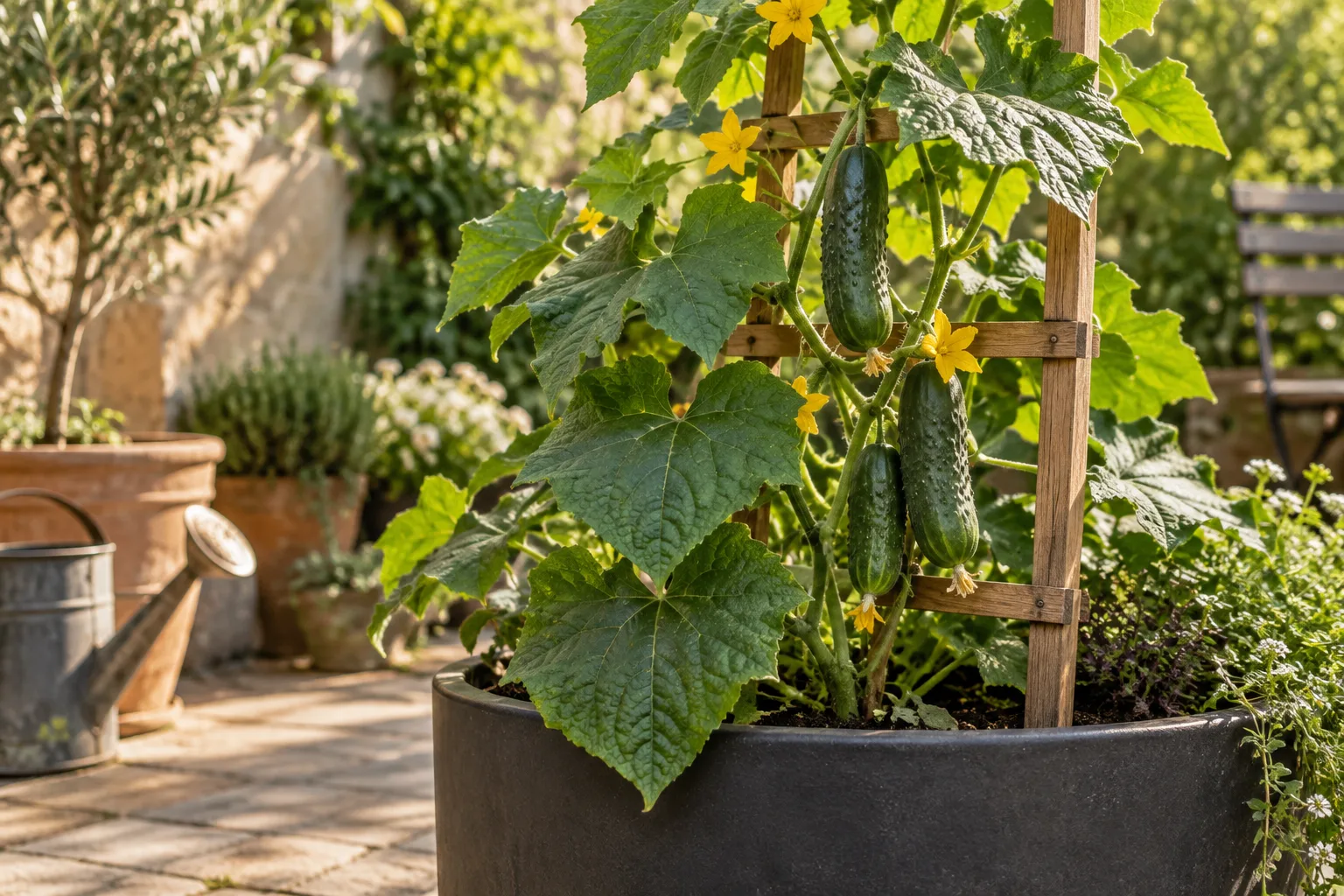
Look for mature plant size and growth habit. A bush cucumber has shorter vines, but it still needs leaf space. For a vining type, sketch the support and the path you need to reach the fruit. A trellis is useful only if you can harvest both sides safely.
For a first layout, reserve one roomy container of roughly 5 gallons or more for a compact plant; larger plants benefit from more room. Treat that as a starting plan, then follow the variety supplier’s container guidance rather than squeezing several plants into the same pot.
Install support before planting
Anchor a freestanding trellis so wind cannot pull the entire pot over. Follow building rules and do not use a balcony railing as an assumed structural anchor. Put the filled container where its weight can safely remain.
Cucumbers need warm conditions and do not tolerate freezing. Direct sow at the packet’s recommended time or transplant a young seedling gently. Avoid tearing the root ball apart. Label the plant and leave room to reach its base with the watering can.
Check flowers before blaming the plant
Some cucumber varieties need pollinators; others can set seedless fruit without pollination. The label or seed supplier should explain which you have. In many ordinary varieties, early male flowers appear before female flowers. An early flower without a cucumber is not automatically a problem.
Keep the variety name in your planner. If fruit set is poor, your first investigation can then be specific: flowering stage, pollination requirements, and recent weather. Randomly pruning flowers or adding extra feed makes that investigation harder.
Water and harvest attentively
Check container moisture frequently in warm or windy weather, particularly as leaf area increases. Water the mix thoroughly when needed and let excess escape. Harvest fruit at the variety’s usable size before it becomes oversized and seedy.
Build a quick daily inspection route: look at the pot, follow the main stems, then look behind large leaves. Hidden fruit is easy to miss. Use clean cutting tools when appropriate and handle vines gently. Note the sizes your household prefers so future harvests serve a meal, not just a photograph.
Your next steps
0 of 4 steps checked · Saved on this device
Sources & further reading
Extension resources support the growing principles in this guide. Planning examples apply them to small container gardens. Local conditions and variety instructions take priority.
Prepared with AI assistance; this is research-based guidance, not a personal growing trial. Editorial policy · Suggest a correction