
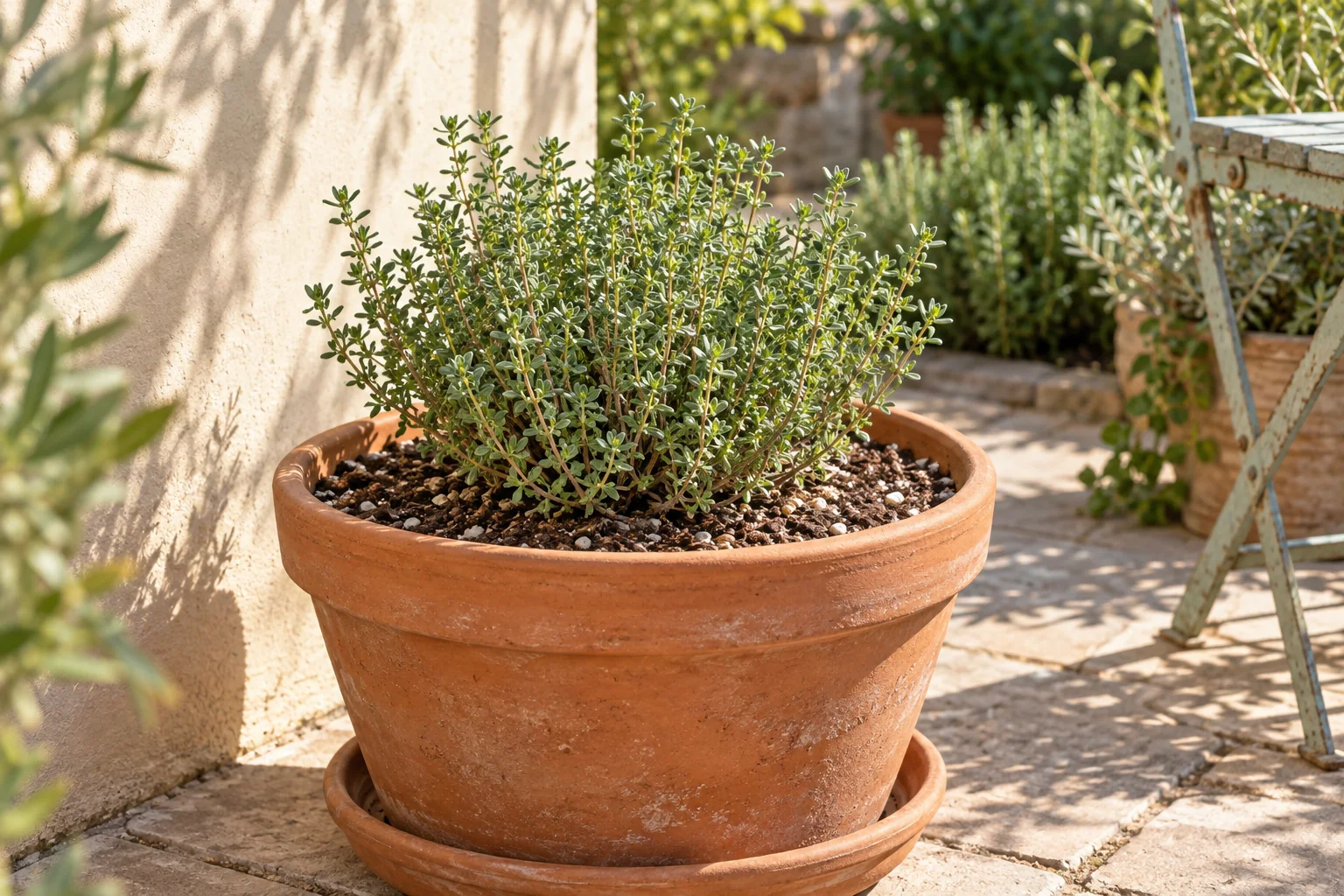
Thyme is useful when a few sprigs are enough for dinner. Give a labeled culinary plant a sunny pot of its own, then let its moisture needs set the watering routine. A small perennial herb is a different project from a thirsty pot of salad leaves, especially when autumn brings cooler weather and slower drying.
Start with a plant you can identify
North Carolina Extension describes common thyme, Thymus vulgaris, as a woody perennial culinary herb. Buy a plant labeled for culinary use and keep the variety tag. A decorative plant sold simply as “thyme” is not enough information to plan its size or winter care. Check the supplier’s mature dimensions and hardiness information rather than assuming every creeping or variegated form behaves alike.
A young nursery plant offers a straightforward starting point for a first pot. Common thyme can be raised from seed, but North Carolina notes that germination may be uneven. If you choose seed, use its packet instructions and allow for establishment before expecting kitchen cuttings. Do not treat a sowing date as a promised first-harvest date.
Set up one pot before making a mixed planter
Maryland Extension lists small herbs, including thyme, for two- to five-gallon containers. That is a useful planning range, not a universal minimum or a reason to move a tiny plug straight into a huge pot. Match the current root ball and expected plant size; the repot-or-wait guide helps if you are keeping an existing nursery plant. Check usable interior space, not just the rim measurement.
Choose drainage holes and a commercial soilless container mix that drains freely. Maryland’s herb guidance emphasizes lightweight, well-draining media. Keep the plant at its previous growing depth and leave room below the rim for watering. Do not put a gravel layer under the mix; open drainage holes are the useful feature. Empty collected water from a saucer after watering.
| Setup decision | What to do with thyme |
|---|---|
| Its own container | A manageable first choice: you can water it independently and move it when conditions change. |
| Shared pot with other herbs | Compare light, mature size and moisture needs before combining them. A matching label color does not establish compatibility. |
| Decorative pot without a drain | Use it only as an outer cover around a draining inner pot; remove trapped water. |
| Potting mix that already contains fertilizer | Record what the label supplies before adding another product. |
Give it sun and check the mix before watering
Common thyme prefers full sun; North Carolina defines that as six or more hours of direct sunlight. Use a simple sunlight record to check the actual location. An attractive table beside a shaded wall may not provide that much light. Recheck when nearby trees, buildings or the season change the pattern.
Thyme needs a chance to dry between waterings, according to Maryland’s indoor-herb guidance. Check below the surface and consider the weight of the pot rather than watering every herb on the same day. When water is needed, wet the mix thoroughly and allow excess to drain. “Drought tolerant” does not mean a small root ball can be left dry indefinitely; a pot offers a limited reserve.
If leaves wilt while the mix is still wet, adding another drink is not the next test. Check for standing water, blocked drainage and a recent change in light or temperature. If the cause remains unclear, use the plant-symptom record and seek local extension help. Heavy feeding is not a substitute for correcting a wet, dim growing space; follow product directions and record any fertilizer already applied.
Take small cuttings and make a separate winter decision
Wait for an established plant with healthy leafy growth before cutting for the kitchen. Take a few leafy tips with clean snips, leaving the woody framework and plenty of foliage. North Carolina’s harvesting guidance stresses retaining growth rather than cutting the plant down to its base. A newly planted or struggling thyme is better left to establish than trimmed to meet a recipe. Use the small-batch drying guide only when you actually have spare sound material.
In cold regions, a perennial label is not a guarantee that roots will survive in an exposed pot. Illinois Extension explains that container roots lack the insulation of garden soil. Choose winter protection for your cultivar and local conditions before hard freezes, using the indoor-herb plan if you have a suitable growing location. Indoors, supply adequate light, keep the plant away from heat vents and do not assume a warm room will maintain summer harvests.
In a mild climate, October may remain part of the outdoor growing season. Continue watching the plant and the mix instead of moving it on a fixed national date. Save a note of its variety, location, watering observations and winter arrangement; that will make next year’s decisions more specific than “thyme likes dry soil.”
Your next steps
0 of 5 steps checked · Saved on this device
Sources & further reading
Extension resources support the growing principles in this guide. Planning examples apply them to small container gardens. Local conditions and variety instructions take priority.
- North Carolina Extension: common thyme
- Maryland Extension: herbs in containers and indoors
- Maryland Extension: container sizes and growing media
- Illinois Extension: winter protection for container roots
Prepared with AI assistance; this is research-based guidance, not a personal growing trial. Editorial policy · Suggest a correction