
THE SHORT ANSWER
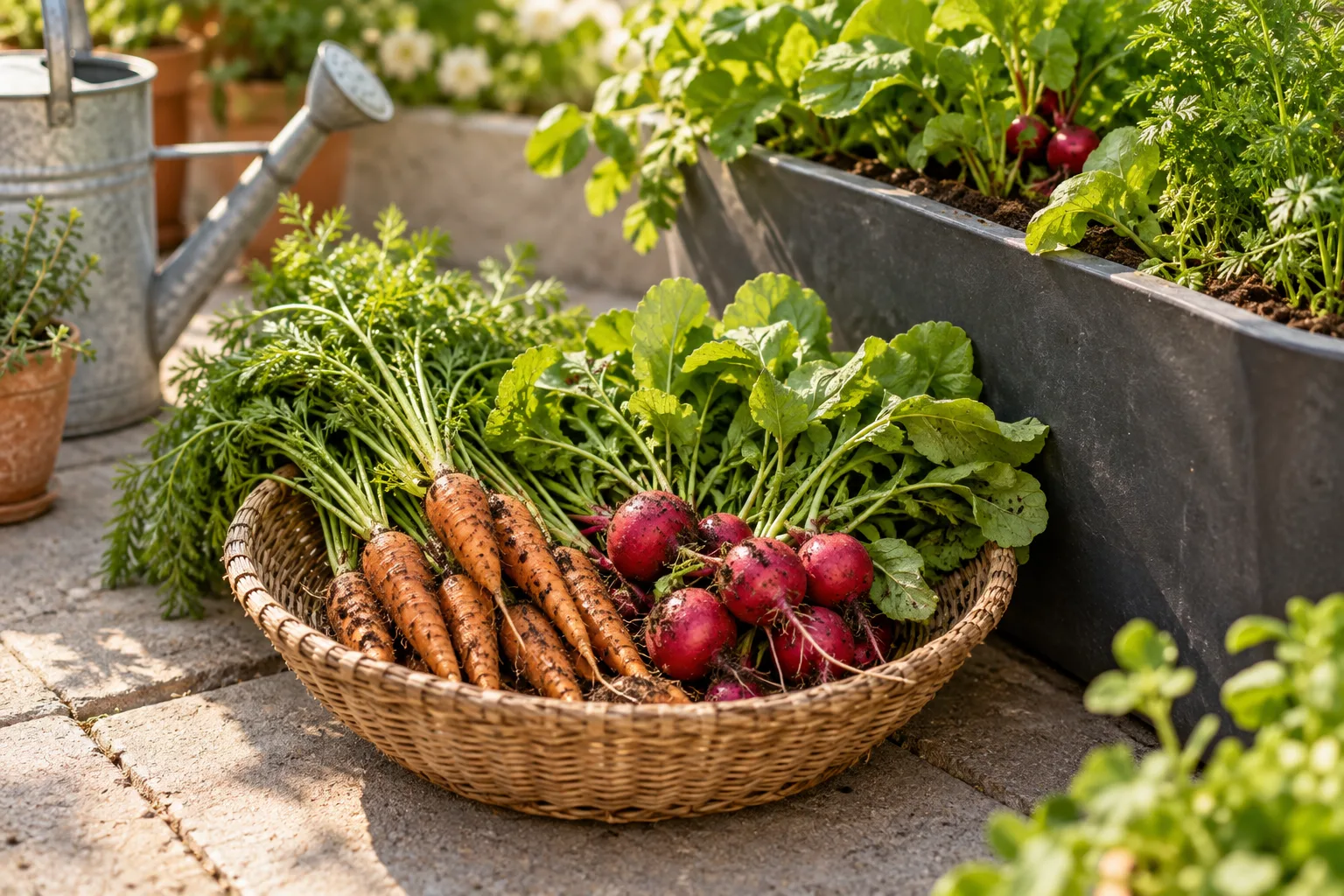
Choose a short carrot variety that fits your container’s usable depth. Direct sow into fine, loose potting mix, keep the surface moist during germination, and thin before crowded roots begin competing.
Measure the useful depth
A tall decorative pot may contain a false bottom or a large empty reservoir. Measure the depth that will actually hold growing mix. Match the mature carrot length to that space, with additional room underneath; shorter varieties are easier to accommodate.
Make a simple pot label with two measurements: usable depth and the variety’s expected root length. This avoids buying an impressive-looking container whose useful planting space is too shallow. Leave watering headroom at the rim when calculating the fill depth.
Sow where the roots will grow
Direct sow carrots rather than beginning them in small cells for later transplanting. Their germination can be slow, and the shallow seed zone must not dry out. Use the packet’s depth instructions and avoid a hard, crusted surface.
Choose a starting spot you pass every day. Place a reminder near your watering can saying “check seed surface.” That small prompt is more useful than an elaborate watering schedule that ignores a windy day. Check by observation; moist does not mean standing water.
Thin with the final carrot in mind
Seedlings that look widely separated above ground may still crowd each other when roots enlarge. Thin to the variety’s spacing. Loose, obstruction-free mix helps roots develop more evenly; a rocky soil blend is a poor choice.
If the first sowing looks too dense, deal with it early. Take a photograph before and after thinning for your own garden record. Next time, compare that image with your sowing method. Learning to use fewer seeds can reduce both waste and the work of thinning.
Test before emptying the container
As the crop approaches its expected maturity, examine root shoulders and carefully harvest one carrot to judge size. Different varieties have different shapes, so compare it with the packet description rather than a supermarket carrot.
Write a brief harvest note: container depth, variety, usable roots, and any crowding. Do not treat an oddly shaped carrot as proof of a fertilizer shortage. Your next decision might simply be a shorter variety or more generous spacing. Wash harvested produce before preparing it.
Your next steps
0 of 4 steps checked · Saved on this device
Sources & further reading
Extension resources support the growing principles in this guide. Planning examples apply them to small container gardens. Local conditions and variety instructions take priority.
Prepared with AI assistance; this is research-based guidance, not a personal growing trial. Editorial policy · Suggest a correction