An empty planter can still be damaged by winter weather. Before the wet and freezing part of your season arrives, decide which containers need indoor space and which can stay in a sheltered outdoor location. A short material-and-condition inventory is more useful than moving every pot into one crowded stack.
Separate empty-pot storage from overwintering a plant
This routine is for containers you have finished using. A healthy perennial herb or strawberry plant needs a crop-specific winter plan; emptying its pot merely to tidy the patio would destroy that plan. Use the indoor-herb guide, strawberry care or the frost-night plan for living plants first.
University of Nevada, Reno Extension emphasizes knowing the container material as well as the plant’s needs. Earthenware, ceramic and terracotta deserve particular attention during repeated freezing and thawing. A container that survives outdoors does not necessarily protect a plant’s roots; those are separate questions. Here, the plant-care decision is already finished and the job is preserving the empty equipment.
Give the most vulnerable pots the best shelter
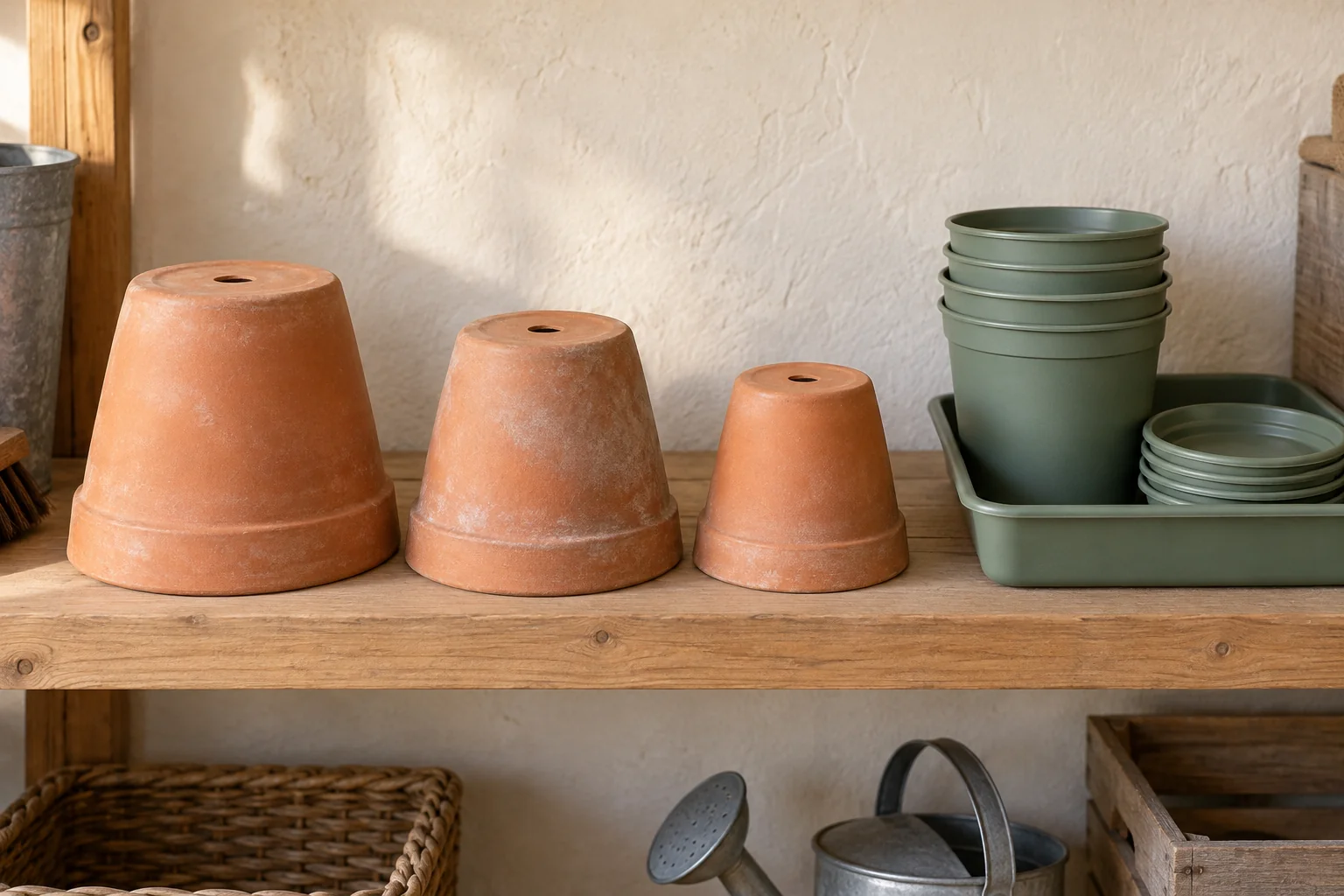
Maryland Extension notes that ceramic, especially unglazed terracotta, can absorb moisture and crack through freeze-thaw cycles. A glazed surface is not evidence that every pot is frost-proof. Check the maker’s winter-use instructions, existing chips and cracks, and any exposed porous base. When the material or rating is unknown, favor a dry, protected storage place rather than using the next freeze as a test.
| Container group | Storage decision |
|---|---|
| Unglazed terracotta, earthenware or vulnerable ceramic | Prioritize dry indoor storage protected from freezing; let cleaned pots dry before putting them away. |
| Intact plastic or resin with known outdoor rating | Follow the maker’s guidance. Keep empty pots sheltered, stable and unable to collect water. |
| Large fixed wooden or concrete planter | Check its construction and winter instructions in place; do not assume every heavy planter tolerates the same conditions. |
| Cracked, brittle or unidentified container | Resolve the material or damage question before allocating storage space or planning another crop. |
Illinois Extension recommends emptying seasonal containers and storing them upside down to extend their useful life in freezing climates. It notes that large wood and concrete planters can be exceptions in northern Illinois. Treat that as a regional generalization, not permission to leave water in any product sold as concrete. Construction, condition and drainage still matter.
Finish the wet jobs before choosing the shelf
- Remove the spent plants and mix from containers that are ready to be emptied. Keep suspect material separate until its reuse or disposal decision is settled.
- Follow the empty-pot cleaning routine for pots, saucers and trays. Complete the method’s rinsing and drying steps.
- Inspect the rim, base and drainage openings. Record damage that could be hidden once pots are nested.
- Drain empty saucers and any reservoir components according to the product instructions. Store removable plugs and fittings together so they can be found again.
- Move only dry equipment into the finished storage area; keep dirty items separate.
Emptying a pot does not mean all of its mix must go in the trash. Use the reuse decision guide to assess it and label retained batches. Equally, storage does not cure an unidentified root disease. Avoid combining every old batch simply because one bin is convenient.
Plan a stable storage arrangement
Choose low, accessible space for heavy pots. Do not force tightly fitting ceramic pots together or balance a tall stack where one movement can topple it. Keep saucers and small fittings in a separate dry tray. A garage or shed is not automatically frost-free: if vulnerable pottery will be stored there, check the actual conditions and use a better location when needed.
For outdoor-rated empty containers that must remain outside, prevent rain and melting snow from pooling inside them, keep them stable against wind, and follow their storage instructions. Recheck after storms. Covering a wet pot or wrapping it in insulation is not proof that it will remain dry or avoid freezing.
Make a shelf card with four fields: container, inside dimensions, condition and storage location. For example, “clay herb pot · 8-inch inside width · intact · lower indoor shelf” is more useful next spring than a count of assorted pots. Add a separate “still needs cleaning” list instead of mixing unfinished equipment into the ready group.
Match the schedule to your climate
Where freezing is likely, complete the job before containers and wet mix freeze together. In a mild U.S. climate, October may still be an active growing month and the main storage problems may be rain, wind or limited space. Keep useful crops growing; store equipment as it becomes empty rather than clearing every container on the same calendar date.
Before refilling in spring, inspect the pots again and confirm that drainage is clear. Compare the usable dimensions with the next crop’s space needs. A good storage record tells you what you already have, what needs attention and which purchases can wait.
Your next steps
0 of 5 steps checked · Saved on this device
Sources & further reading
Extension resources support the growing principles in this guide. Planning examples apply them to small container gardens. Local conditions and variety instructions take priority.
- Maryland Extension: container materials and freezing
- Illinois Extension: winter container care
- University of Nevada, Reno: protecting containers
Prepared with AI assistance; this is research-based guidance, not a personal growing trial. Editorial policy · Suggest a correction