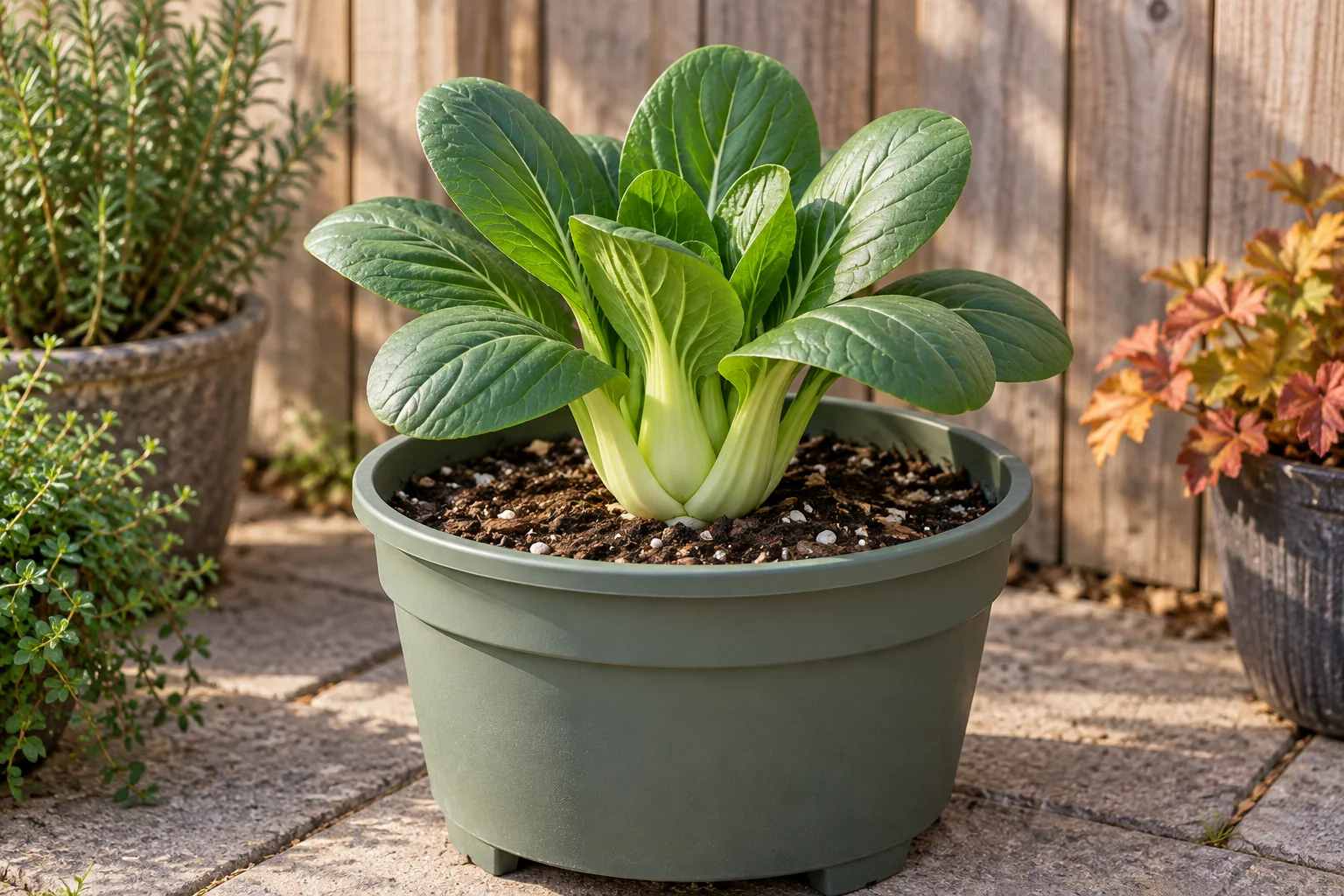
A pot of bok choy is a project in timing as much as space. Decide whether you want a small whole plant for a meal, a few outer leaves, or a full-sized plant before you sow. Then match that goal to the variety and your local season. “Cool-season crop” does not mean you can plant it outdoors on any cool day.
Start with a variety and a harvest goal
Bok choy, also called pak choi, has thick pale stalks and a loose cluster of green leaves; it does not form the tightly packed barrel of Napa cabbage. Minnesota Extension describes dwarf and full-sized forms. Read the packet for its expected size and whether the maturity estimate starts at sowing or transplanting. Keep the packet with your planting record so a photograph of a small plant is not your only reference.
| What you want | What to decide before sowing |
|---|---|
| One small whole plant | Choose a compact variety and a usable harvest size. Reserve the pot for that plant rather than counting every seedling as a future head. |
| A few leaves at a time | Plan access to the outside leaves and keep the center intact. Record actual pickings instead of assuming a weekly yield. |
| A larger plant | Check its mature spread and final spacing. A packet labeled baby-leaf harvest is not a promise of full-sized plants at that density. |
Give the plant a workable pot and growing window
Maryland Extension recommends matching both container depth and volume to the plant. As a roomy first-project example, choose one compact plant in a pot about 12 inches across and 12 inches deep, with drainage holes and container mix. These are planning dimensions, not a proven minimum for every bok choy variety. Measure the inside, allow watering space below the rim, and use the container-size guide if the pot tapers sharply.
For cool-season container crops including Asian greens, Maryland lists 3–5 hours of direct sun. Observe your actual site with the sunlight worksheet; shorter autumn days and a shaded balcony can change the usable growing window. Drainage must remain open, and the growing pot should not sit in collected runoff.
Illinois Extension includes bok choy among leafy crops that can be direct-seeded in planters for fall. That regional advice concerns establishing plants before harvest weather arrives. It is not a nationwide October planting date. In a cold-winter area, October may be a harvest or planning month; mild-winter gardeners should use their local extension calendar and variety instructions. Work backward with the fall planning guide before opening the packet.
Sow a small batch and watch for bolting
Minnesota’s planting guidance gives a sowing depth of ¼–½ inch and final garden spacing of 12–18 inches, depending on size. For the single compact plant planned here, thin to one suitable seedling; a trough needs a separate layout using the variety’s spacing. Keep the seed zone moist during emergence. For transplants, use the gradual outdoor transition rather than moving tender indoor growth straight into exposed conditions.
Minnesota warns that late spring frost or more than a week of nights below 50°F can prompt bolting when warmth returns. That is a regional risk example, not an exact prediction for every cultivar. Watch the plant itself: an elongating central flower stalk changes the harvest decision. More fertilizer will not turn flowering growth into the original leafy crop.
- Label the pot with variety and sowing date; write the packet’s harvest stage beside it.
- Check moisture in the mix and compare it with yesterday’s observation; use the watering guide rather than a fixed weekly amount.
- Inspect young leaves and their undersides when watering. Photograph damage and identify the cause before choosing a treatment.
- Keep a simple note of unusually cold nights, emerging flower stalks, and the first usable harvest.
Pick for the meal you are actually making
Minnesota describes picking the oldest outer leaves while younger ones continue growing, or harvesting the whole plant at usable size. If it starts bolting, harvest before the flowers open rather than waiting for a larger leafy plant. Do not wait for a bok choy rosette to tighten like a supermarket Napa cabbage.
Illinois Extension recommends refrigerating bok choy unwashed in a food-safe bag or container, then washing carefully between the layered stalks before preparation. Match the picking to a meal: a whole small plant and several detached leaves are different kitchen portions. Note what your pot supplied, what was usable and whether that amount suited you. That record is more useful for the next sowing than an assumed number of servings.
Your next steps
0 of 5 steps checked · Saved on this device
Sources & further reading
Extension resources support the growing principles in this guide. Planning examples apply them to small container gardens. Local conditions and variety instructions take priority.
- Minnesota Extension: Bok choy planting, bolting and harvest
- Maryland Extension: Container space, light and drainage
- Illinois Extension: Fall crops in planters
- Illinois Extension: Bok choy storage and preparation
Prepared with AI assistance; this is research-based guidance, not a personal growing trial. Editorial policy · Suggest a correction