THE SHORT ANSWER
There is no best material for every garden. Choose a container that suits the crop, your watering routine, the weather, and the surface it will stand on.
Use your daily routine as the starting point
Imagine caring for the container on an ordinary busy day. Can you check it before leaving home? Is water nearby? Will you need to move it between locations? Your answers matter more than a material being fashionable.
Fabric, plastic, and clay can all support useful container gardens when properly sized and managed. Before buying a matching collection, try one or two containers you can compare under similar conditions. Record what changes in watering and handling, rather than judging only by appearance.
Know the practical differences
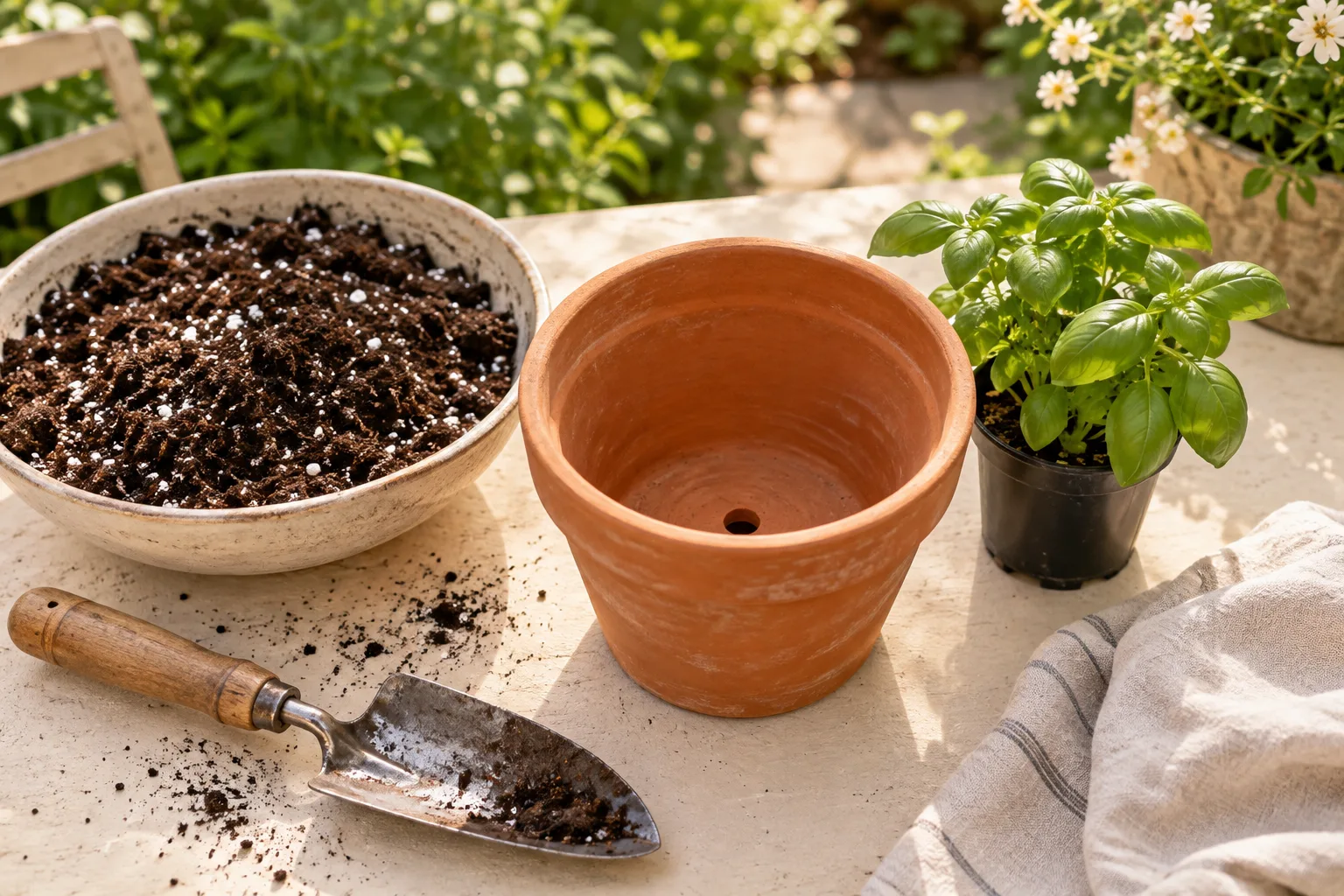
Porous materials such as unglazed clay and fabric allow more evaporation than many plastic containers. Plastic can be lighter when empty and may retain moisture longer. The exact outcome still depends on pot size, weather, medium, and plant growth.
Check handles, seams, base stability, and the quality of drainage. A grow bag that is comfortable to store flat may become difficult to move when full. A beautiful clay pot may need protection from freezing conditions. Illinois Extension discusses these material tradeoffs in its container guidance.
Look beyond the empty weight
A container’s filled weight includes damp growing medium, the plant, water, and sometimes a support. Large pots are not safely portable just because the empty shell is light. Consider your own lifting ability and the surface’s permitted load.
If moving pots is part of the plan, choose an appropriate stable caddy before planting and check its rated capacity. Keep containers away from unprotected edges. On rented or shared spaces, confirm what is permitted rather than fastening supports or drainage arrangements to the building without checking.
Make a decision you can explain
Write down one reason for your choice. “This plastic planter is wide enough for my greens and easy to reach” is a stronger purchase rationale than “everyone online uses this.” Price, durability, storage, and replacement parts can all be valid factors.
For a cohesive-looking garden, coordinate colors while allowing different pot shapes and sizes. The plants do not need matching containers. At the end of the season, record which material was easiest for you to manage and use that experience to guide the next purchase.
Your next steps
0 of 4 steps checked · Saved on this device
Sources & further reading
Extension resources support the growing principles in this guide. Planning examples apply them to small container gardens. Local conditions and variety instructions take priority.
- Illinois Extension: Container material choices
- University of Maryland Extension: Containers and growing media
Prepared with AI assistance; this is research-based guidance, not a personal growing trial. Editorial policy · Suggest a correction