
The evening decision
When frost threatens, decide which pots to move, which crops to cover, and what is ready to harvest. A cover can help through a short cold event, but it cannot guarantee protection during a prolonged freeze. Get the plan in place before darkness makes every small job harder.
The awkward part of a cold forecast is often deciding where to start. The basil is beside the door, a pepper pot is too heavy to lift alone, and the greens look perfectly comfortable. A short list made in daylight is more useful than trying to cover everything at bedtime.
Read the forecast beyond the overnight low
Check your own location’s forecast, the expected duration of cold, wind, and any frost or freeze notice. Frost can form on surfaces even when the reported air temperature is a little above 32°F. The National Weather Service explains that readings above ground can be warmer than the surface on a clear, calm night. Alert thresholds and the season in which alerts are issued vary by forecast office. NWS frost and freeze explanation.
Do not treat the absence of an alert as proof that a particular pot is safe. If you have a thermometer, put it near the growing area and compare it with the forecast over several nights. Keep it out of direct sun when measuring air temperature. The purpose is to learn your site, not to invent a precise protection threshold from one reading.
Give every pot a job: move, cover, or harvest
- Move: Put manageable, cold-sensitive containers in a suitable sheltered space for the night. Confirm that the space itself will stay warm enough.
- Cover: Reserve sound covers and supports for pots that cannot be moved and for a cold event your setup can reasonably handle.
- Harvest: Pick usable produce you do not want to risk, particularly when a long or severe freeze is forecast. You do not have to keep every summer plant going.
Iowa State identifies moving potted plants indoors as the simplest protection when it is practical, and cautions that covering can still fail during prolonged freezing temperatures. Its advice is a useful reminder to plan a backup rather than assume a sheet guarantees survival. Read Iowa State’s protection guide.
For example, make three lines on a note: “small herb pots to the porch,” “large planter under the cover,” and “pick the remaining usable peppers.” Assign the actual pots before moving anything. Check that your route leaves doors and walkways usable, and get help with heavy containers instead of improvising a lift in the dark.
Use the right fabric and close the gaps
Row-cover fabric comes in different weights, with different insulation and light transmission. A lightweight insect barrier is not interchangeable with every frost blanket. Use the product’s stated purpose and temperature guidance; the same fabric can perform differently depending on wind, duration, and how well it is secured. UNH Extension explains the differences between covers.
- Set up supports before placing the cover so the material will not press down heavily on the plants.
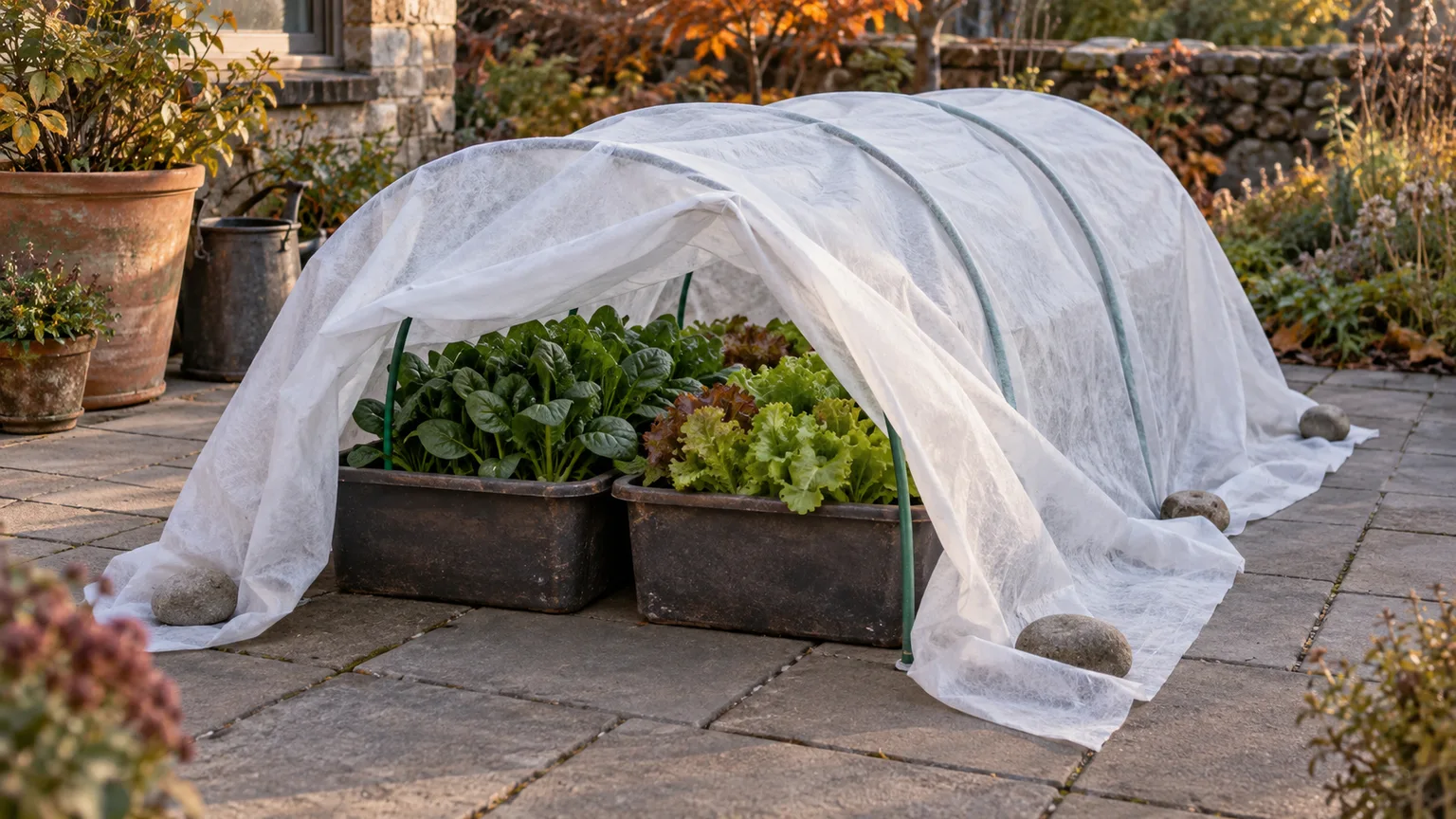
- Drape the cover over the entire group and extend it to the ground. Secure edges and close the ends; an open skirt lets warm air escape.
- Keep leaves from touching plastic if plastic is part of your setup. Breathable frost fabric is easier to manage for this simple approach.
- Check the setup again before leaving it overnight. A loose corner on an exposed balcony can undo careful work.
Ground-level covers work partly by retaining heat near the plants. Pots elevated on stands or surrounded by air do not have the same conditions as a garden bed. Treat results cautiously. The pictured setup has its front lifted to show the arrangement; close that end for the night. The edge-sealing advice follows UNH’s cover guidance.
Put the morning check on your calendar
Plan who will uncover or ventilate the plants the next morning. Iowa State advises removing coverings when temperatures rise above freezing. Sunshine can quickly change conditions inside a shelter, so the overnight setup should not simply be forgotten for the whole next day. Iowa State’s morning-care instructions.
Check the pots themselves as well as the leaves. Is the cover wet and heavy? Has it slipped? Is the mix actually dry? Use the normal moisture check instead of adding water automatically because the night was cold. Let your observations guide the next small adjustment.
Know when a cover is no longer the plan
A brief cold dip followed by milder weather is a different project from repeated freezing nights and short winter days. Before buying more fabric, decide what you are trying to keep: a few last pickings, a living plant for spring, or an actively growing winter crop. Those goals need different setups.
If the current forecast exceeds the protection your arrangement can reasonably offer, move what you can and harvest what is ready. For the next season, our fall planning guide can help you choose crops and timing earlier. If you are starting garlic in a pot, arrange winter root protection separately; an overnight foliage cover does not solve that longer problem.
Questions to settle before the evening
Can I leave the end open for ventilation overnight?
For frost protection, open ends and gaps undermine the effort to retain heat. Close the setup for the cold event, then plan ventilation or removal as conditions warm. Recheck the forecast if your setup cannot safely stay closed.
Should every pot receive exactly the same treatment?
No. Use the crop’s needs, its current condition, your actual shelter, and the forecast to set priorities. Make a specific plan for the pots you have rather than assuming one method fits an entire mixed container garden.
Your next steps
0 of 5 steps checked · Saved on this device
Sources and further reading
- Iowa State University Extension: Protecting Plants from Frost and Freeze
- University of New Hampshire Extension: Using Row Covers
- National Weather Service: Frost and Freeze Information
Growing recommendations vary with climate and variety. The planting layouts and planning examples in this guide apply the linked research to a small container garden.