
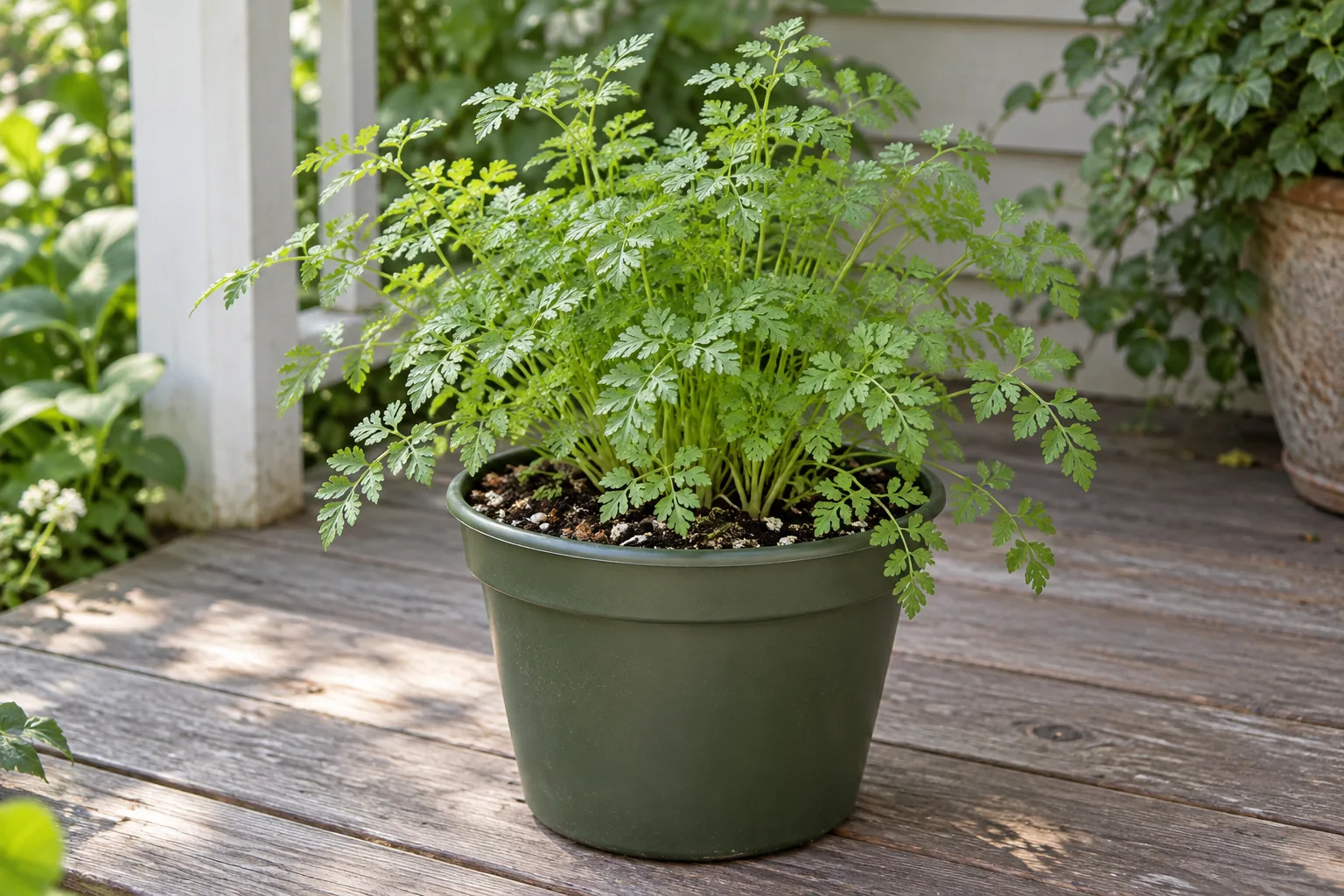
Chervil is a good herb to try when a few fresh leaves would be more useful than a large harvest. Its mild anise flavor suits eggs, salads and finishing a warm dish. The trick is to treat it as a succession of small plants: an old flowering plant will not provide the same supply as a fresh sowing.
Buy culinary chervil and choose a cool window
Look for Anthriscus cerefolium on the packet. Illinois Extension describes chervil as an annual culinary herb with finely cut leaves. Keep the packet with the pot; a leaf photograph is not a safe way to identify an unknown edible plant.
The useful growing season depends on where you live. Illinois recommends spring sowing, or late-fall sowing for germination the following spring. That second option does not promise a fall harvest. In a mild-winter region, ask local extension about an autumn crop; in a cold region, plan protection or a spring start rather than assuming an October sowing will mature outdoors.
Give the roots room and the leaves light shade
The RHS recommends a container at least 10 inches deep and wide. Choose a pot with open drainage holes, fill it with prepared container mix, and put it in a cool, lightly shaded position. A shallow decorative bowl is a poor substitute for usable root depth. The featured image illustrates the plant and pot arrangement; it does not document a growing trial.
Before sowing, check the spot at the warmest part of the day. A porch described as shady may still receive strong afternoon sun. Map the actual light and make sure you can reach the pot for watering. If you need to move it often, test the filled pot’s weight first.
Sow where the plant will grow
Illinois favors direct sowing because chervil does not transplant readily. Moisten the mix first, scatter a small batch thinly, and label it with the date. Illinois advises leaving the light-requiring seed uncovered or only very lightly covered. Published sowing-depth advice differs, including in the RHS guide; check the instructions for your seed and avoid burying tiny seed deeply by habit.
Water gently so seeds stay in place, and keep the surface moist during emergence. Once seedlings are established, thin rather than leaving a solid mat. The RHS gives about 6 inches between plants. A 10-inch pot can start with one retained plant in the center; this is a simple layout choice, not a tested yield recommendation. See how to thin seedlings without disturbing those you keep.
Use two labels to plan the next batch
Illinois suggests another small sowing every three to four weeks because chervil readily flowers. Put the next sowing date on a second label now, then adjust it to the weather and remaining growing season. Do not keep sowing outdoors as conditions become unsuitable just to maintain a calendar interval.
| Label or observation | What to write down |
|---|---|
| Current pot | Variety, sowing date and location. |
| Next pot | A reminder three to four weeks later, subject to suitable conditions. |
| First picking | Actual date and whether enough leaves were ready for the intended meal. |
| Flower stalk appears | Whether the next batch is established; replace the declining leaf crop when appropriate. |
Keep moisture steady and harvest lightly
Keep the mix moist without standing water. Colorado State’s container salad guide recommends checking moisture and matching fertilizer to the mix and plant growth. Read the mix label before adding feed; an already enriched mix and an unfertilized one need different decisions. Use the product directions rather than a field fertilizer rate.
Pick a few tender leaves once the plant has established, leaving plenty to grow. The RHS notes that hot, dry conditions hasten flowering and that leaves are best used fresh, added near serving time. If an older plant flowers, start relying on the replacement pot rather than expecting extra fertilizer to restore its earlier growth.
Your next steps
0 of 5 steps checked · Saved on this device
Sources & further reading
Extension resources support the growing principles in this guide. Planning examples apply them to small container gardens. Local conditions and variety instructions take priority.
Prepared with AI assistance; this is research-based guidance, not a personal growing trial. Editorial policy · Suggest a correction