THE SHORT ANSWER
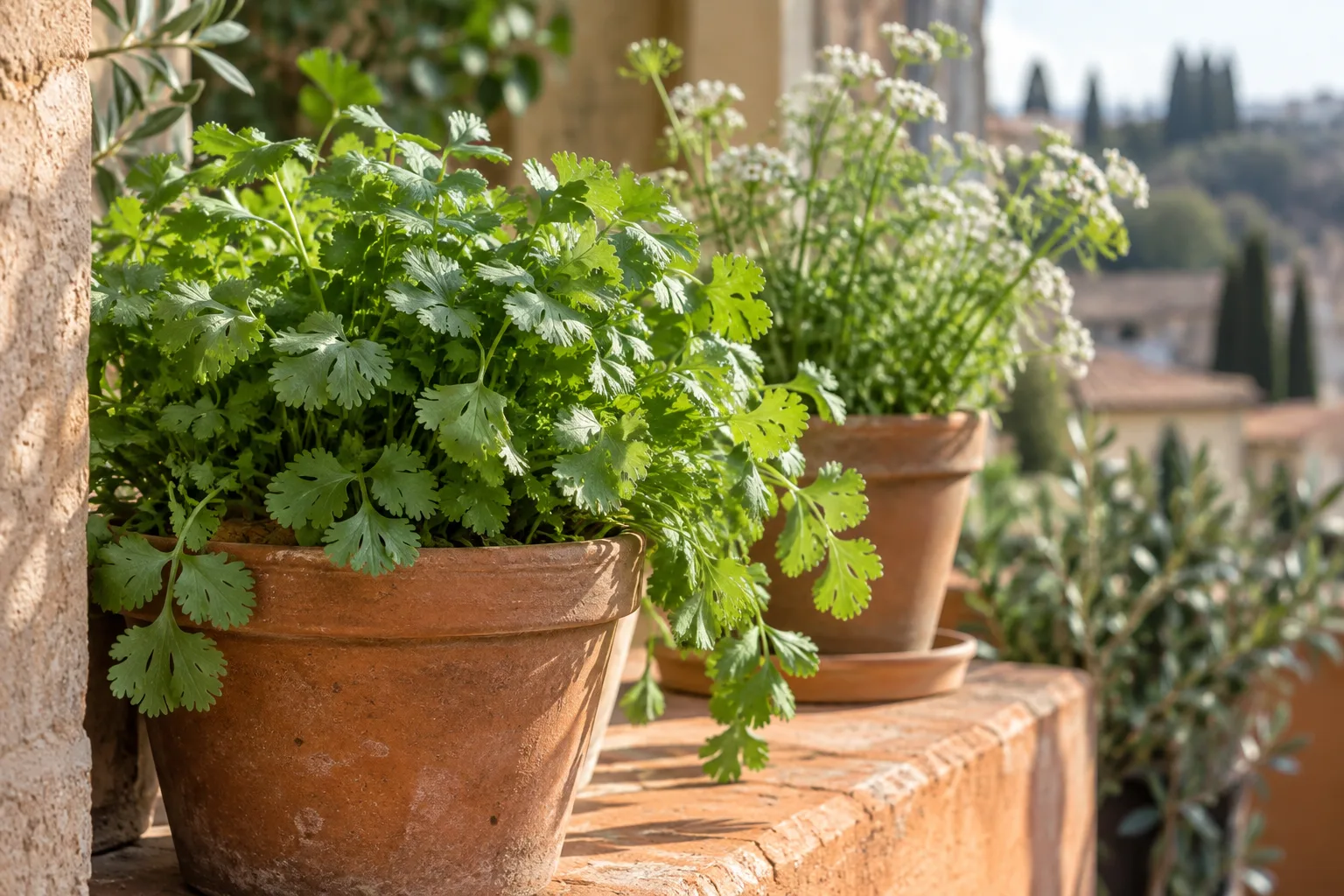
Cilantro is a cool-season herb that tends to flower as conditions become hotter and days lengthen. Sow small batches at suitable intervals, use the leaves while tender, and plan to replace plants rather than keep one leafy forever.
Understand the two harvests
Cilantro leaves and coriander seed come from the same plant. A flowering plant has shifted its growth stage; cutting off every flower does not guarantee a return to prolonged leaf production. Decide whether you want fresh leaves, seed, or a little of both.
For a small garden, label one pot “leaves” and, if you have room, another “seed.” This turns a disappointing bolt into a deliberate choice. Only retain the seed project if your season and space make it worthwhile.
Sow small, useful batches
Direct sow into a draining pot with enough depth for the roots. Follow the packet’s spacing and sowing depth. Cool growing conditions favor a longer leafy phase; a locally appropriate spring or fall window may be better than midsummer.
Use a simple two-pot rotation: sow one, record the date, and consider a second small sowing later if temperatures remain suitable. The interval depends on conditions. The purpose is to avoid having every plant reach the same stage at once.
Harvest for a real meal
Snip usable outer leaves and tender stems without stripping a young plant bare. Keep the mix from repeatedly drying out, but do not leave roots standing in water. Shade during intense afternoon heat may help with stress, but it cannot cancel the plant’s seasonal development.
Plan a meal before harvesting a large handful. Cilantro is more useful when the amount you cut matches what you will prepare. Note which sowing date gave you the most useful leaf stage in your own space.
Know when to start again
When fine, feathery growth and flower stalks dominate, decide whether to collect seed or replace the plant. A succession planting is often a better leaf strategy than nursing a tired pot through unsuitable weather.
Keep the old label until you have recorded the result. “Good leaves for this part of spring” is useful local information. Next season, use that observation alongside your regional planting guidance to choose the first sowing date.
Your next steps
0 of 4 steps checked · Saved on this device
Sources & further reading
Extension resources support the growing principles in this guide. Planning examples apply them to small container gardens. Local conditions and variety instructions take priority.
Prepared with AI assistance; this is research-based guidance, not a personal growing trial. Editorial policy · Suggest a correction