THE SHORT ANSWER
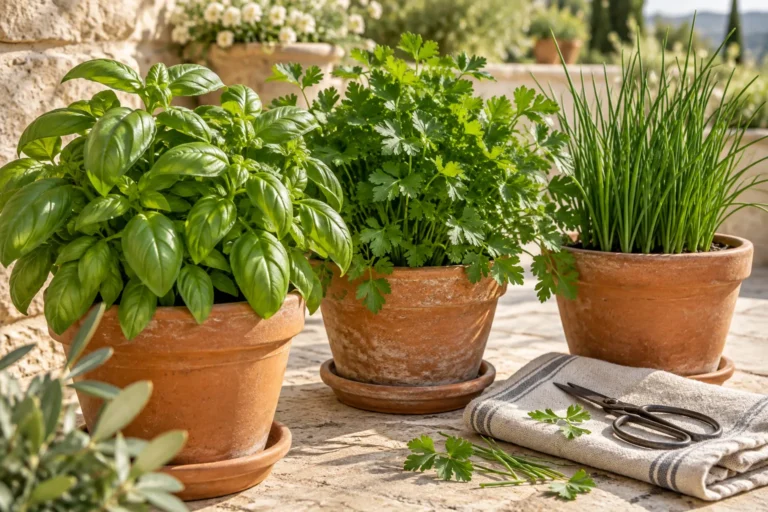
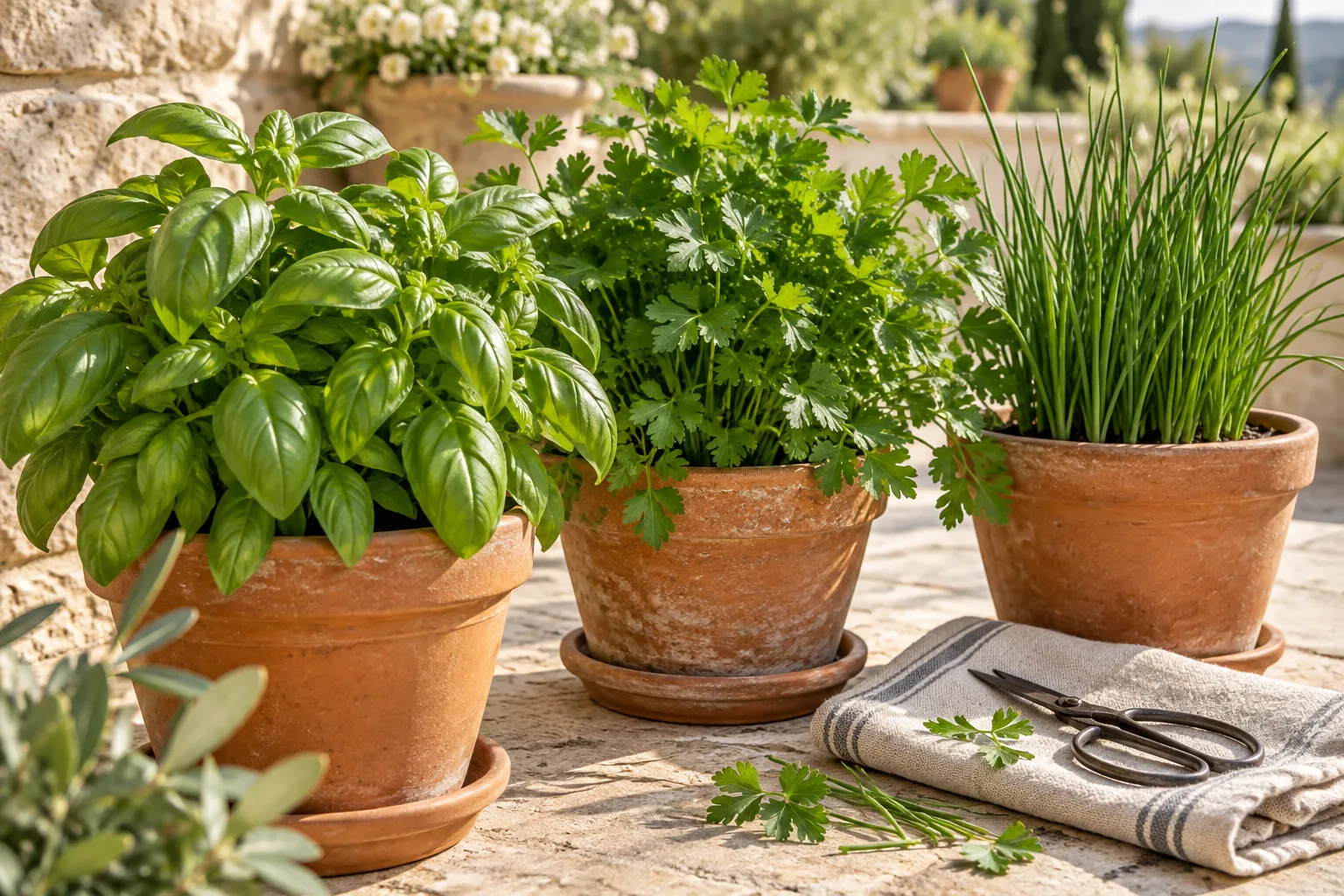
Basil is a warm-season herb. Give it a bright growing position, a drained container, and regular moisture checks. Once established, harvest small amounts from growing tips rather than stripping the plant bare.
Start with the kind of basil you want to eat
Sweet basil is a familiar choice for many dishes, but basil varieties differ in aroma, leaf shape, and size. Read the plant label and choose one you already have a use for. A healthy transplant is the quickest way to begin a single-pot project.
Before buying, look for sturdy new growth and inspect both sides of the leaves. If several seedlings crowd one small supermarket pot, do not assume that arrangement is intended to support a full season outdoors. A nursery plant with room to develop is often a simpler first experiment.
Wait for reliably warm conditions
Basil does not enjoy cold weather. Use your local forecast and extension advice to decide when it can stay outside, and acclimate a sheltered or indoor-grown plant gradually. The bright windowsill where a plant was sold is not the same environment as a hot, windy balcony.
Choose a pot you can move while it is still small, if that fits your space. Set it somewhere you will actually visit: beside the patio chair or near the kitchen door can work better for regular observation than an inconvenient corner chosen only for appearance.
Harvest to encourage a useful shape
Allow the plant to establish before repeatedly cutting it. Then take a small growing tip above a pair of leaves, leaving enough healthy foliage for continued growth. Remove developing flower tips if your aim is a longer supply of leaves.
Use the kitchen as your harvesting reminder. Taking a modest amount for one meal is more manageable than waiting until the plant becomes a tall, awkward stem and cutting most of it at once. Photograph the plant before and after your first harvest so you can compare how new shoots develop.
Keep care simple and visible
Check the potting mix, especially after heat or wind. Water when the root zone needs it and allow drainage. A decorative outer pot should never hide a nursery pot standing in accumulated water. Avoid trying to fix every pale leaf with fertilizer before checking light and moisture.
If the plant struggles, change one obvious issue and watch its new growth. Keep expectations seasonal: basil is commonly grown as an annual, and a plant slowing down in cold weather does not mean you failed. Save notes about the variety and location for the next warm season.
Your next steps
0 of 4 steps checked · Saved on this device
Sources & further reading
Extension resources support the growing principles in this guide. Planning examples apply them to small container gardens. Local conditions and variety instructions take priority.
- University of Maryland Extension: Growing basil in a home garden
- University of Minnesota Extension: Growing herbs
Prepared with AI assistance; this is research-based guidance, not a personal growing trial. Editorial policy · Suggest a correction