
THE SHORT ANSWER
Grow rosemary in a sunny position with a freely draining mix. Let moisture needs guide watering, avoid a permanently wet root zone, and plan winter protection according to your local climate and variety.
Choose a plant that fits the job
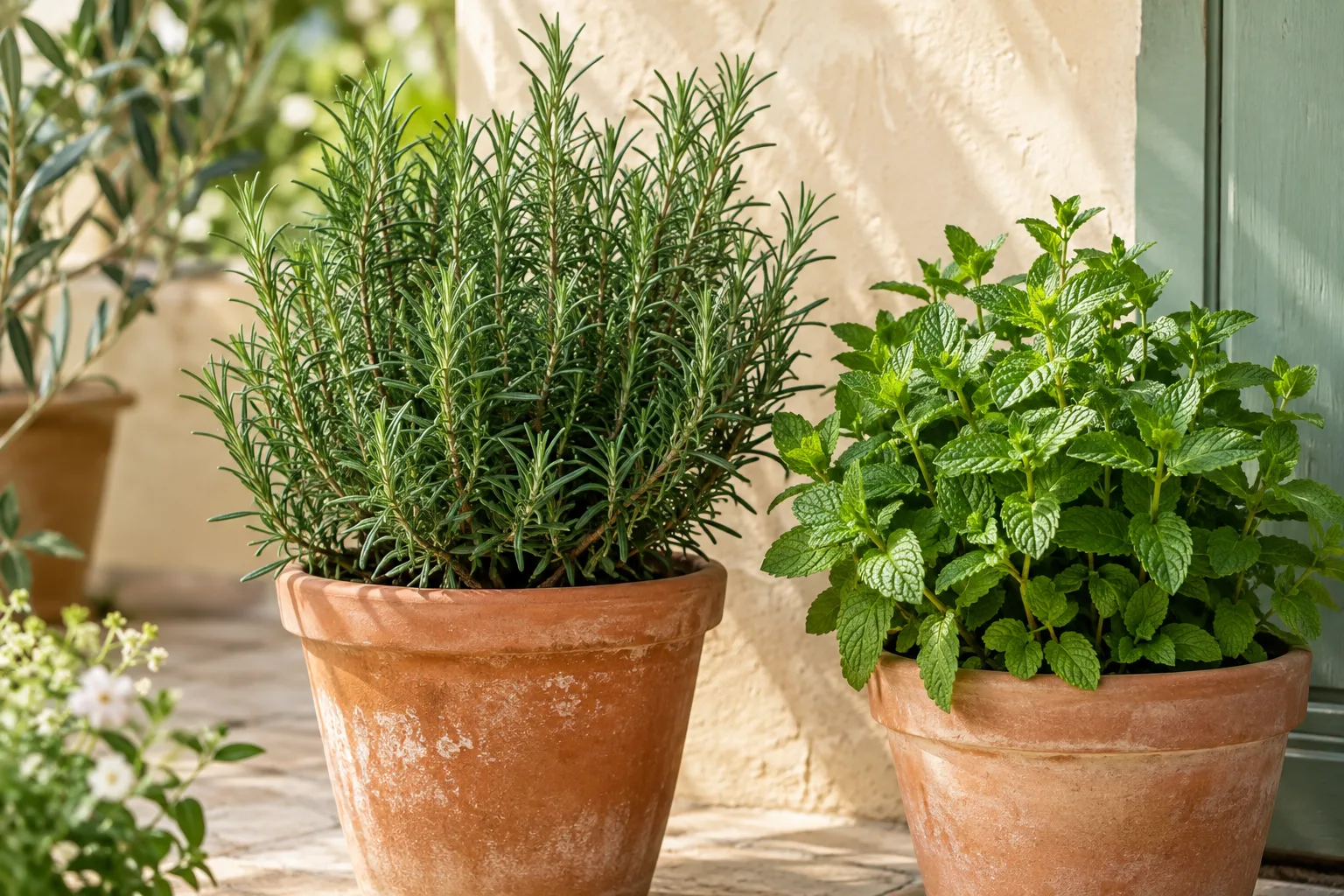
Rosemary varieties differ in habit: upright types suit a small shrub shape, while trailing types spill over edges. A nursery plant is a convenient starting point. Check the expected size before buying a decorative pot.
Choose the plant’s role in your kitchen too. If you use rosemary only occasionally, one healthy plant may supply all the fresh sprigs you need. Leave space for future growth instead of immediately buying several plants that compete for the same sunny corner.
Keep the root zone from staying wet
Use a container with drainage holes and a suitable free-draining mix. Rosemary should not sit continuously in a water-filled saucer. Sharing a pot with a herb that wants consistently moist conditions can make care more complicated.
Give rosemary its own care note rather than watering every herb identically. Check moisture before adding water. If a plant is struggling in wet mix, adding more water because its leaves look tired can make the underlying problem worse.
Harvest soft growth carefully
Cut modest amounts of healthy young growth for cooking, leaving plenty of foliage. Avoid assuming a heavily cut, bare woody branch will regrow as readily as a soft green tip. Regular light shaping is easier to manage than a drastic rescue cut.
Keep the plant label and a photo of its original shape. Compare seasonal growth with that baseline. This helps you decide whether the plant has outgrown the pot or merely needs thoughtful harvesting from several sides.
Make a winter plan before frost
Rosemary is not reliably winter-hardy everywhere in the United States, and container roots are especially exposed. Depending on the variety and climate, a bright, cool indoor location or other protected arrangement may be needed. Indoor light and watering require attention.
Choose the winter location early and measure the space. A plant that fits an outdoor corner in May may be awkward to bring indoors in autumn. If overwintering is impractical, treating rosemary as a seasonal culinary plant is a valid choice.
Your next steps
0 of 4 steps checked · Saved on this device
Sources & further reading
Extension resources support the growing principles in this guide. Planning examples apply them to small container gardens. Local conditions and variety instructions take priority.
Prepared with AI assistance; this is research-based guidance, not a personal growing trial. Editorial policy · Suggest a correction