THE SHORT ANSWER
Give parsley a draining pot with a useful root depth, suitable light, and consistent moisture. Harvest the outer stalks near the base while leaving the central growing point to continue producing leaves.
Choose leaf type and starting method
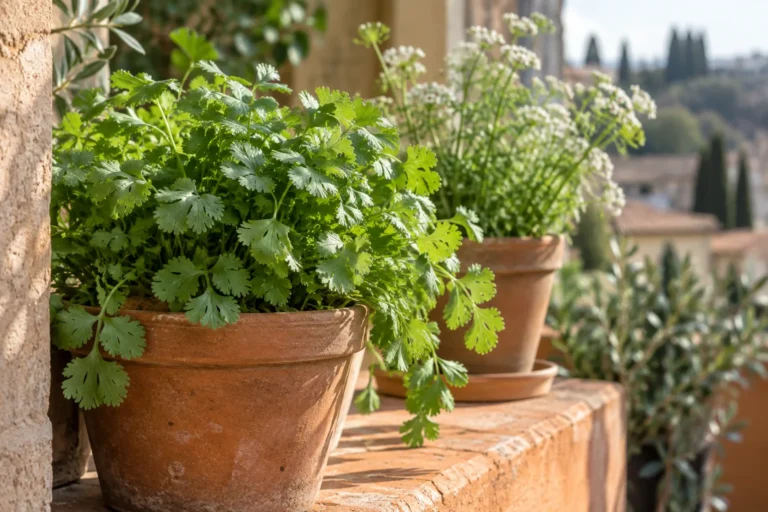
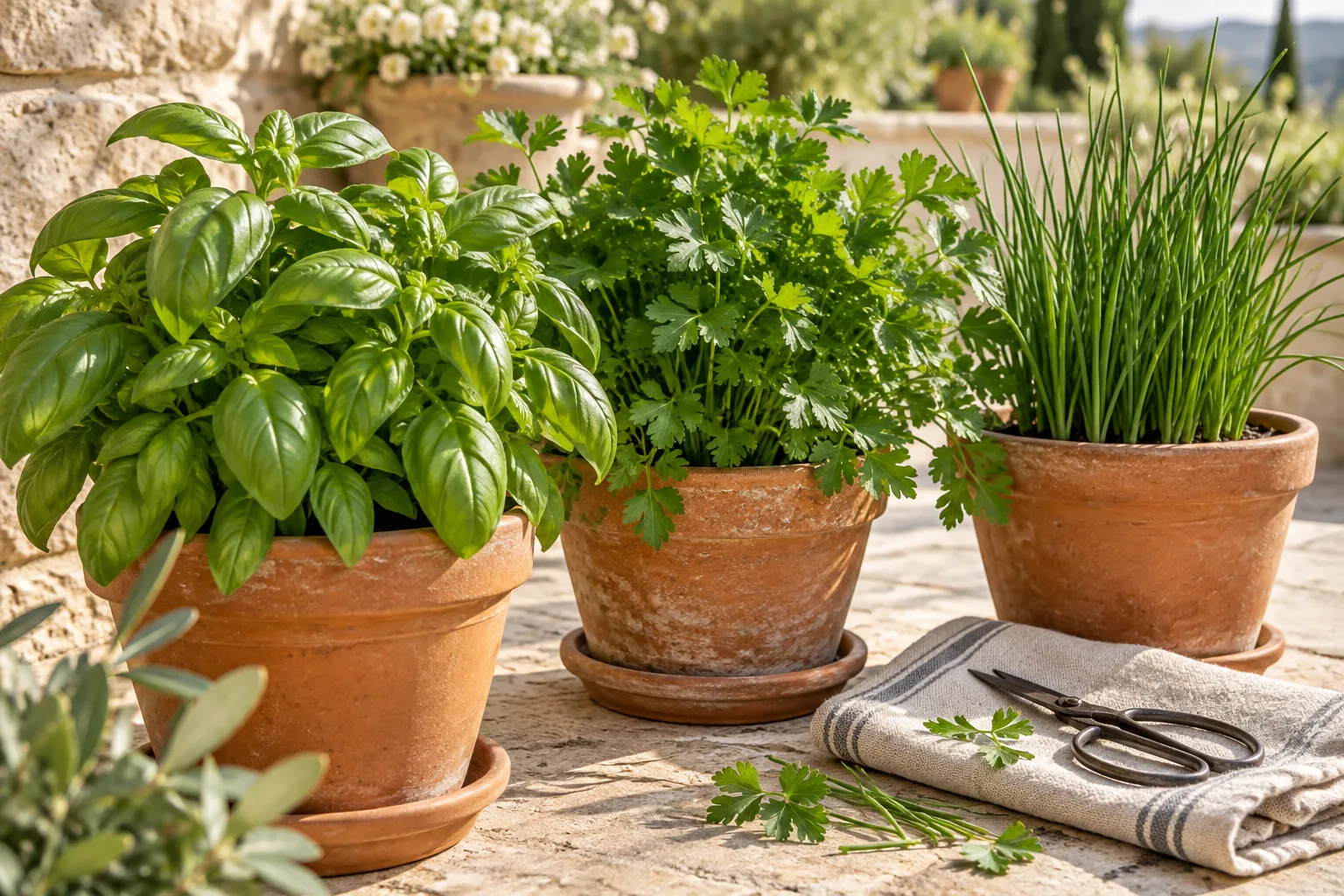
Flat-leaf and curly parsley are both useful culinary herbs. Pick the type you enjoy cooking with. Seed germination can be slow, so a healthy transplant is a practical option when you want a simpler start.
If starting from seed, keep the packet and mark the sowing date prominently. A quiet pot is easy to forget or accidentally reuse. Set a reminder to inspect moisture and progress, while giving the seeds the time the supplier describes.
Prepare an accessible container
Choose a pot deep enough for an established root system, with drainage holes and loose potting mix. Place it where light is suitable and you can reach the plant to cut complete stalks. An ornamental herb shelf is less useful if the best leaves are out of reach.
Think about the route from kitchen to garden. If the plant is convenient to visit before dinner, you are more likely to harvest it. Make the pot stable and leave room for its mature leaf spread rather than surrounding it tightly with decorations.
Harvest from the outside
Take mature outer stalks close to their base and preserve younger central growth. Avoid removing most of the plant at once. Water according to the mix and conditions rather than waiting for repeated dramatic wilting.
Try assigning the plant a weekly use: chopped into grains, added to a dressing, or used in a favorite dish. A small regular harvest gives you a reason to inspect new growth and notice problems before the whole plant declines.
Plan for its second year
Parsley is a biennial. After exposure to the appropriate seasonal conditions, it can flower in its second year and become less useful as a leaf crop. Many gardeners replace it for dependable culinary leaves.
At the season’s end, record whether you preferred flat or curly leaves and whether a transplant saved you useful time. If keeping a pot over winter, check local guidance because container roots receive less insulation than garden soil. Treat next year’s leaf crop as a planned decision, not an assumption.
Your next steps
0 of 4 steps checked · Saved on this device
Sources & further reading
Extension resources support the growing principles in this guide. Planning examples apply them to small container gardens. Local conditions and variety instructions take priority.
Prepared with AI assistance; this is research-based guidance, not a personal growing trial. Editorial policy · Suggest a correction