THE SHORT ANSWER
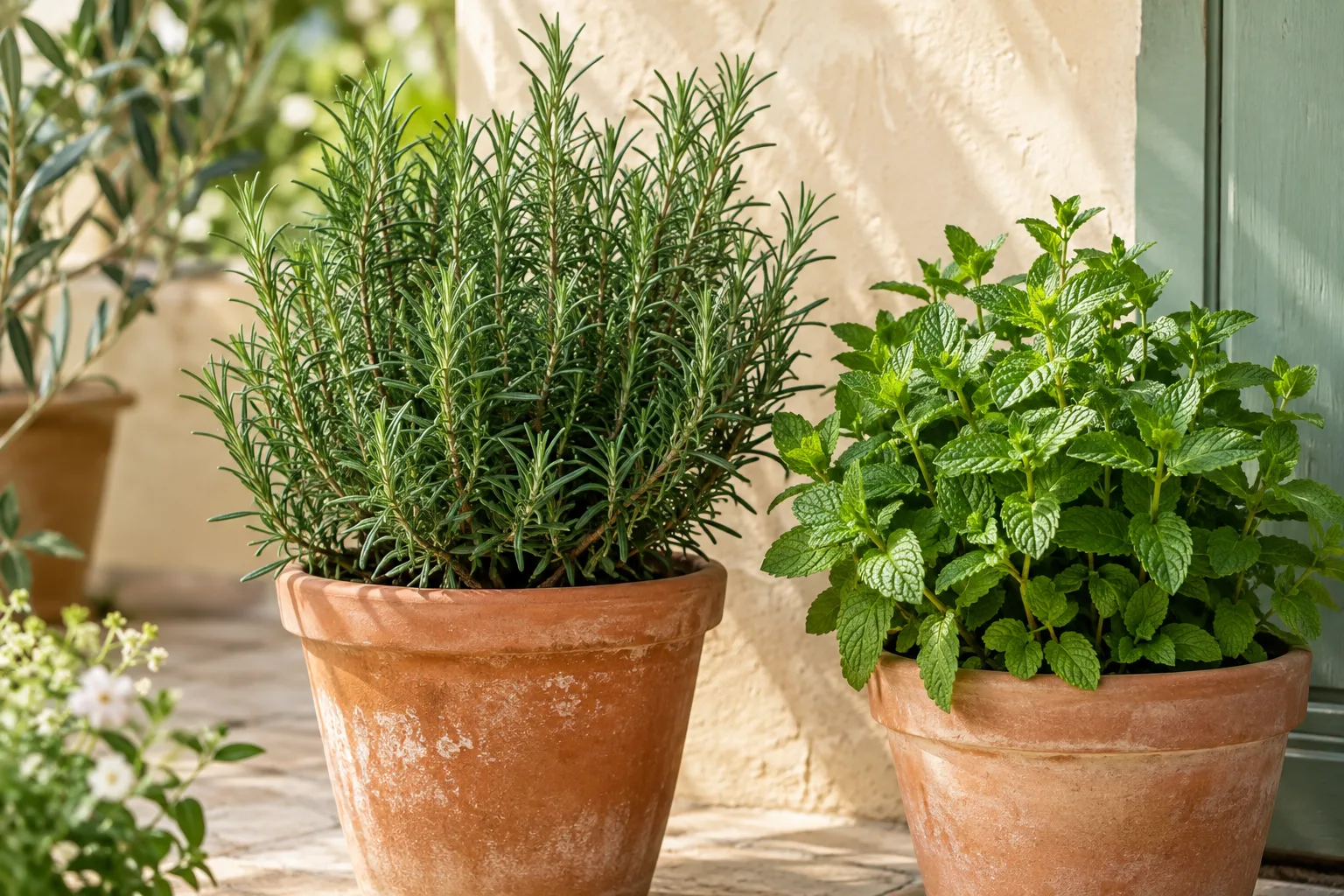
Grow mint in a separate draining container so its spreading growth is easier to manage. Keep moisture reasonably consistent, harvest growing tips, and watch for stems or roots escaping into neighboring beds.
Choose a flavor before buying
Spearmint and peppermint are familiar options, but named mints can differ substantially in aroma. Choose the herb for something you already make: tea, a fruit salad, or a savory dish. Read the nursery label and keep the variety name.
A single plant is enough to begin. Buying several unfamiliar mints can turn a useful kitchen herb into a collection you struggle to label and use. Start with one, then let your cooking decide whether another variety deserves space.
Give spreading growth a boundary
Mint spreads vigorously. A separate container makes management easier than planting it among slower herbs. Use drainage holes and keep the pot where escaping stems and roots are visible; a pot resting directly on soil is not a perfect barrier.
Add the pot to your regular inspection route. Look around its base and nearby cracks, not just at the attractive new leaves. The point of growing mint separately is to make this check easy, not to assume the boundary can never fail.
Build a simple care routine
Mint appreciates moisture, but the roots still need drainage. Check the actual mix and water when needed. Harvest stem tips regularly while leaving enough foliage for recovery. If growth becomes tired and congested, division or renewal may help.
Keep scissors near your cooking area and harvest with a meal in mind. A useful garden habit is to write one intended use beside the plant label. That turns “I should use the mint” into a concrete plan for lunch or an evening drink.
Refresh instead of crowding
Inspect an established plant for tightly packed roots and declining vigor. Spring is often a practical time to divide a healthy clump, depending on local conditions. Replant manageable portions and avoid spreading unwanted mint into natural areas.
Review the plant after a season: did you use its flavor, could you reach it easily, and did the pot dry too quickly? Those answers are more useful than the number of stems it produced. Move or resize the project accordingly.
Your next steps
0 of 4 steps checked · Saved on this device
Sources & further reading
Extension resources support the growing principles in this guide. Planning examples apply them to small container gardens. Local conditions and variety instructions take priority.
Prepared with AI assistance; this is research-based guidance, not a personal growing trial. Editorial policy · Suggest a correction