THE SHORT ANSWER
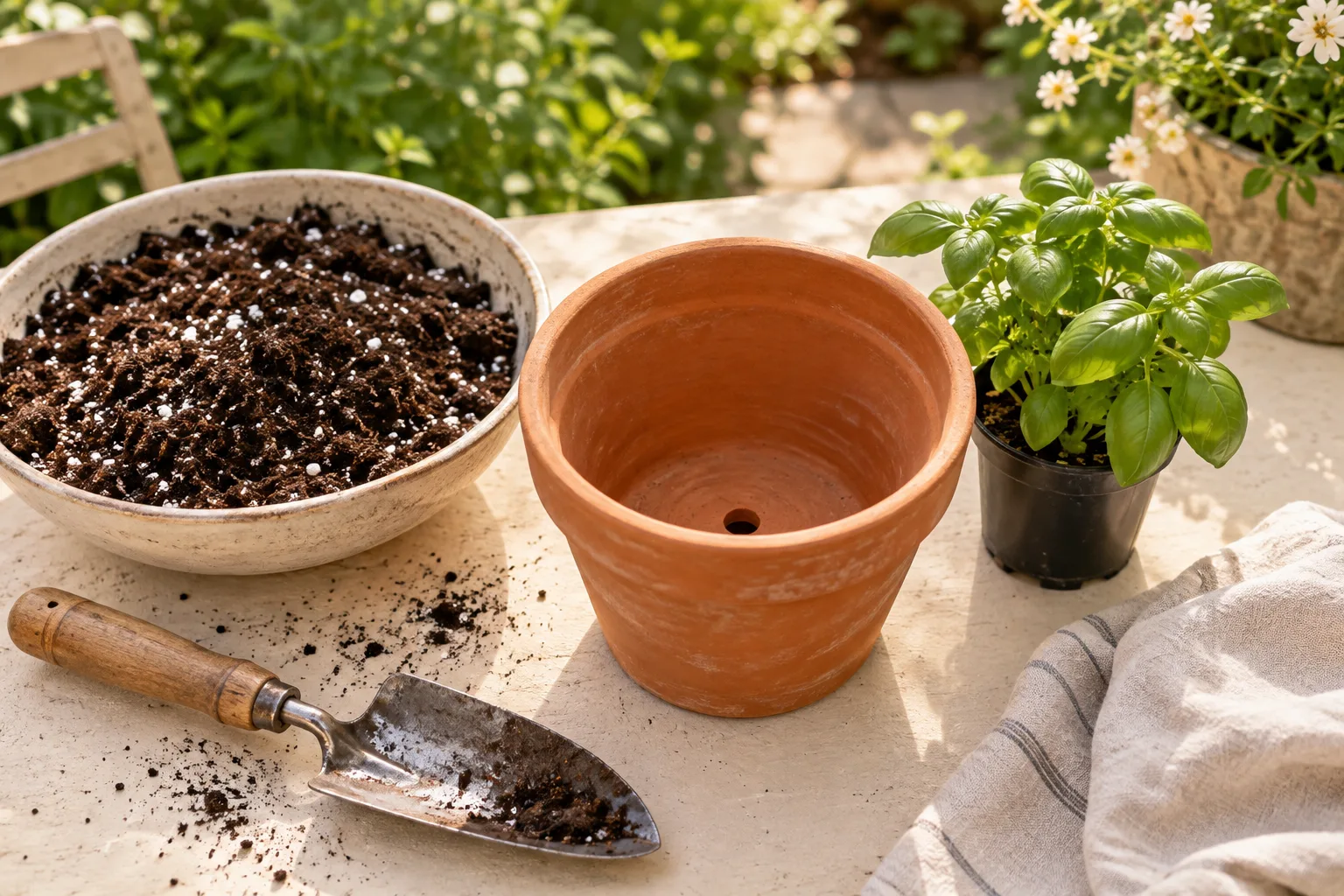
For a typical vegetable or herb pot, start with a commercial growing mix labeled for containers. Garden soil and compost are not interchangeable with a complete container mix.
Think of the mix as part of the container
Roots need air as well as water. A container limits the volume they can explore, so the structure of the growing medium matters. University of Maryland Extension explains that container media support the plant while supplying the root zone with air, water, and nutrients.
That is why filling a pot with dense soil dug from a yard is not the same as growing in the yard itself. A material that behaves well in an open garden bed can behave differently when confined in a pot, especially a shallow one.
Read the bag instead of relying on the name
Look for an intended use such as container vegetables or outdoor pots. Product names like “soil,” “mix,” and “compost” can be confusing. Read the use directions, ingredients, and whether nutrients have already been included.
For your first few pots, one suitable ready-to-use product is easier to manage than several experimental ingredients. Photograph the bag label and keep it with your planting notes. If growth or watering becomes difficult, knowing what you actually used is much more helpful than remembering that the bag was green.
Avoid adding everything at once
Compost can be an ingredient in a growing mix, but it is not automatically a complete substitute. Do not keep adding fertilizers, manure, water-retaining products, and other amendments without understanding what the existing mix already contains.
A useful beginner experiment is to keep the medium consistent across similar pots. If you change the plant variety, container material, and mix at the same time, it becomes hard to learn which change mattered. Start simply, then adjust one variable in a later planting when you have a reason.
Buy the amount your pots need
Measure the container’s inside dimensions and useful fill depth. Leave a watering rim instead of filling to the very top. The potting-mix calculator gives a volume estimate and rounds bag purchases upward, but tapered pots and existing root balls affect the real amount.
Moisten and handle the mix according to the manufacturer’s directions. Store leftover product covered, in a suitable dry place, and retain the label. When a crop finishes, inspect the old mix and plant health before deciding how to reuse materials; do not simply add a new seedling to a root-bound, exhausted pot.
Your next steps
0 of 4 steps checked · Saved on this device
Sources & further reading
Extension resources support the growing principles in this guide. Planning examples apply them to small container gardens. Local conditions and variety instructions take priority.
- University of Maryland Extension: Growing media for containers
- Illinois Extension: Soil for container gardens
Prepared with AI assistance; this is research-based guidance, not a personal growing trial. Editorial policy · Suggest a correction