
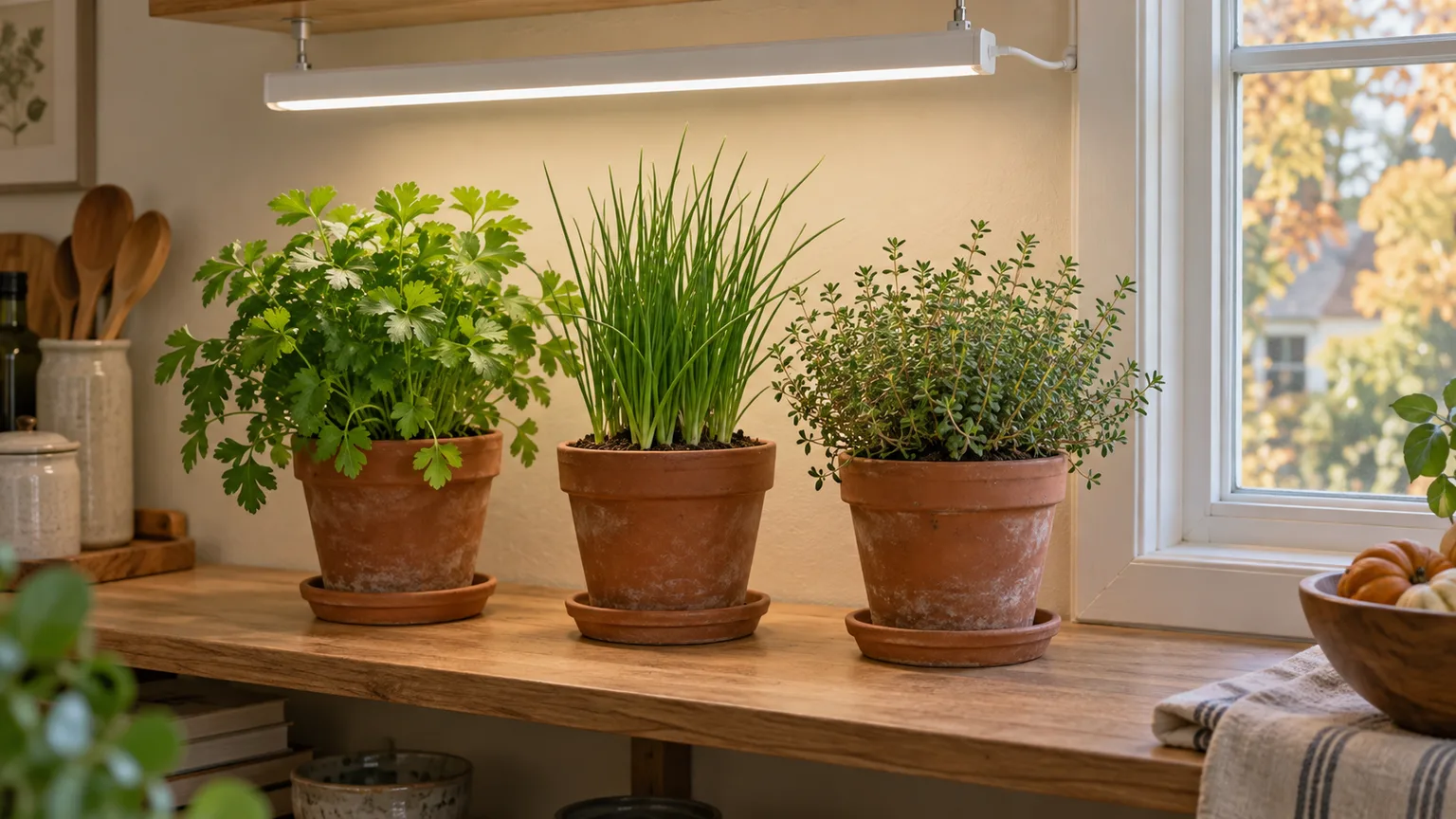
Make room before moving pots
Choose a few healthy herbs, arrange enough light, and give returning plants a separate observation space. Moving a pot indoors can preserve a useful plant, but a warm room alone does not provide the conditions for a steady winter harvest.
The last warm weeks of the season are a good time to decide which herb pots deserve indoor space. Saving every container can turn a pleasant kitchen project into a crowded windowsill. Start with herbs you cook with often and a place where you can reach each pot to inspect it and water without spilling.
Choose the plants you can actually accommodate
Iowa State lists parsley, mint, chives, basil, oregano, cilantro, and thyme among useful indoor choices. Rosemary can work too, but its stronger light requirements and potential pest problems make it a more demanding first choice. See the indoor-herb guide before moving a large collection.
- Bring in a favorite: Choose a healthy, manageable plant that fits the light and space you have.
- Start smaller: If an outdoor pot is unwieldy, plan a smaller replacement or an appropriate propagation project rather than forcing it onto a narrow sill.
- Finish the outdoor season: Harvest usable growth from a tired or badly infested plant and plan a fresh start when conditions are better. You do not need to overwinter every herb.
Start with two or three pots you can care for individually. A parsley plant for finishing soup and chives for eggs may be more useful than an impressive collection you rarely harvest. This is a planning example, not a claim that those plants will provide a particular amount each week. Our parsley and chive guides cover their outdoor growing habits.
Plan around the forecast and the room
Complete the move before cold conditions damage the selected herb. Tender basil should not be left out to experience a frost while you search for shelf space. Cold-hardiness differs among herbs, so check the plant’s requirements and your local forecast rather than using one universal moving date for every pot.
Look at the proposed spot in the morning, midday, and afternoon. Notice nearby buildings, overhangs, and trees that block direct light. A window can look bright to a person while providing less light than a herb needs. Minnesota Extension recommends matching plants to the actual quality and duration of light in the room. Read its indoor-lighting guide.
Keep pots where you can reach them without moving several others first. Protect furniture with suitable saucers, leave foliage away from cold glass, and avoid the direct stream of a heating vent. Illinois Extension identifies light and dry indoor conditions as important winter limitations and advises keeping herbs away from direct heat. Its winter-herb guidance is a useful starting point.
Inspect outside, then keep newcomers separate
- Inspect stems, leaf undersides, pot rims, and the surface of the mix. Look for insects, webbing, sticky residue, or unexplained damage.
- Remove dead debris and gently rinse foliage outside where practical. Let the leaves dry before bringing the plant in.
- Give returning pots their own indoor space away from established houseplants. Check them repeatedly, rather than assuming the first inspection caught everything.
- If pests appear, identify them before selecting a treatment. Any product must be suitable for the herb, indoor use, and the intended edible harvest; follow its label.
The inspection and isolation steps adapt Iowa State’s advice for plants returning indoors, which recommends keeping newcomers separate for three to four weeks. That page covers houseplants generally; use herb-specific light and care guidance for the plant’s permanent location.
Use a grow light when the window is not enough
A small light can make the available shelf more useful. Iowa State suggests a timer providing 12–16 hours of supplemental light per day for indoor herbs. That is a starting schedule, not a promise that every lamp at any distance works. See its lighting recommendations.
Use the fixture’s guidance for mounting height and coverage, and check all the pots fit within the useful lit area. Distance affects the intensity reaching leaves; simply reading a bulb’s wattage does not tell you the amount of usable light at the plant. Minnesota’s explanation of light intensity helps distinguish duration from intensity.
Write the timer’s on and off times on your care note. If you choose a 14-hour schedule, for example, 7 a.m. to 9 p.m. leaves a dark period overnight. Check the timer after an outage. Keep the light securely mounted and its electrical connections away from watering spills.
Reset watering and harvesting expectations
Do not carry the patio’s watering schedule indoors unchanged. Feel the mix in each pot, then water according to that herb’s needs and allow surplus water to drain. Herbs differ in how dry they should become between waterings; Iowa State’s container-herb guidance explains why herbs sharing a pot should have compatible water needs. Separate pots make those adjustments easier.
Keep saucers from holding standing water against the roots. If growth slows, check light, moisture, and temperature before adding fertilizer. Follow the product label and the herb’s seasonal needs; a larger fertilizer dose cannot replace missing light. Note what you change so you can tell whether the plant responds.
Begin with small kitchen pickings after the plant settles in and shows useful new growth. For perennial herbs, Iowa State advises limiting a harvest to the leafy tips or upper third of the plant. Read its harvesting advice. Take less when growth is slow, and allow recovery before another cutting.
Keep a first-month note
Record the move date, daily light schedule, moisture checks, and any pests observed. At the end of the observation period, decide whether the plant belongs in the main herb area. If it is surviving but barely growing, use it sparingly; if it is declining, reassess the location before committing another pot to the same conditions.
Does every herb need the same winter routine?
No. A basil plant in active growth, a slow-growing rosemary, and outdoor-hardy chives do not have identical needs. This guide is for maintaining a few herbs as indoor plants. It does not replace a separate dormant overwintering plan or promise continuous summer-level growth.
Your next steps
0 of 5 steps checked · Saved on this device