THE SHORT ANSWER
Grow chives in a draining pot with suitable light and consistent care. Harvest leaves with clean scissors, leave the base intact, and divide a congested clump when it needs renewal.
Choose the chive you want to cook with
Common chives have hollow leaves and an onion-like flavor. Garlic chives have flatter leaves and a different flavor. Buy a clearly labeled culinary plant so your expectations match the herb.
Think of one dish you already cook that could use a small handful. This is a better starting point than buying a large assortment of herbs because they look good together. A small clump that gets harvested is a more useful garden than a crowded decorative collection.
Give a clump space to expand
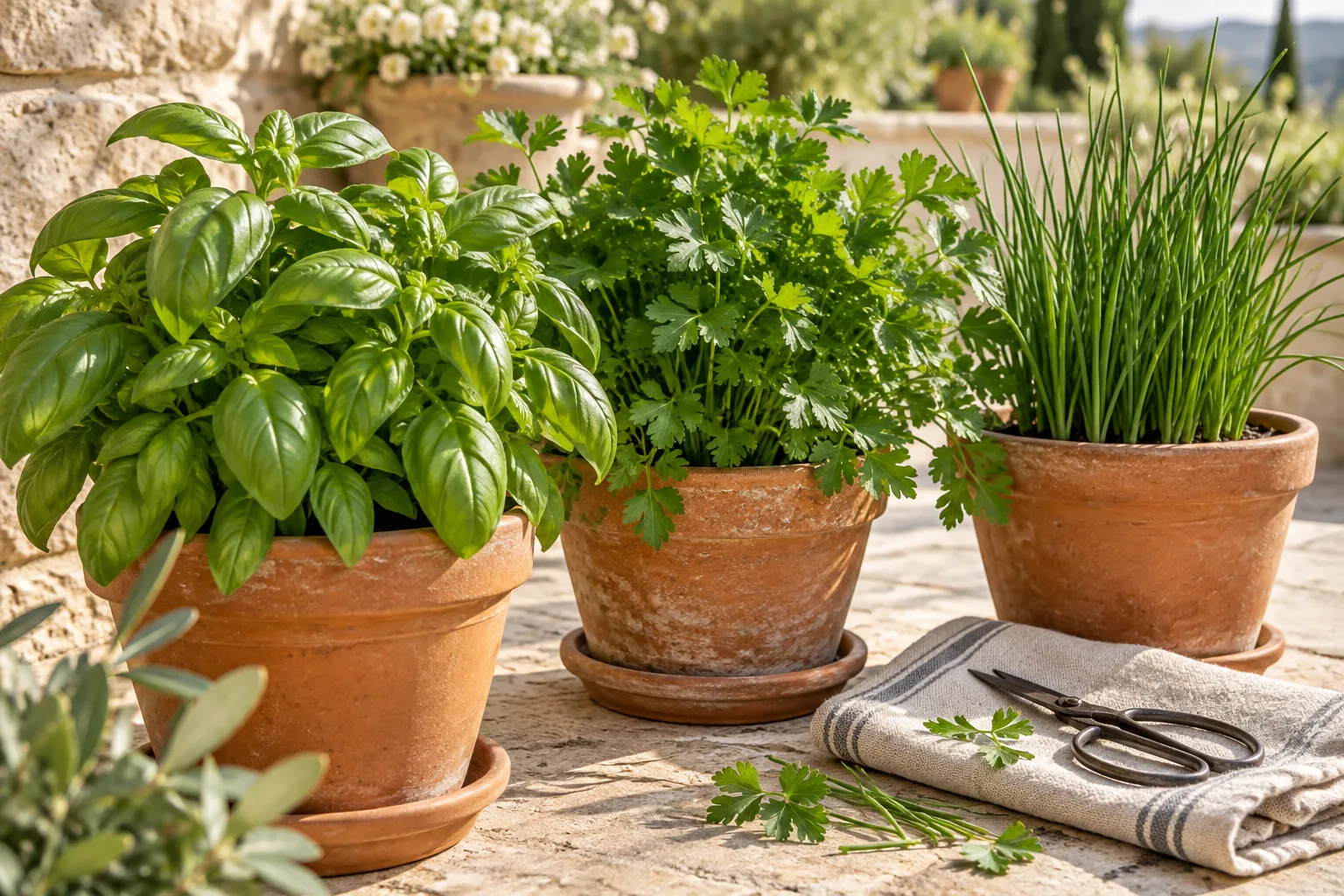
Use a pot with drainage holes and room for growth around the initial clump. Chives can grow from seed, but a nursery plant or healthy division provides an easier start. Plant at an appropriate depth and water the mix thoroughly after settling it.
Place the label at the back of the pot, where scissors are less likely to knock it out. Leave a clear approach for harvesting. If the pot shares a shelf with other herbs, check that taller plants will not shade it as summer growth develops.
Harvest without exhausting the plant
Snip leaves above the base, allowing the plant to regrow. Avoid repeatedly stripping a small, newly established clump. Common chive flowers are edible when correctly identified and grown for food; remove spent heads if you do not want self-seeding.
A practical routine is to harvest from a different part of the clump each time. Note how quickly usable leaves return under your conditions. Let the plant’s growth determine the size of the next harvest instead of assuming a fixed weekly amount.
Plan for renewal and winter
An established clump can become crowded. Division creates manageable pieces that can be replanted into fresh mix. Outdoor winter survival depends on climate and container exposure, even for a hardy perennial.
Before winter, record the plant type and pot location. Check local advice about protecting container roots. In spring, assess new growth before deciding whether to divide. Keeping this small record avoids confusing normal seasonal dormancy with a plant that needs to be replaced.
Your next steps
0 of 4 steps checked · Saved on this device
Sources & further reading
Extension resources support the growing principles in this guide. Planning examples apply them to small container gardens. Local conditions and variety instructions take priority.
Prepared with AI assistance; this is research-based guidance, not a personal growing trial. Editorial policy · Suggest a correction